In the December diary, I am highlighting books and exhibitions exploring themes of national art – both British and Sudanese. I have also included several other art books that may be of interest as gifts at Christmas. Then I turn to exhibitions in ecclesiastical settings, along with others that feature Edmund de Waal, Paula Rego, and Sean Scully. Books also feature in a range of linked ways in several of these exhibitions, too.
In ‘The Invention of British Art’, Bendor Grosvenor embarks on a journey of discovery through an incredible array of artworks and artists from 10,000 BCE to the nineteenth century, revealing how art from the British Isles was created, what made it distinctive, and why it took so long to emerge. From folk art to the role of female artists, from the influences of invaders to the colonised territories of the British Empire, the book embraces previously overlooked contributions to the story of British art. It explores the cultural, political and economic factors that helped to shape it.
In my review of the book for ‘Church Times’, I noted that: “Grosvenor rightly pays significant attention to the influence of religion (principally Christianity), for good and ill, throughout the telling of his story. The first point at which he identifies a ‘British’ art, one which both accommodates international artists and styles to create a new type of art which spread across Europe, is with the creation of the Insular style through the production of religious books in Northumbria. He ends in a similar place with the wider influence of John Constable’s landscapes on the development of an art focused on landscape and rural life. As he does so, he notes the religious aspect of Constable’s art, in particular the religious sublime.”
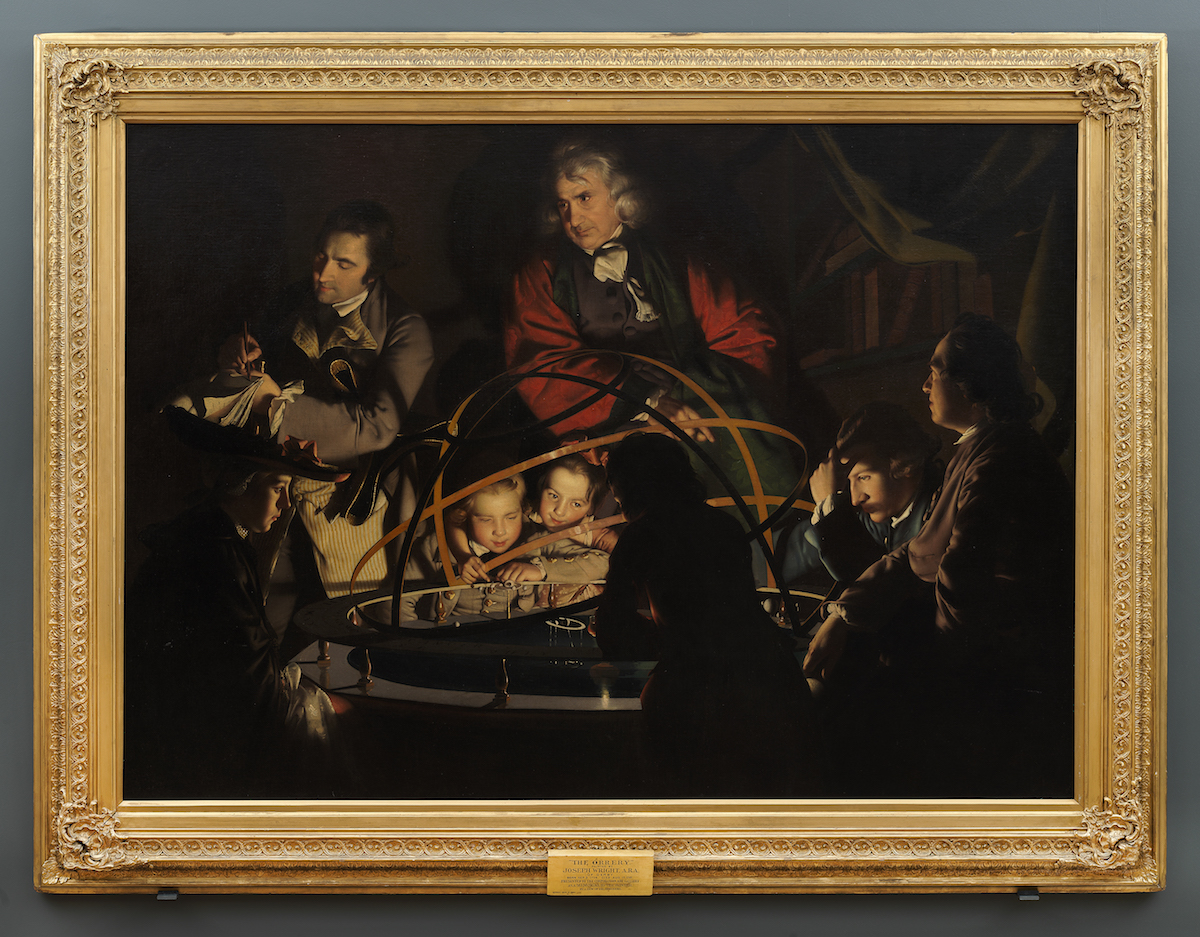
Of interest, too, is “his recognition that the paintings of Joseph Wright of Derby depict the harmony achieved in that period between science and religion rather than the beginnings of a separation between the two, as interpretation of Wright’s images has often assumed.”
‘Wright of Derby: From the Shadows’ at the National Gallery is the first major exhibition dedicated to the British artist’s ‘candlelight’ paintings. The show includes ‘Three Persons Viewing the Gladiator by Candlelight’, ‘A Philosopher giving that Lecture on the Orrery in Which a Lamp is Put in Place of the Sun’ and the National Gallery’s ‘An Experiment on a Bird in the Air Pump’. This marks the first time in 35 years that all these works will be brought together. In these images, illuminated faces gather around a variety of objects – from classical sculptures and scientific instruments to bones, bladders and animals. Through his unflinching scenes of people watching, Joseph Wright poses moral questions about the act of looking. The strong light and deep shadows create drama, reminding us of great painters from earlier centuries, such as Caravaggio.
Challenging the traditionally held view of Wright as a figurehead of the Enlightenment, this exhibition, like Grosvenor’s book, contributes to the ongoing re-evaluation of the artist, portraying him not merely as a ‘painter of light’. More than virtuoso scenes of dramatic light and shade, Wright used the night-time to explore deeper, more sombre themes, including death, melancholy, morality, scepticism, and the sublime. With over twenty works, including paintings, mezzotints, works on paper, and objects, the exhibition explores both his artistic practice and the historical context of scientific and artistic development in which these works were made.
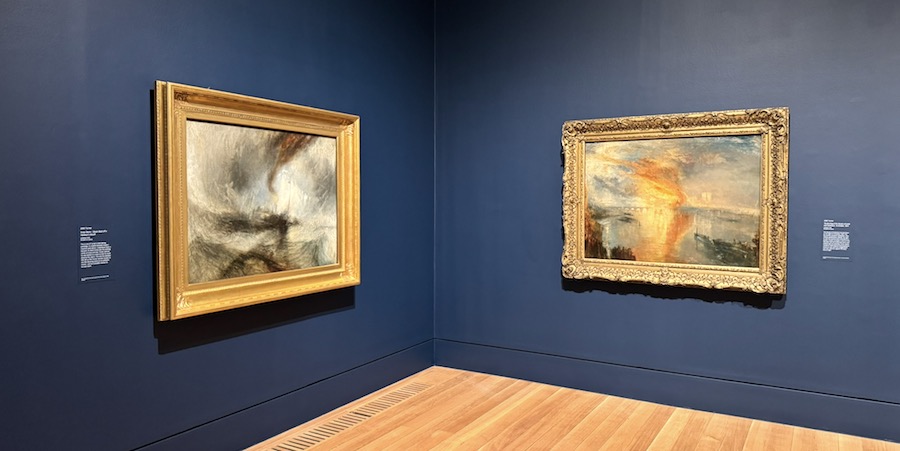
Two of Britain’s greatest painters and landscape artists, J.M.W. Turner and John Constable, are currently being compared and contrasted at Tate Britain. Together, they form the culmination of Grosvenor’s book. Each was born within a year of the other – Turner in 1775, Constable in 1776 – and they vied for success with the art critics of the day, comparing their paintings to a clash of ‘fire and water’.
Marking 250 years since their births, this landmark exhibition explores the intertwined lives and legacies of Turner and Constable. The exhibition enables viewers to discover unexpected sides of both artists, alongside intimate insights revealed through sketchbooks and personal items. Visitors experience many of the artists’ greatest works, with over 170 paintings and works on paper. Highlights include Turner’s momentous ‘The Burning of the Houses of Lords and Commons’, not seen in Britain for over a century and ‘The White Horse’, one of Constable’s greatest artistic achievements.
The ambitious and entrepreneurial Turner had a rapid rise to prominence. At the same time, Constable was equally determined to forge his own path as an artist but faced a longer, more arduous rise to acclaim. Though from different worlds, both artists were united in their desire to transform landscape painting for the better. Turner painted blazing sunsets and sublime scenes from his travels. At the same time, Constable often returned to depictions of a handful of beloved places, striving for freshness and authenticity in his portrayal of nature. As they vied for success through these very different yet equally bold approaches, the stage was set for a heady rivalry in the competitive world of landscape art. As Grosvenor notes in his book, their achievements established a form of British art that drew on earlier religious inspirations, exploring these within a spirit of place and the illumination of divine light.
Other books exploring aspects of British art and life include ‘Divine Light’ and ‘Underground’. ‘Divine Light’ by Janet Gough features glass from every Church of England cathedral. It spans 900 years, beginning with the windows installed at Canterbury Cathedral following the murder of Thomas Becket in 1170 and representing every subsequent century in the history of English stained glass.
‘Divine Light’ encompasses the Middle Ages, the Reformation, the hugely productive ‘long nineteenth century’, the Pre-Raphaelites, the Arts and Crafts movement, the creative commissions of the twentieth century, and the innovative glass being commissioned by cathedrals today. The book establishes the connections between the artistic beauty of stained glass, its effectiveness as a narrative medium, and the various technical developments that have shaped the work of practitioners over the centuries. The refraction of light through coloured glass emerges as an early form of mass communications that retains its power to move and inspire today.
‘Underground’ presents drawings made between 2023 and 2025 on the London Underground by London-based painter Susie Hamilton. Completed in pen or pencil on paper, or in mixed media on paper, cardboard or scraps of torn canvas she calls Rags, these works focus not only on travel within the depths of the Earth but on the Underground as a metaphor and place of metamorphosis.
Hamilton says: “These works began in late 2023 when I made journeys on the District Line and did quick drawings of seated figures, distorting them through speed of drawing. Tube travellers became moon-eyed with stick arms or hands like hooks, and I liked the way they seemed rickety, outlandish or menacing. Their eccentric shapes, gestures and expressions also reminded me of the pathos, ghostliness or grotesqueness of figures in different kinds of mythological underworlds. And these qualities became more noticeable in my subsequent work on cardboard and canvas. My oil sticks, acrylic, pastel and charcoal attacked the figures through intrusive lines, poured paint and flung blots so that human structure and identity began to collapse. My spoiling and messing indicated my subjects’ fragility with the struggle between a figure trying to exist and materials which were trying to undo it.”
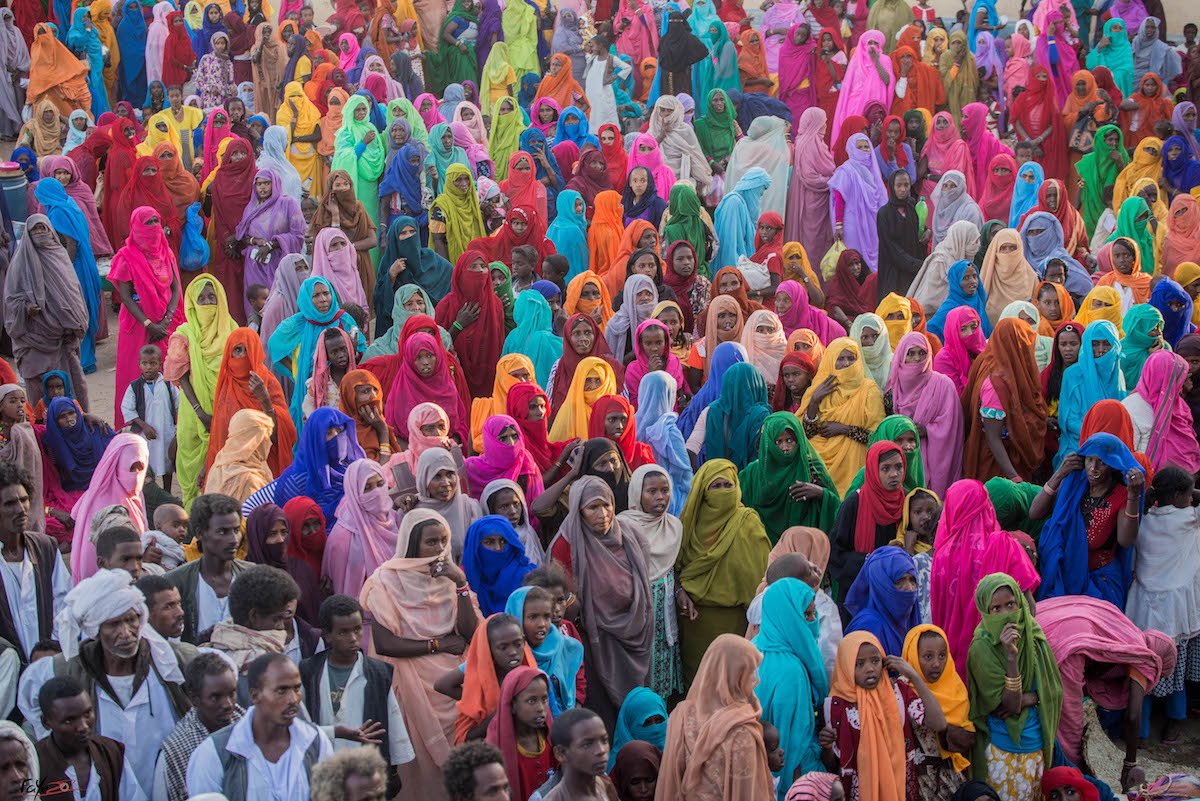
‘Sudan Retold’ is a landmark exhibition and publication which has been a decade in the making. What began as an effort to tell Sudanese (his)stories differently has evolved into a powerful act of cultural preservation – at a time when both memory and place are under threat. Drawing on personal archives, oral histories, forgotten objects, and speculative figures, the exhibition and accompanying book invite visitors to explore rich, multifaceted stories of Sudan – shaped by many cultures, religions, languages, and histories – yet often reduced to a singular, linear narrative.
‘Sudan Retold’ has been curated by Khalid Albaih, Larissa-Diana Fuhrmann and Rahiem Shadad. The exhibition presents a compelling journey through photography, painting, and multimedia installations. Participating artists include Ahmed Abushakeema, Atong Atem, Ayat R. H. Ahmed, Bokhari Hamid, Dar Al Naim, Elamin Gasim, Husam Kabri, Khalid Abdel Rahman, Nadi Abunama-Elgadi, Reem Aljeally, Reham Mohamed, Sahar Abdalla, Waleed Mohammad, Yasir Faiz and Yasmeen Abdullah Ahmed.
‘Sudan Retold’ is part of an ongoing series of publications, research initiatives, and artistic projects. The latest anthology, which follows a 2019 volume of the same name, brings together contributions by artists, writers, curators, and cultural practitioners. The contributors aim to help create a multi-layered, pluralistic understanding of Sudan. To this end, they examine Sudan’s tangible and intangible cultural heritage, record what has been lost, highlight what still exists, and actively support further artistic creation and knowledge production.
‘Tethering Presence, NYC’ is a new book, a continuation of the collaboration between artist and designer Micah Purnell and photographer Richard Harris. The new book builds on their first volume with a more expansive, exploratory approach. Shot entirely in New York, the book pairs evocative street photography with poetic truisms that reflect on connection, presence, and the complexities of modern life—inviting readers to pause, reflect, and adopt an empathetic eye in an increasingly distracted world. Sharp, honest, and moving—this poetic guide navigates the chaos of modern life, framed by the pulse of New York City’s streets.
Purnell says: “After 12 months of writing, designing and collaborating, I’m thrilled to finally share Tethering Presence, NYC with you. It pairs my brand new provocative truisms with Harris’s NY street photography — each image unified by a smartphone and an adage, exploring presence in a connected world.” Purnell is a conceptual artist, designer, and curator whose work explores connection, presence, and the spaces between us. He has collaborated with The Guardian, Wembley Stadium, Elbow, and Arts Council England, and curates outdoor galleries for international artists. His practice examines capitalism’s pillars of Perfection, Privatisation, Scarcity and Certainty while exploring alternatives of Fallibility, Common Good, Abundance and Mystery.
‘Quest for Beauty’ is a documentary film about the life and prolific art career of William Schickel, a prominent 20th-century Catholic artist. Schickel had a very prolific art career spanning sixty-plus years; he produced a large body of mostly commissioned work in painting, sculpture, stained glass, and architectural design. He is most well-known for his renovation of the Abbey of Gethsemani in Kentucky, where he worked personally with Thomas Merton. His works can be found in numerous private collections and museums, including the Vatican Museum. The film explores his Quest for Beauty and the challenges he faced, and his vision for the Church and his heart for unity in the Body of Christ. Director, David Whitaker, says: “Anyone who wants to appreciate the nature of art and faith will benefit as well. The film not only celebrates William Schickel’s artistic contributions but also sparks a conversation about the ongoing relationship between faith and art in today’s world.”
This winter, the south-facing façade of St Mary le Strand in London transforms into a shimmering, sculptural illusion. As part of the Strand Aldwych Winter Commission, Manchester-based artist Louise Giovanelli has been commissioned to deliver a temporary public artwork that responds directly to the architectural and material qualities of St Mary le Strand. Relating the contemporary to the historic, and the sacred to the profane, Giovanelli explores the tension between representation and materiality, figuration and abstraction. Rather than directly deal with religious themes, Giovanelli assimilates parallel moments of social ritual in her work, offering alluring visual encounters that highlight the physical experience of painting.
For this installation, which is entitled ‘Decades’, Giovanelli draws attention to the church’s gradual exposure to the effects of climate and time, transforming its iconic façade into both subject and canvas. Referencing both the theatrical history of the Strand and the church’s Baroque heritage, the work invites viewers to look more closely, revealing subtle traces of decades, pollution and restoration in the building’s surface. By day, ‘Decades’ reframes this architectural jewel within the modern city; by night, it glows, turning the church into a stage of light, history and transformation.
Presented in partnership with Create London, the project forms part of Westminster Council’s ongoing programme to improve access to cultural experiences for everyone in the city. ‘Decades’ shows St Mary le Strand in a new light, capturing the attention of all who pass by this historic building; it also highlights the church’s urgent need for conservation and restoration.
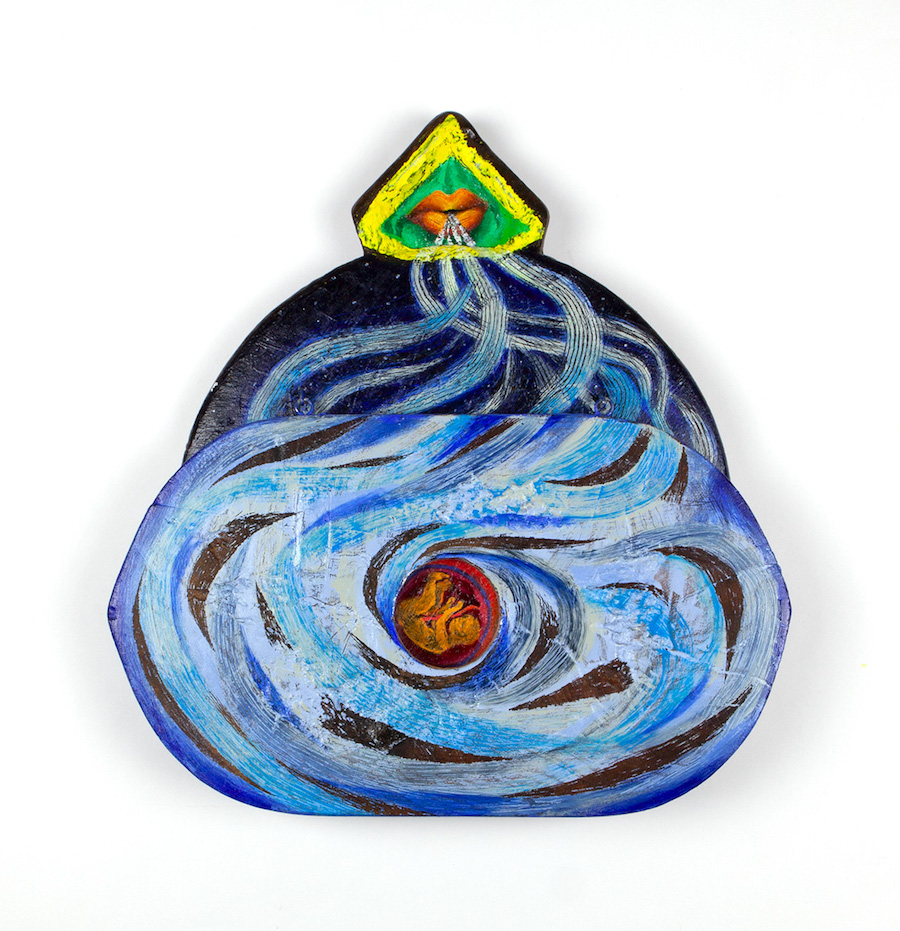
Artist Mark Cazalet, calligrapher Pansy Campbell, and poet Richard Leaf have installed their collective work, ’12 Advent Stations’ at Chelmsford Cathedral. All members of St Martin’s Church, Kensal Rise, this unique collaboration offers a fresh and contemplative exploration of the Advent season and was originally created for St Martin’s. The exhibition features twelve stations thoughtfully placed throughout the Cathedral, each designed to encourage reflection on the profound mystery of God coming to Earth. Through the combined expressions of art, poetry, and calligraphy, the stations invite us to revisit the Nativity story and consider its relevance for our lives today.
The Nativity is not just a distant tale; it is a story of ordinary people facing extraordinary challenges—struggling families, acts of charity, people waiting patiently for miracles to occur, and people fleeing from threats of war and persecution. This is their story. These experiences echo our own, reminding us that the story belongs to all of us. The artists’ hope is that we will find inspiration as we contemplate the moment when the Divine came to dwell among us.
In her contributions to these Advent Stations, Campbell explores the meaning of ‘Ordinary’ within the context of miracles, reminding us that what is often overlooked can be truly special. Leaf is a writer for radio, theatre, and screen, with a background in acting. His passion for language and “The Word” is reflected in his poetry, crafted in the sonnet form out of admiration for William Shakespeare, Edmund Spenser and Don Paterson. Cazalet’s earlier commissions, the ‘Tree of Life’ and St Cedd’s window, can also be seen at Chelmsford Cathedral.
Neil Tye has a new exhibition at Spinderihallerne in Vejle, Denmark, that consists of two bodies of work and is titled ‘piercing through the layers of life’. The works on plastic unfold as investigations of paint on plastic, of light arriving from different directions. It highlights the space between how we want to see things and how they actually are. The works on canvas examine our inner landscapes, filled with tension and release, brokenness and repair. Lines emerge through the layers, bold, insistent, almost luminous, suggesting something moving through it all.
The artist and author Edmund de Waal has curated a major exhibition of acclaimed Danish ceramicist Axel Salto, considered one of the greatest masters of 20th-century ceramic art. Salto was a radical polymathic figure – a poet and a critic, an artist and textile designer – who crossed boundaries from one discipline to another, producing an extraordinary body of ceramic work alongside paintings, woodcuts, drawings, book illustration and textiles. Salto is internationally renowned for his highly individual and expressive stoneware inspired by organic forms, characterised by budding, sprouting and fluted surface textures that appear to ripple and burst with life.
Salto’s ceramics are shown alongside lesser-known and unseen works on paper, illustrations, writings and textiles, with a major new installation by de Waal reflecting on Salto’s enduring influence. This is a conversation across time that leads us closer to their art and connects words, images and ceramics. De Waal says: “My new exhibition Playing with Fire at The Hepworth Wakefield – a dialogue with Axel Salto, the incredible Danish artist whose pots and poetry have inspired me for thirty years.”
‘Drawing from Life’ at the Cristea Roberts Gallery is a major exhibition featuring a body of work by Paula Rego, centred on an intensely personal three-year period the artist spent in her studio. During this time, Rego focused on her drawing practice, as she explored darker and more complex themes than ever before. Over forty works, made from 2005 to 2007, are exhibited, including several which will be shown for the first time. Rego’s studio is also partly recreated, showcasing the dolls and creatures she made and used as subject matter.
A major catalyst for this period was the connection she found in the work of writer and director Martin McDonagh, whose short stories Rego used as an inspiration to create a series of prints. The playwright’s stories became a channel for Rego to feed her own personal history. Just as Rego several decades before distorted and updated the classic tales of Peter Pan, Jack and Jill and Humpty Dumpty, the dark, sometimes grotesque, violent, and often tender stories by McDonagh, alongside other tales, saw her embrace narratives that she layered with memories from her childhood in Portugal and later adult life. For the first time, she began to make objects, dolls and creatures, described as ‘bonecos’ by Rego, to draw from.
The colour blue has a particular resonance within Sean Scully’s practice and is central to his exhibition entitled ‘Blue’ at Thaddaeus Ropac in Paris. There, Scully’s unique expression of light and emotion through chromatic nuance is celebrated to particularly poetic effect. Each of the nine gem-like ‘Wall of Light’ paintings, in various shades of blue on copper, is an ode to the echoes of memory and place that the colour blue stirs in the artist.
When asked by the poet and art critic Kelly Grovier when it was in his life that he first started thinking about art, Scully responded with a memory from his early childhood in London: “I remember I had a bicycle. And I’ll never forget it. It was a cerulean blue.” It was in recognising “that lovely pale blue” and the feelings it evoked, back in his earliest preschool years, that Scully believes he became an artist. Scully began the ‘Blue’ series of paintings during a two-year period living in Hampstead, London, and working from a studio in Kentish Town, not far from where he spent those first formative years with his blue bicycle, living in his grandmother’s boarding house in Highbury. The resulting muted, beclouded cobalts and greys of ‘Wall Cobalt White’ conjure London’s cool northerly light. With ‘Wall Blue Moor’, the viewer senses the grey rain of a deep Hampstead twilight, and with ‘Wall Pale Grey’, the seeping post-war fog.
Exploring the sweep of emotional and improvisational possibilities accessible through the colour blue, Scully mines the tonal registers used in the early 20th century by the great painters of European Modernism. The palettes of the works on view refract, in turn, the melancholy of Picasso’s Blue Period and Matisse’s 1902 painting ‘Notre-Dame, une fin d’après-midi’, and the ethereal, luminous Mediterranean blues of the works Matisse painted in his Tangier studio a decade later.
Adding to this remarkable colouristic depth and warmth, each of the ‘Wall of Light’ works on view is painted on a luminous copper ground. Testifying to an expressive, loose handling of paint, the artist’s brushstrokes allow the underpainted layers of colour beneath them to glow through, while the copper supports glint in the seams between the interlocking rectangles to imbue the cool atmospheres of the paintings with a warm incandescent flush, as if lit from behind or within. This effect recalls the closing lines of Kelly Grovier’s poem selected by Scully for the accompanying book: ‘The sky is empty, but the stars bleed through – cerulean, cobalt, and Prussian Blue.’
The exhibition is accompanied by a book including illustrations of the ‘Blue’ works, as well as poems by Kelly Grovier, Elizabeth Bishop, Rainer Maria Rilke and Scully himself.
‘The Invention of British Art’ – Visit Here
‘Wright of Derby: From the Shadows’, until 10 May 2026, National Gallery – Visit Here
‘Turner & Constable: Rivals & Originals’, Until 12 April 2026, Tate Britain – Visit Here
‘Divine Light’ – Visit Here
‘Underground’ – Visit Here
‘Sudan Retold’, 15 October – 14 December 2025, Almas Art Foundation – Visit Here
‘Tethering Presence, NYC’ – Visit Here
‘Quest for Beauty’ – Visit Here
‘Decades’, 19th November 2025 – 18th January 2026, St Mary le Strand – Visit Here
’12 Advent Stations’, 1 December 2025 – 2 February 2026, Chelmsford Cathedral – Visit Here
Neil Tye, Piercing through the layers of life, 27 November – 18 December 2025, Spinderihallerne – Visit Here
‘Playing with Fire: Edmund de Waal and Axel Salto’, 22 November 2025 – 4 May 2026, Hepworth Wakefield – Visit Here
‘Paula Rego: Drawing from Life’, 27 November 2025 – 17 January 2026, Cristea Roberts Gallery – Visit Here
Sean Scully: Blue’, 29 November 2025—17 January 2026, Thaddeus Ropac Paris – Visit Here