
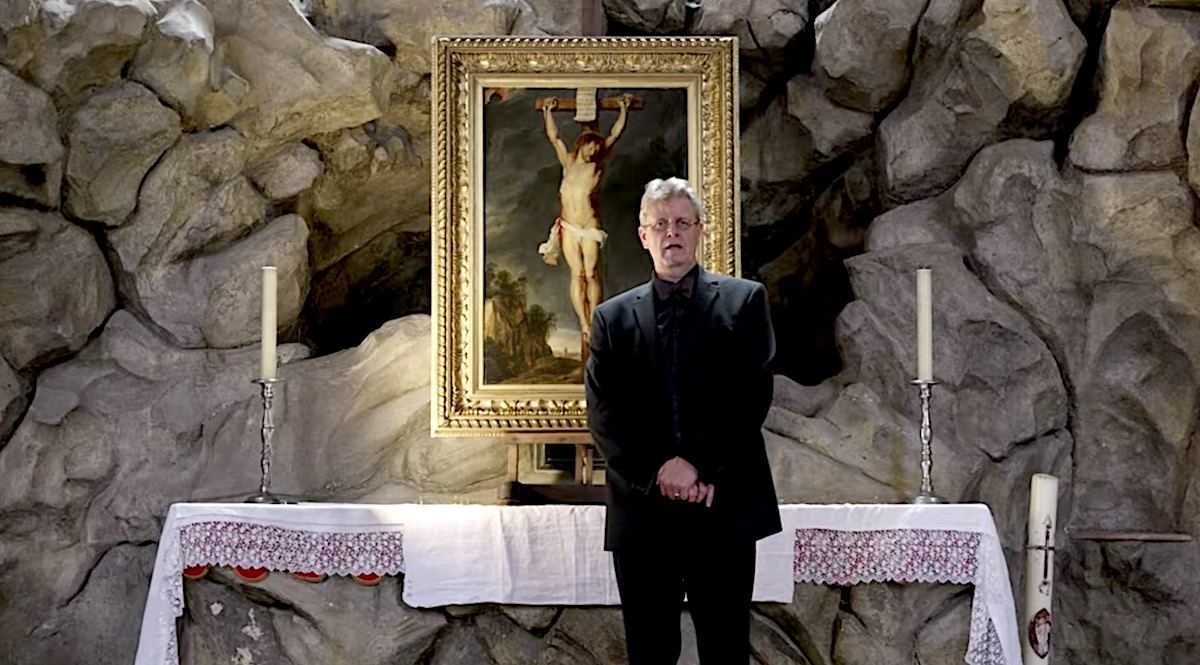
A long-lost painting by Peter Paul Rubens, hidden for 4 centuries, was sold for €2.94 million this week in Versailles. The hammer came down at Osenat, the French auction house run by Jean-Pierre Osenat, who — in a stroke of luck and expertise — found the picture tucked inside a Paris townhouse he was preparing for sale. A routine valuation, a bit of dust, then suddenly: a Baroque master staring back.
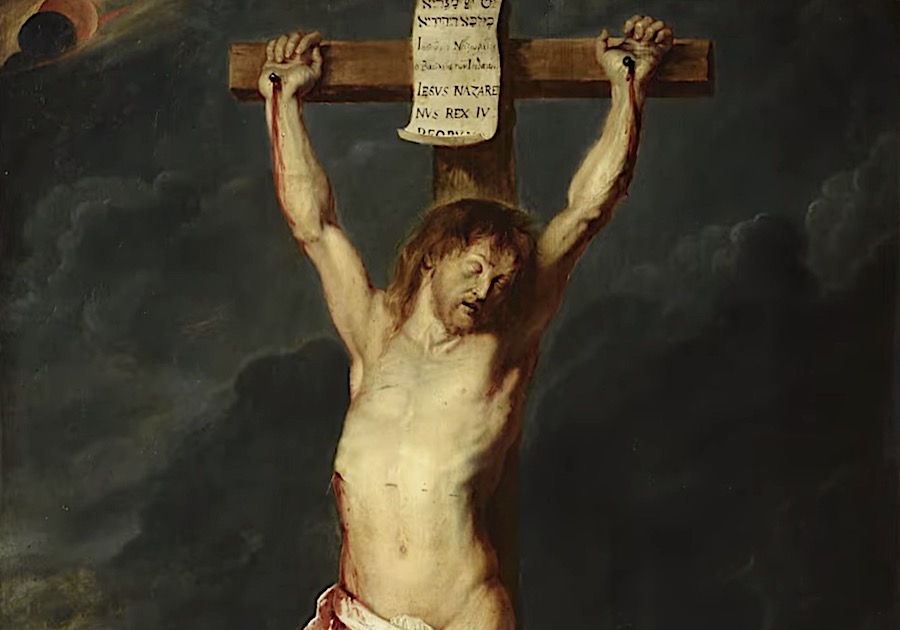
The painting, created in 1613, shows Christ on the cross — a theme Rubens circled throughout his career, but not quite like this. It’s a more solitary Christ, pierced and drained of life, as German art historian Nils Büttner calls it, a rare moment in which Rubens faces the dead body directly. Apparently, it’s the only version in which blood and water visibly flow from the side wound. A single detail, perhaps, but it’s these details that separate workshop replicas from the real thing.
Osenat estimated the work at €1–€2 million, playing it safe. They needn’t have worried. On Sunday, the bidding marched briskly past the high estimate, eventually landing at €2.94 million with fees — about $3.4 million for those keeping score. Not stratospheric by Rubens’ standards, but astonishing given the painting’s long absence and the faint fog surrounding its early history. The market, of course, loves a resurrection story.
The provenance, as presented, has prompted a Parisian attic tale: the painting was bought by William-Adolphe Bouguereau, the 19th-century academic painter whose salon-perfect canvases once dominated the French establishment. From there it passed quietly down through the family, generation to generation, until no one quite realised what was on the wall anymore. An engraving by a contemporary of Rubens had kept the composition alive in art-historical footnotes, but without the original, it remained more rumour than fact. Historians catalogued its existence with an almost apologetic tone — this should exist, somewhere — and then moved on.
Authentication, in cases like this, is never one person’s hunch. Büttner, one of the most respected Rubens scholars, signed off on it. Then came the technical parade: X-rays, pigment analysis, and close comparison with known works. Osenat insisted on transparency, perhaps aware that the reappearance of a long-lost Rubens might prompt a cynic or two to raise an eyebrow. The results held. It’s authentic, early, and shimmering with the unmistakable theatricality of Rubens.
What’s striking — and slightly moving — is how intimate the work is. At just over one metre tall, it’s not designed for the vaulted drama of a cathedral. This wasn’t made to overwhelm a congregation. It feels private, contemplative—an object for a collector’s chapel or small devotional room. Rubens produced plenty for the Church, but he also understood the spiritual appetite of private patrons. Not all patrons want spectacle; some want a moment of stillness to look at in the evening light.
The composition sits at the cusp of Baroque painting, that moment when religious imagery becomes more psychologically charged, when darkness and light start to wrestle on the canvas. Osenat, in his characteristically emphatic tone, called the painting a “masterpiece” made “at the height of [Rubens’s] talent,” and for once, the hype isn’t difficult to believe. Christ stands out against a storm-dark sky, the body luminous in a way that feels almost unnatural — a spiritual glow, or something borrowed from theatre lighting centuries before its invention.
Rubens is one of those artists whose reputation is so colossal that the biographical details often blur, so it’s worth drawing him back into focus. Born in 1577 in Siegen (now Germany), Peter Paul Rubens grew up in Antwerp, a city whose mercantile energy and Catholic fervour shaped his sensibility. He trained as a painter, then, like so many ambitious artists of the time, travelled to Italy in search of antiquity, Titian, the whole arsenal. He absorbed everything — Venetian colour, Roman sculpture, the dynamism of Caravaggio — and returned north in 1608 armed like a general preparing for conquest.
He led a studio that worked at an industrial scale, producing altarpieces, mythological dramas, portraits, and diplomatic commissions. He wasn’t just a painter; he was a negotiator, a scholar, a multilingual statesman. His art fuses sensuality and intellect, flesh and allegory, political theatre and devotional sincerity. Few artists span that spectrum with such swagger. By the time he died in 1640, he had changed the course of Northern European painting permanently.
Which makes the reappearance of this small, fierce crucifixion all the more significant. A missing piece returns to the puzzle. A painting whispered about in journals is suddenly tangible, framed, and vibrating under the lights of an auction room. The art market loves numbers — €2.94 million makes for a crisp headline — but in truth, the discovery matters more than the price. It gives historians a primary source instead of a ghost. It fills a gap in Rubens’s chronology. It sharpens our sense of what he was trying to do, or risking, in 1613.
And perhaps most tellingly, it reminds us that the past is not fixed. Rooms in old Paris townhouses still hide things. Family estates still harbour misattributed treasures. Every so often, a painting steps out of the shadows and forces the entire field to look again. The Baroque, vivid as ever, keeps finding ways to return.
Top Photo: Long-lost painting by Peter Paul Rubens, Courtesy Osenat Auctions