
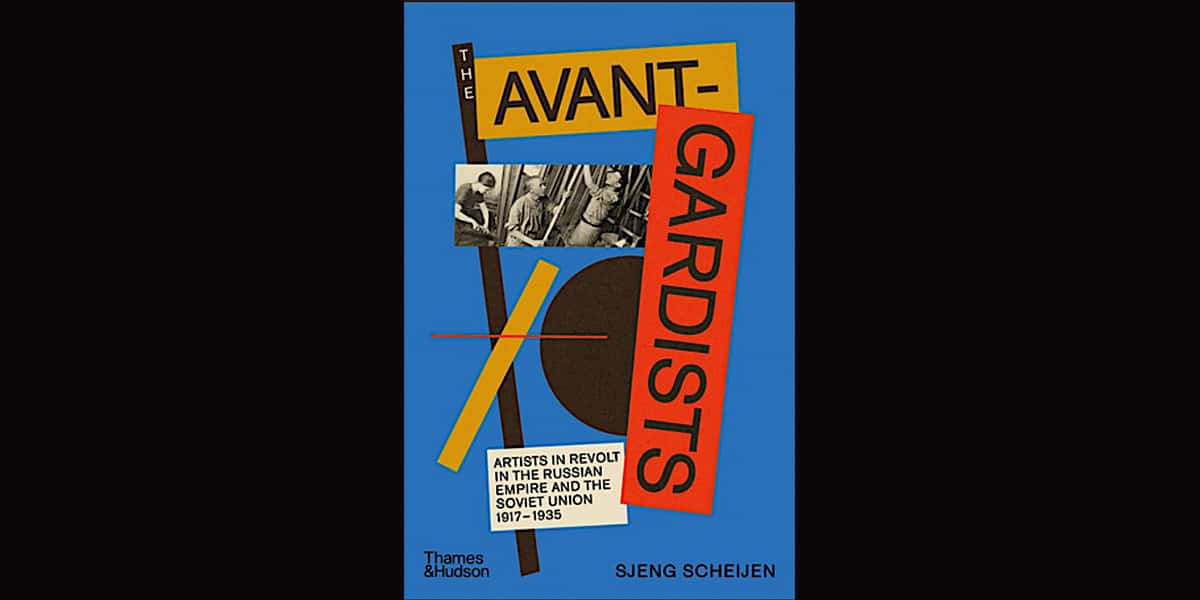
In “The Avant-Gardists”, Sjeng Scheijen provides a detailed account of the dramatic changes that took place in the Russian Empire and later the USSR between 1917 and 1935. After exhaustive study, Scheijen follows the trajectory of many of the principal exponents of this new wave of creativity (Chagall, Kandinsky, Malevich, etc.) and their attempts to transform the face of art.
With the Russian Civil War raging, Scheijen describes how the Russian Avant-Garde grew in prominence before coming into direct conflict with the new Soviet state. Not only did they create large-scale works of immense scale and originality, but they also sought to question and overturn prevailing ideas and concepts. The consequences of this continue to reverberate through our contemporary culture.
But as the Soviet state consolidated its control, the path of these artists became increasingly fraught. Scheijen details the persecution, imprisonment and even brutalisation that they suffered at the hands of Stalin. Incorporating diary entries and letters, he allows us to follow their resolve and struggle against the burgeoning totalitarian state.
Based upon his own wide-ranging discoveries in the archives and interviews, Scheijen has crafted a rich and absorbing account of these artists and their epoch. He writes with confidence and panache, establishing his credentials as the pre-eminent commentator on this period and why readers should engage with his book.
Natalia Murray, Curator of the exhibition Revolution (RA, London) and formerly of the Courtauld Institute, describes the book as “undoubtedly the finest account of the Russian Avant-Garde to date”. In combining rigorous academic analysis with a gripping read, Scheijen pays fitting tribute to the artists whose innovations laid the foundations for subsequent centuries of modern art.
A long-standing writer and authority on Russian art, Scheijen has curated several major shows and written extensively in the field. His earlier title, Diaghilev: A Life, was universally lauded. Here too, he sets out to reveal a little-known aspect of the Russian experience. – PCR