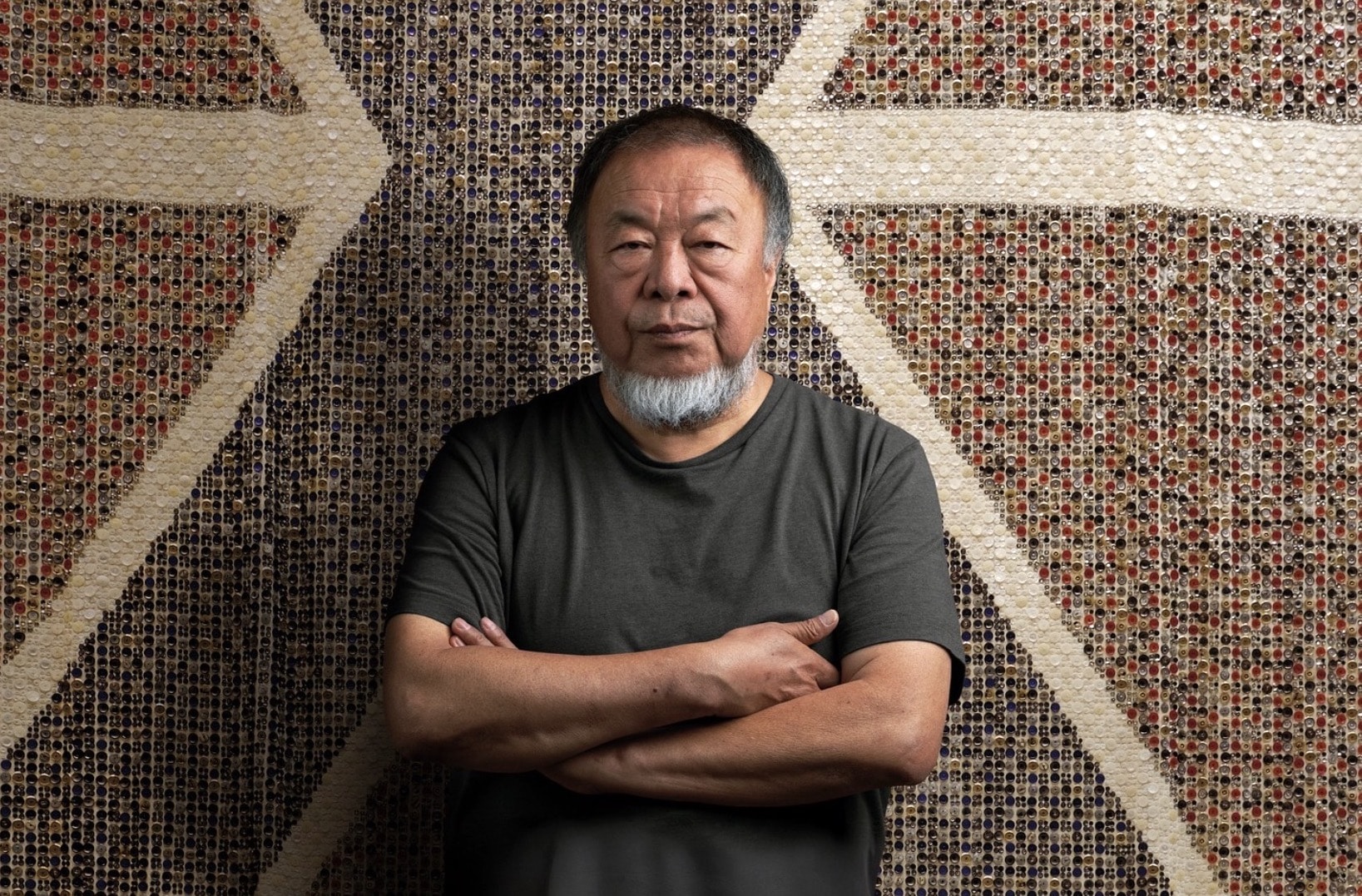
Ai Weiwei returned to China quietly last month, ending a ten-year absence that began when he left the country in 2015. The three-week stay in Beijing marked his first return since the authorities restored his passport a decade ago, effectively allowing him to rebuild his life abroad.
For an artist whose international reputation has been shaped by open confrontation with the Chinese state through work that confronts censorship, surveillance and human rights abuses, the visit was unexpected. Since leaving China, Ai has lived across Europe, spending time in Germany, the UK and, most recently, Portugal.
His sudden visit to Beijing has prompted speculation about how the government now weighs the presence of one of its most outspoken critics, and whether the terms of engagement have subtly shifted.
The visit had minimal official notice or comment. Mr Ai has spoken of a brief interrogation on arrival at Beijing Capital Airport, lasting close to two hours, but no further interference. He later described the questioning as routine. That relative ease stands in stark contrast to his treatment in the early 2010s, when he was detained, silenced and closely monitored.
Much of Ai’s time in Beijing was personal rather than public. He shared fragments of the visit on Instagram via videos of friends and family gatherings. One motivation for the trip was to allow his 17-year-old son and his 93-year-old mother to spend time together—a simple domestic gesture freighted with the weight of long separation.
“It felt like a phone call that had been disconnected for 10 years suddenly reconnecting,” Ai told CNN. Speaking Chinese again brought back a familiar cadence and rhythm that had been absent from his daily life for years.
That the visit was allowed to proceed at all has led some observers to suggest that a decade of online censorship has dulled Ai’s visibility within China, reducing the perceived risk of his return. Others point to the international attention that would likely have followed a refusal of entry. Ai himself has offered a different reading: that the authorities may now accept his position, even if they reject his views.
In recent interviews around his book Ai Weiwei on Censorship, he has argued that restrictions on speech are hardly confined to China, and that Western societies are facing their own forms of control and decline. China, by contrast, he sees as being in an “upward phase”, a context that may have shaped the state’s response to his visit. “Although a country or group may disagree with my positions,” he has said, “they at least recognise that I speak sincerely and not for personal gain.”
Past reprisals remain ingrained. In 2011, Mr Ai was detained for 81 days on allegations of tax evasion charges. This never resulted in a trial. His passport was confiscated, and he spent four years under house arrest before leaving China in 2015. The incident was widely covered by the international press with attempts to curb his growing influence at home and abroad.
Before that detention, Ai had already established himself as a formidable dissident voice, producing works such as Hua Hao Yue Yuan (2010), a two-hour documentary exposing the abuse of activists arrested for protesting against the Chinese Communist Party. Those projects helped define an artistic practice rooted in testimony, resistance and public accountability.
The Chinese artist and activist said he was planning a “monumental” work in Manchester for his first major show in the North of England. The 68-year-old, known for designing Beijing’s Olympic stadium and for filling Tate Modern’s Turbine Hall in London with handcrafted porcelain sunflower seeds in 2010, will lead Aviva Studios’ spring/summer exhibitions later this year. Factory International said the world-renowned artist’s exhibition would focus on British imperialism, Chinese-British relations and the rise of globalisation.
Top Photo Via Ai Weiwei Courtesy Instagram