

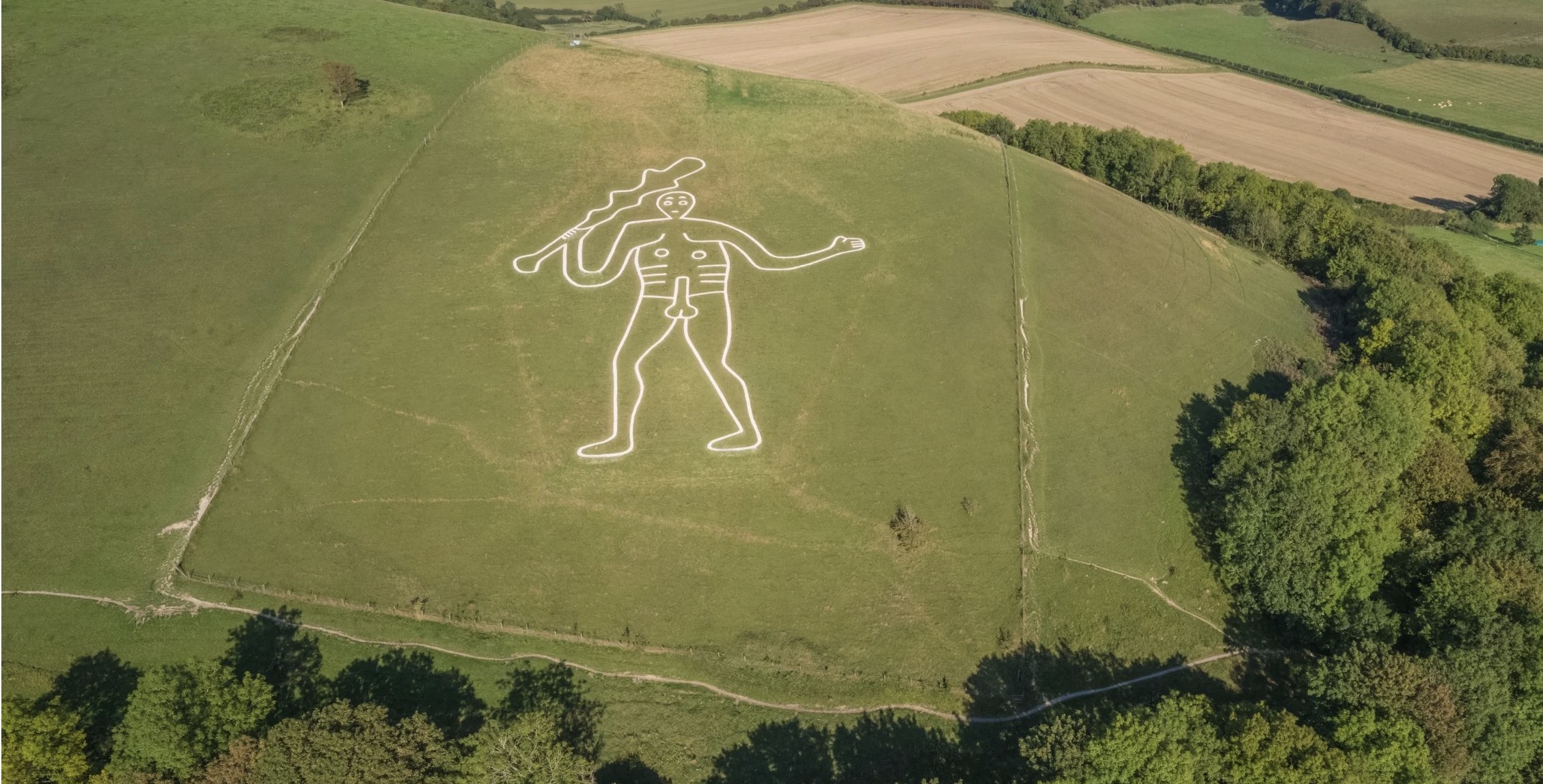
After a strong public response to a fundraising appeal launched late last year, the National Trust has taken ownership of a broad sweep of land around the Cerne Abbas Giant. The acquisition covers 138 hectares of chalk downland, placing one of Dorset’s most familiar and fragile landscapes under long-term care, with new opportunities for conservation, research and public access now firmly in view.
The appeal, announced in early December and supported by Sir Stephen Fry, set out to raise £330,000 to complete the acquisition. Within two months, the target had been met, thanks to donations from across the UK and beyond. Contributions ranged from modest single pounds to £32,000 gifts, with supporters in 20 countries participating. In total, the land secured is roughly equivalent to 190 football pitches.
The public campaign marked the final stage of a broader effort. Earlier philanthropic gifts, grants, and legacies totalling more than £2 million had already put the project in motion, making the appeal the final piece needed to bring the land under National Trust ownership.
For the Trust, the acquisition marks a shift from protection to active restoration. The newly assembled site includes a 59.5-hectare Site of Special Scientific Interest and will allow fragmented chalk grassland areas to be reconnected. The aim is to establish a mosaic of habitats that can support declining species, including 36 butterfly species. Among them is the Duke of Burgundy, now reduced to just six sites in Dorset and under pressure across much of England.
Preparatory work is already underway. A new local ranger is being recruited to lead on-the-ground conservation efforts, supported by staff, volunteers, and partner organisations, including Butterfly Conservation. Discussions with local communities are also planned, drawing on long-held knowledge of the landscape and its uses.
Attention will soon return to the Giant himself. Early this summer, the chalk figure will be re-chalked in a carefully managed operation involving staff, volunteers and ten appeal donors who secured places through a prize draw. Around 17 tonnes of chalk will be pressed into the figure’s outline, a necessary ritual to keep vegetation at bay and maintain the Giant’s visibility across the valley.
The expanded estate also offers renewed scope for archaeological study. Previous analysis in 2021 suggested the Giant was cut during the early medieval period, between 770 and 1100 AD. With more of the surrounding land now accessible, researchers will be able to examine patterns of settlement and ritual activity across a much broader area.
Although the purchase has been completed, fundraising remains open. Further support will contribute to habitat restoration, tree planting, and improved access, ensuring that the Cerne Abbas Giant remains within a living, working landscape rather than a frozen monument.