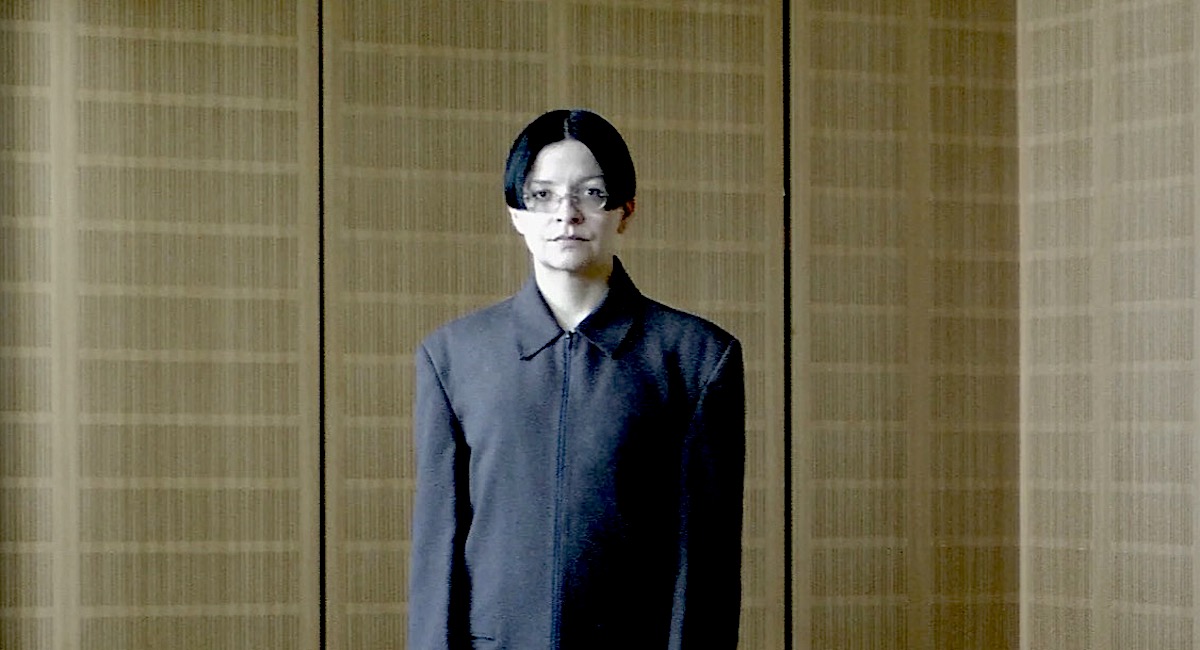
The Institut für Auslandsbeziehungen (Ifa), the body responsible for overseeing the German Pavilion, has confirmed the news in a statement, saying it “mourns the loss of Henrike Naumann, an extraordinary artist and personality”, who died on 14 February following a short but serious illness.
“Henrike Naumann passed away, surrounded by her family and friends in Berlin, after a cancer diagnosis that came far too late. Henrike asked us to send a final farewell to everyone who accompanied her on her journey. At every stage of her life, she surrounded herself with loved ones” – FAREWELL: Written on 16. February 2026 Courtesy The Artist’s Website
Naumann had been selected, alongside Sung Tieu, to represent Germany at the 61st Venice Biennale, opening 9 May and running through 22 November. The exhibition, curated by Kathleen Reinhardt, marked a defining moment in her career. According to Ifa, completing the work—at least in conceptual terms—was of central importance to her. She was determined, the organisation said, that the project would be realised in Venice in accordance with her vision. Further comment from Ifa had not been issued at the time of writing.
Born in 1984, Naumann belonged to a generation shaped by the aftershocks of German reunification. Her work repeatedly returned to the upheavals that followed the fall of the Berlin Wall in 1990—social, political, and psychological—probing how ideologies linger in the everyday. Ifa described her practice as responding to shifting geopolitical realities through a sharply defined visual language, framing art as a form of cultural exchange. In later years, her focus widened, extending beyond Germany to the broader global legacy of the Cold War.
Her method was distinctive, even tactile. Speaking to Bomb magazine in 2023, Naumann described a process that moved between political research and the search for ordinary objects. “While researching and reading texts on political topics,” she said, “I go to flea markets and estate sales to find objects that transport the connections I establish and the insights I get while diving into daily news and deeper academic analysis.” The work, she suggested, emerged from this friction—between theory and material culture, between public history and private interiors. “My artistic practice,” she added, “is about interpreting politics while looking at designed objects.”
She became known for installations assembled from mass-produced furniture and domestic items—objects carrying the aesthetic residue of particular eras, systems and social conditions. Many of the pieces she used were sourced through Kleinanzeigen, the German online marketplace, where the detritus of recent history circulates in plain sight.
Naumann studied costume and stage design at the Academy of Fine Arts in Dresden before continuing her training in scenography in Potsdam. The theatrical roots of this education remained visible in her work—the sense of space as a constructed environment, the careful orchestration of objects, the suggestion that history itself might be staged.
Her international presence had grown steadily. In 2022, she held her first solo exhibition in the United States at SculptureCenter in New York, introducing American audiences to her probing installations and historically attuned practice. More recently, she had taken up a professorship at the Hamburg University of Fine Arts, signalling a new phase that combined artistic production with teaching and mentorship.
Naumann’s career was still gathering momentum. Her work, restless, sharply observant, and rooted in the politics of lived experience, persistently asks how ideology inhabits the spaces we occupy and the objects we inherit. That question, unresolved and pressing, remains.
This has been a rather grim start to the 2026 Venice Biennale. Koyo Kouoh, the visionary director and chief curator of Zeitz Museum of Contemporary Art Africa (Zeitz MOCAA), died last May at age 57. Kouoh, appointed curator of the Biennale, was a transformative force in contemporary art, championing African perspectives on the global stage.