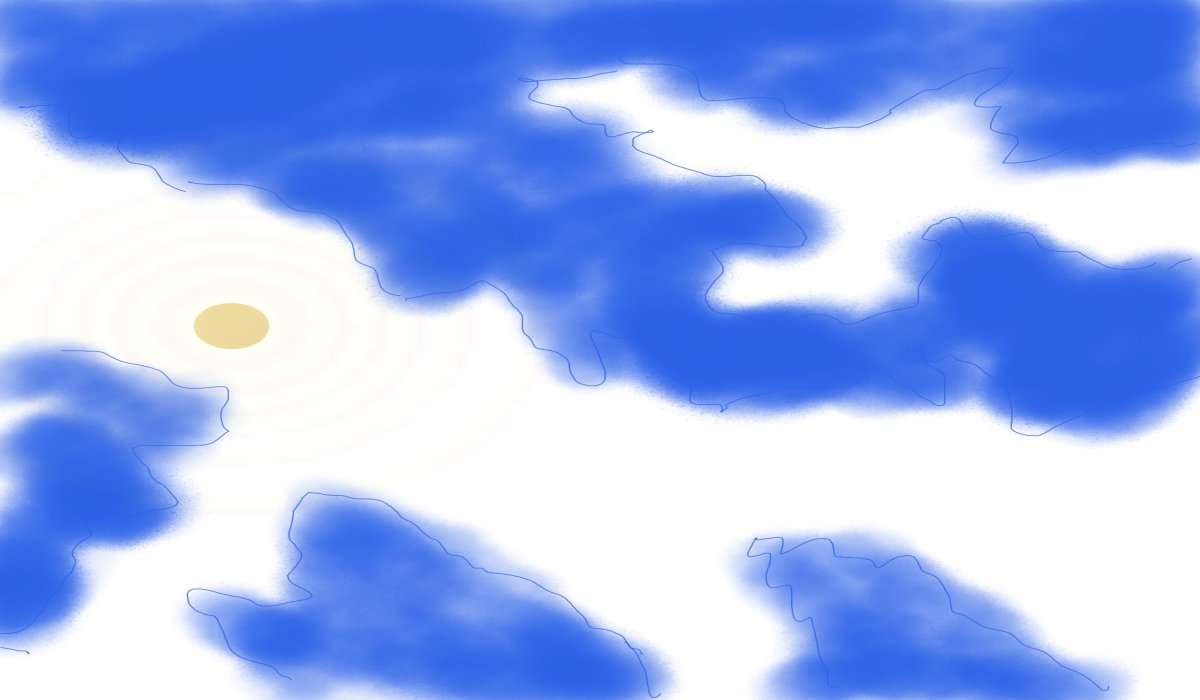
Chen Chen’s work doesn’t begin with a canvas or a screen; it begins later, in the gap between experience and recollection, when something that happened has already started to shift into something else, a colour in the sky. A landscape half-remembered. An emotional state that was real at the time and is now reconstructed from the inside.
That distance from the literal is not evasion. It’s a method. Chen Chen’s practice moves between digital painting and traditional oil painting, and the two inform each other in ways that appear in the work. Digital work allows for fluid layering and rapid compositional shifts, letting intuition run ahead of intention. At the same time, oil demands a slower, deliberate commitment to each mark. This produces a practice that is comfortable with uncertainty, which has learned from both the speed of one medium and the resistance of the other. The work tends toward atmosphere rather than description. Forms simplified, details removed, space left open.
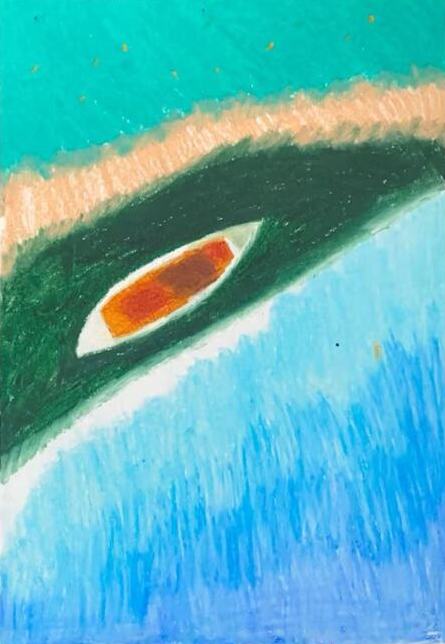 Oceans appear frequently. So do skies, and undefined spaces that resist being named as specific locations. These aren’t chosen for their beauty, though they’re often beautiful; they’re chosen for their instability. The ocean doesn’t stay still. The sky is always in transition. These are environments that refuse to be fixed, and that quality makes them useful for an artist interested in what it feels like to exist in states of uncertainty, or calm, or the particular disorientation of not quite knowing where you belong.
That last preoccupation, belonging, and its absence run through the work as a recurring structural concern. Figures and forms appear in Chen’s paintings in an ambivalent relationship to their surroundings: present but not fully integrated; connected but not securely. There’s a tension between presence and distance that feels less like a compositional device and more like an honest account of something experienced. In-between states. The question of whether a connection is possible, stable, or both, or neither. It’s not melodramatic. It’s quiet, and that quietness gives it weight.
Colour is where the work happens most successfully, in the most immediate sense. Chen Chen’s works intuitively adjust tones and contrasts as the piece develops rather than arriving with a fixed palette.
A composition that begins open can become enclosed. Something intended as calm can turn interior and tense depending on how the colours interact as they’re laid down. This unpredictability is not accidental; it’s treated as a resource, a way to let the work exceed its initial intention. Some pieces change direction entirely during this stage. The artist speaks of valuing that unpredictability. It feels like the honest position of someone who has learned that their best work happens when they stop directing it quite so firmly.
The process typically begins with fragments — sketches, photographs, remembered images, rather than a resolved composition. These get simplified over time, not elaborated. The reduction is deliberate. By removing detail, Chen creates what the work calls “room for ambiguity”, space for the viewer to bring their own emotional response rather than receiving a directed one. This is a common enough stated ambition in contemporary art, but it’s rarer to see it genuinely enacted. The work isn’t vague in the way unresolved work is. It’s specific in its incompleteness, which is different.
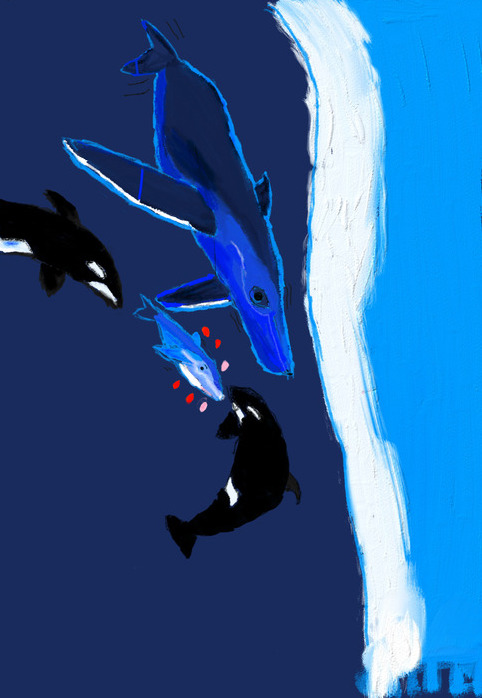
Recent works have returned to skies, clouds and water, treating these as what Chen calls “carriers of longing, resilience, and play.” That’s a generous set of registers to hold simultaneously, and the work handles the range with more ease than you’d expect. There’s something in the recurring landscape motifs, the environmental instability, the forms that suggest but don’t resolve, that connects to a broader cultural moment, a shared sense of precarity in relation to the natural world. However, the work doesn’t make this clear. It doesn’t need to. The conditions it describes are already familiar enough.
What Chen is ultimately doing, and what the best of this work achieves, is making space for slowness. The stated aim is to resist the speed at which images are currently consumed and reproduced to offer something that requires, rather than rewards, sustained attention. That’s an ambitious aim in the current environment, and not every work fully earns it. But when it does land, when a particular arrangement of colour and form holds you in place for a moment longer than you expected, the effect is genuine.
An artist worth watching. The work is still developing, which in this case reads as a strength – PCR 28/03/2026