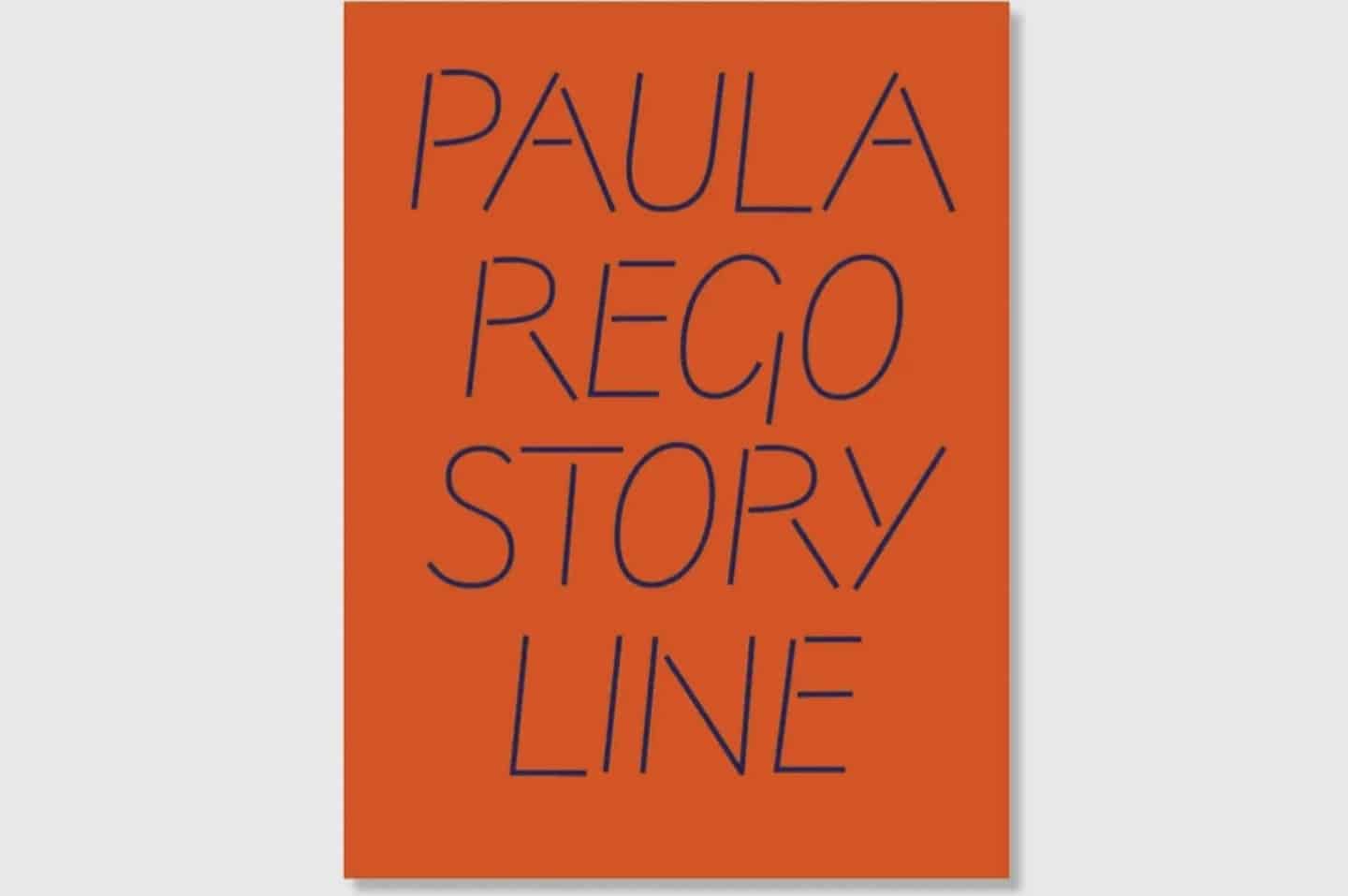
There is something immediately unusual about Story Line, the latest publication from the Victoria Miro gallery, marking the largest exhibition of Paula Rego’s drawings to date. It is not a catalogue in any conventional sense. It is not a typical monograph either. What Nick Willing has written about his mother is a close witnessing, a sustained and intimate account of an artistic life seen from the inside, by someone who was present for much of it and who has spent decades trying to understand what he saw. The book begins with an aphorism and is full of personal recollections.
Willing has explored the subject before. His 2017 BBC documentary Paula Rego: Secrets and Stories won the Royal Television Award for Best Arts Programme and demonstrated his ability to hold the complexity of his mother’s work and personality without reducing either to sentiment.
The format is modest: 25 by 19 centimetres, 168 pages, softcover with foiled detail, published at a special exhibition price of £35. It does not attempt the monumental. Instead, it gathers a selection of drawings from across Rego’s career, works that span her student years through to her final decades, and uses them as anchors for a biographical and critical account that moves with real fluency between the personal and the art historical.
The drawings vary considerably in register, from intimate notations that feel barely intended for outside eyes to careful studies for some of her most recognised paintings. Alongside them, Willing has assembled photographs and rarely seen archival material that give the book a texture no purely critical account could achieve.
Rego’s own relationship to drawing was fundamental to her practice. She described herself, characteristically, as a “drawer” rather than a draughtsperson, i.e., drawing for her was not preparation for something else. It was thinking made visible, the place where she worked out what she felt before she had found the language for it. Willing understands this, and his selection honours it. Drawing was a document of where Rego was, emotionally and biographically, at the moment it was made.
The life it maps was, by any measure, extraordinary. Born in Lisbon in 1935 and educated at the Slade School of Fine Art from 1952 to 1956, Rego came of age artistically in London while remaining deeply shaped by the political and psychological landscape of Salazar’s Portugal. The tension between those two worlds, between a repressive Catholic patriarchy and the relative freedoms of postwar Britain, generated much of the energy that drives her work. Her imagery is populated by figures caught in the codes and dynamics of power, women especially, depicted with a clarity that refuses both victimhood and false resolution. The Dog Women series, begun in 1994, and the Abortion series of 1998 to 1999, which is widely credited with influencing Portugal’s successful second abortion referendum in 2007, established her as someone beyond an art-world figure. She became, in the fullest sense, a public artist
Willing traces this trajectory with care, and the biographical passages are among the book’s strongest. His account of Rego’s marriage to the painter Victor Willing, who died in 1988 after a long illness, is handled with particular sensitivity, neither minimising the difficulty of those years nor allowing them to overshadow the work that emerged from them. The later sections, covering the Female Genital Mutilation series of 2008 to 2009 and the sustained critical recognition that followed, give appropriate weight to the scale of her achievement without tipping into hagiography.
The institutional recognition was real and substantial. In Portugal, the government commissioned the architect Eduardo Souto de Moura to design a museum dedicated exclusively to her work, the Paula Rego House of Stories in Cascais, which opened in 2009. In Britain, she was appointed the National Gallery’s first Associate Artist in 1989, received a major exhibition at the Serpentine Gallery in 1988, and was made a Dame of the British Empire in 2010. Her work appears on the GCSE syllabus and continues to reach generations of younger artists who encounter it long before they have context for the art history it so fluently and subversively inhabits.
What Story Line adds to this record is a new intimacy. Willing is not attempting to reposition his mother within critical discourse or to make claims that the scholarship has not already established. What he offers instead is a portrait of an artist as seen by someone who loved her and who has spent a considerable part of his own creative life learning to look at what she made.
Rego died in 2022. The book does not make much of that loss directly. Still, it is present throughout, in the care with which each drawing has been chosen and in the quality of seriousness with which Willing writes about work that was, for him, never entirely separable from the person who made it. Story Line is a worthy companion to the exhibition it accompanies, and a quietly moving document in its own right. – PCR 2026
Paula Rego: Story Line by Nick Willing is published by Victoria Miro, £35
Buy This Book Here