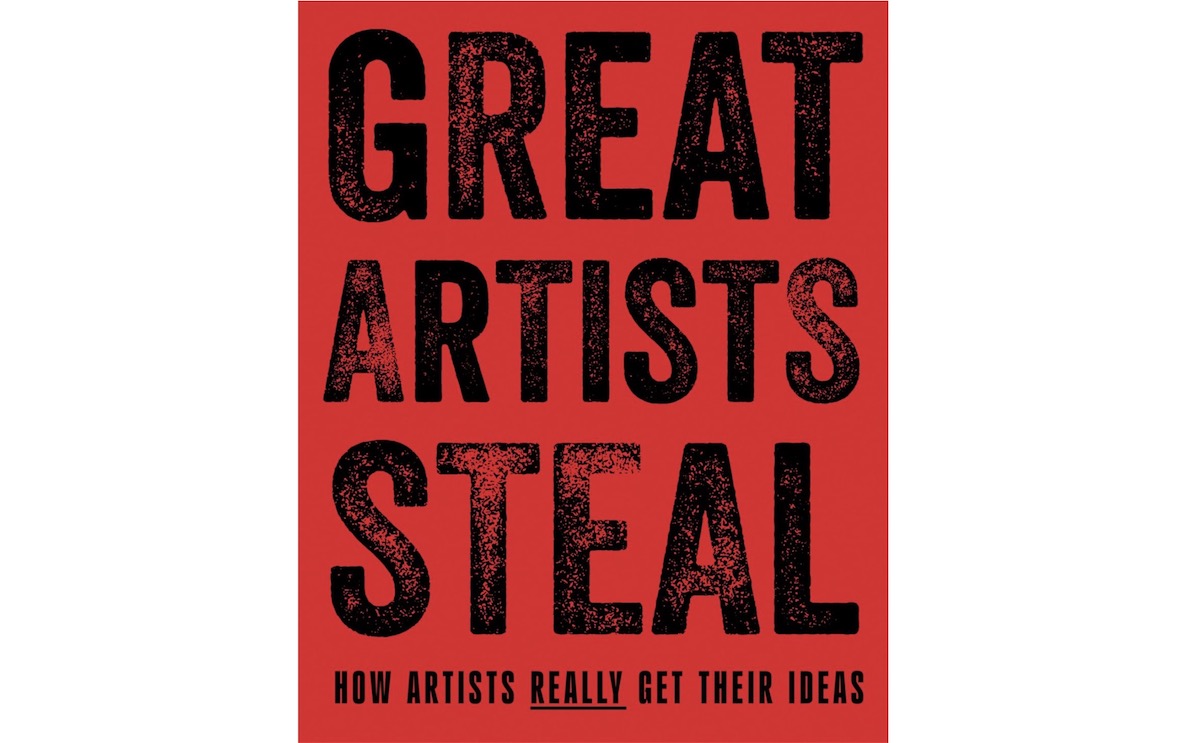
“Good artists borrow, great artists steal.” Whether Picasso actually said it is another matter entirely, but Debra N. Mancoff uses it as the conceptual thread for a book that is, at its best, genuinely illuminating about how visual ideas travel across time, and at its least, a little too tidy about a fundamentally messy subject.
The premise is simple. Forty groundbreaking artworks, held up to the light to reveal their debts, borrowings and outright appropriations. Warhol recycling commercial imagery. Renaissance masters lifted compositional schemes from classical antiquity. Visual motifs that have circulated for 3,000 years are appearing, barely altered, in contemporary painting. Mancoff moves through these cases with the brisk confidence of someone who has spent thirty years teaching art history and knows how to make the unfamiliar accessible without condescending to the reader.
She is good at the mechanics of influence: how an image gets absorbed, modified, misremembered, and then re-emitted into the culture, slightly changed. The chapters on specific works are where the book earns its keep. There are moments of genuine surprise, connections you would not have made yourself, and the pleasure of having them made for you by someone who clearly enjoys the detective work.
What we take home from this book is that stealing, borrowing, quoting, and plagiarising are not the same thing, and the book is not always able to distinguish between them. Consciously reworking a Velázquez, as Bacon did repeatedly, is a different act from unconsciously absorbing an aesthetic atmosphere.
That said, the book is not trying to be a theoretical text. It is trying to change how the lay reader views art history, and, in doing so, it largely succeeds. The writing is clear and propulsive without being breezy, and Mancoff has a gift for the telling anecdote and the well-chosen comparison that makes ideas stick. For an art student or an enthusiastic amateur, this is exactly the kind of book that opens up the subject rather than closing it down.
The forty-artwork structure does occasionally feel like a constraint. Some entries feel rushed where they should breathe, and a few of the later examples in the contemporary section skate over genuinely complicated questions about cultural appropriation with a lightness that will frustrate some readers.
Minor reservations aside, this is an often entertaining book. Mancoff knows her material and respects her audience, two qualities not always found together. The central argument, that originality is a myth we tell ourselves, and that the most creative artists have always been the most voracious thieves, is made with sufficient wit and evidence to be worth your time. – PCR
Great Artists Steal by Debra N. Mancoff is published by Frances Lincoln.