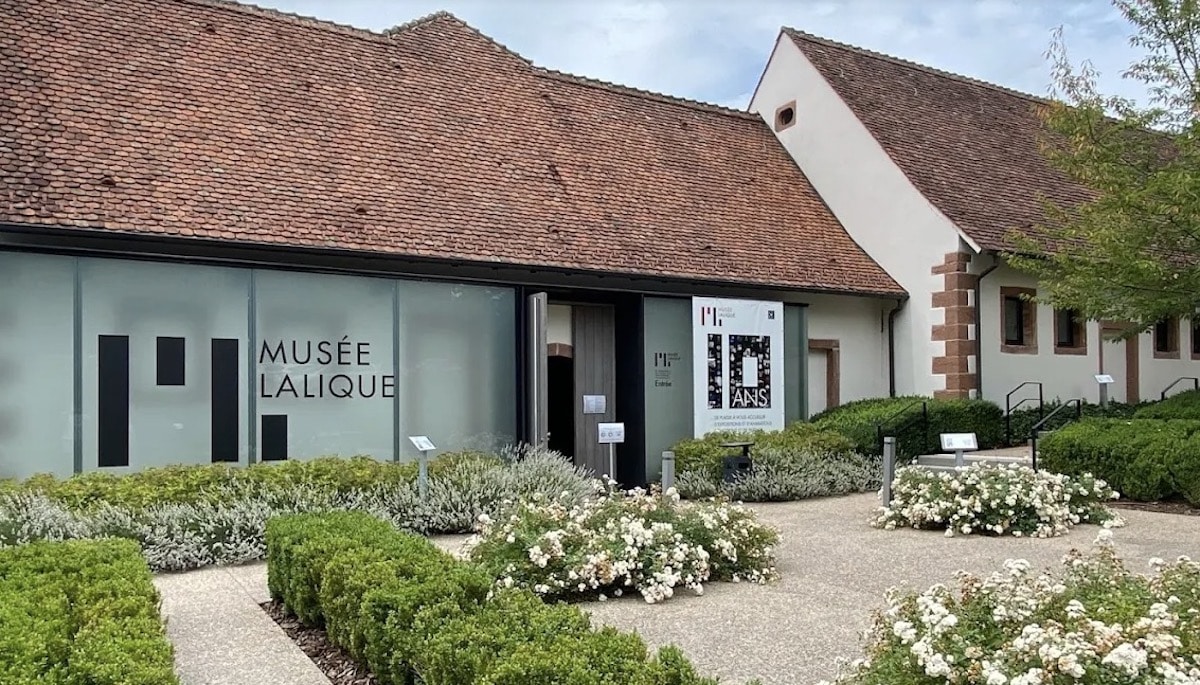
Burglars have broken into the Lalique Museum in Wingen-sur-Moder in northeastern France in the early hours of Sunday morning, forcing a door, entering the jewellery room, and smashing open six display cases. Around twenty pieces were taken. The loss is still being assessed but is estimated at close to 4 million euros, according to a source close to the investigation.
The raid took place at around 5.30 in the morning. An alarm was activated, but by the time the security company completed its checks, a cleaning employee had arrived first and called the police. The mayor of Wingen-sur-Moder, Christian Dorschner, was not restrained in his assessment of the security company’s response. The alarms had all functioned correctly, he told the local paper Les Dernières Nouvelles d’Alsace. The failure occurred afterwards, when the company neither intervened immediately nor notified the gendarmerie. “They were surely well-informed to carry out this job in that way,” he said. “They must be specialists.”
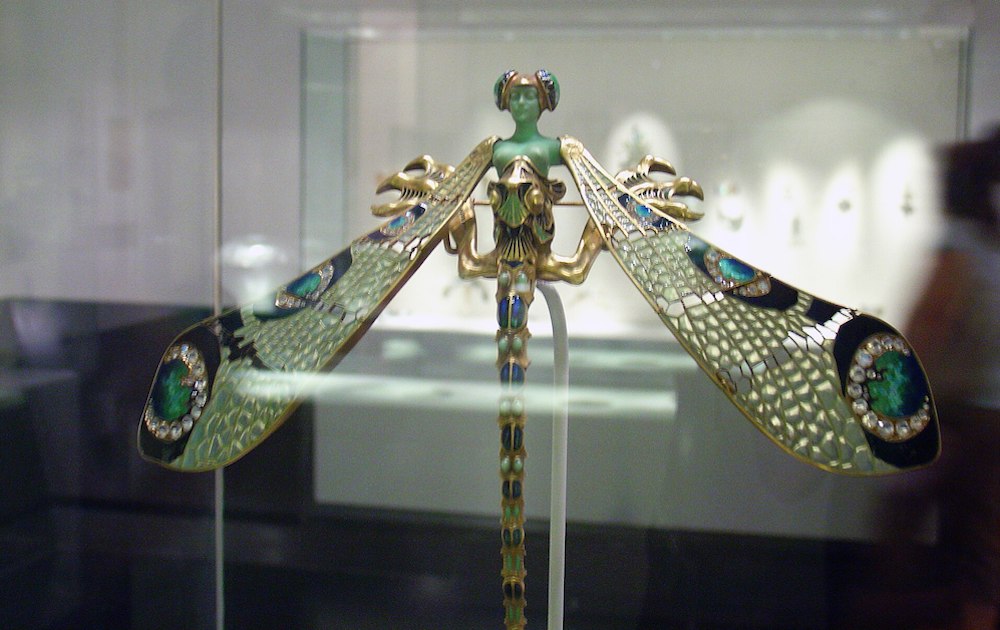
This is a fine example of René Lalique’s ‘plique-à-jour’ craftsmanship similar to items stolen in the raid
The stolen pieces are described as crystal jewellery without precious stones, meaning they cannot be melted down, a detail that complicates their disposal and may assist investigators. CCTV footage is currently being examined. The museum has closed for several days.
The theft comes months after the October raid at the Louvre in Paris, in which thieves made off with around $102 million worth of jewellery, including pieces from the old French crown jewels, in a raid lasting less than eight minutes. That attack had already put museum security across France under scrutiny, and the Lalique museum had apparently been identified as a sensitive site requiring particular attention in its aftermath. That attention did not prevent Sunday’s raid.
The museum in Wingen-sur-Moder opened in 2011, close to the Lalique company’s factory, in a town of around 1,500 inhabitants, about 60 kilometres northwest of Strasbourg. It holds more than 650 works, including Art Nouveau jewellery, Art Deco glass and contemporary crystal.
René Lalique, whose work the museum exists to celebrate, was born in Aÿ in 1860. He trained as a jeweller under Louis Aucoc in Paris before studying at the Collège Turgot and the Crystal Palace School of Art in London. By 1885, he had his own workshop and was working as a freelance designer for Cartier, Boucheron, and others. What distinguished him early was his willingness to use materials other jewellers undervalued: horn, enamel, and carved glass, placed alongside diamonds and opals, with organic forms drawn from flora, fauna, and the female figure. Sarah Bernhardt wore his work, and the 1900 Paris Universal Exposition made him internationally famous.
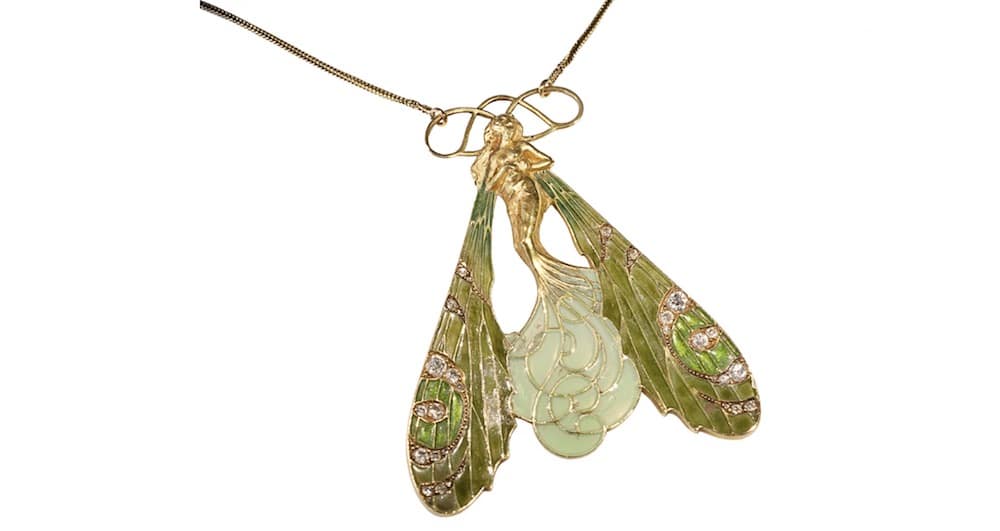
Plique-à-jour Art Nouveau pendant by Renè Lalique
Around 1905, he began a collaboration with the perfumer François Coty that decisively shifted his practice toward glass and mass production, including the perfume bottles that became defining objects of early twentieth-century luxury. After the First World War, he moved into the geometric aesthetic of Art Deco, opened his factory at Wingen-sur-Moder and developed new techniques for frosted and clear glass. He went on to design hood ornaments, architectural installations and lighting, including the interior glassworks for the Côte d’Azur Pullman Express and the grand dining rooms of the ocean liner SS Normandie. Before he died in 1945, he had created more than 1,500 designs. The company continues today as a crystal house, and his historic pieces remain among the most sought-after objects in the decorative arts market.
What was taken on Sunday morning represents a small fraction of what the museum holds, but the works are irreplaceable. The manner of their taking, swift, apparently well-planned, and executed before anyone with the authority to intervene had been notified, raises questions that the museum and the security company involved will be answering for some time.