New York’s new pied-à-terre tax has drawn some of the art world’s most prominent figures into an unexpected public spotlight after the city’s Department of Finance published property rolls containing nearly a million records, including owners’ names, addresses, and city-assigned valuations.
Governor Kathy Hochul proposed the tax initiative to support Mayor Zohran Mamdani’s drive to close the city’s budget gap by imposing a surcharge on wealthy owners of New York properties that are not their primary residences. The Mayor went into battle armed with stats.
According to Mark Levine, NYC’s comptroller (a senior financial executive), the pied-à-terre tax on second homes will raise about $500m annually from about 11,200 properties. The surcharge is aimed at people who own a property in the city but declare their primary residence outside the Big Apple. It targets homes valued at over $5 million. When the DOF released its two massive property rolls on 24 July, the data exposed the identities, or in many cases the shell companies, behind scores of high-value properties across the city. The department was careful to stress that inclusion on the list does not automatically mean a property will be taxed. Still, the publication prompted immediate privacy concerns and a scramble among owners to establish that their properties qualify as primary residences.
ArtNet reports that, among those listed by name, are mega-dealer David Zwirner, whose East Village home carries a city-assigned value of $10.6 million; Pace Gallery’s Arne and Marc Glimcher; artist Julian Schnabel; art advisor Allan Schwartzman; and collector Mitchell Rales. A spokesperson for Zwirner confirmed that he is a New York City resident and that the property is his primary address.
Schwartzman said the inclusion of his Flatiron apartment, valued by the city at $1.42 million, came as a surprise. “This is news to me,” he said, declining to comment further. He did offer a broader view on the principle behind the tax, saying it made sense to target out-of-towners who maintain New York apartments without contributing to the city’s tax base. “We’re paying for their safety, their security, their water, their police, their fire,” he said.
Others appear in the records through limited liability companies rather than their own names. Larry Gagosian’s mansion on East 75th Street is held by an entity called Sugar Shack LLC and carries a city-assigned value of $63.3 million. Billionaire collectors Steve Cohen and Leon Black, as well as Len Blavatnik, can be linked to properties through corporate vehicles. Representatives for Cohen and Black declined to comment.
The financial stakes are considerable for some. Cohen, whose primary residence is in Greenwich, Connecticut, acquired properties in the West Village in 2012 through a company called Greenwich Heights Corporation. The city values the completed property at $69.8 million. If it does not qualify for an exemption, a 1.3 per cent surcharge could generate nearly $910,000 annually for the city. Rales, the founder of Glenstone, the private museum in Potomac, Maryland, owns a Central Park South apartment valued at $2.67 million. A 4 per cent surcharge on that property, if no exemption applies, would amount to roughly $107,000 per year.
The surcharge applies in Phase 1 to one- to three-family homes valued at $5 million or more and to condos and co-ops valued at $1 million or more, with rates ranging from 0.8 to 6.5 per cent depending on the property type and value. Owners of family homes and condominiums have until 21 August to apply for an exemption, cooperative apartment owners until 24 August. Formal bills are expected to go out in November.
Mamdani, who announced that notices had been sent to affected owners, said the tax delivered on a promise he had made on Tax Day earlier this year. “I promised that we would tax the rich, and with our new pied-à-terre tax, that is exactly what we have done,” he said.
Real estate attorney Benjamin Williams of Rosenberg and Estis, who specialises in New York property tax assessments, offered some perspective on the sense of alarm the publication appeared to cause. He noted that the city has been publishing similar rolls since at least 2009 and that the names have effectively been in the public domain for two decades. “It’s nothing new,” he said. He estimated that only 15,000 to 20,000 property owners actually received notices from the DOF to verify their residency status, a fraction of the nearly one million records in the published rolls.
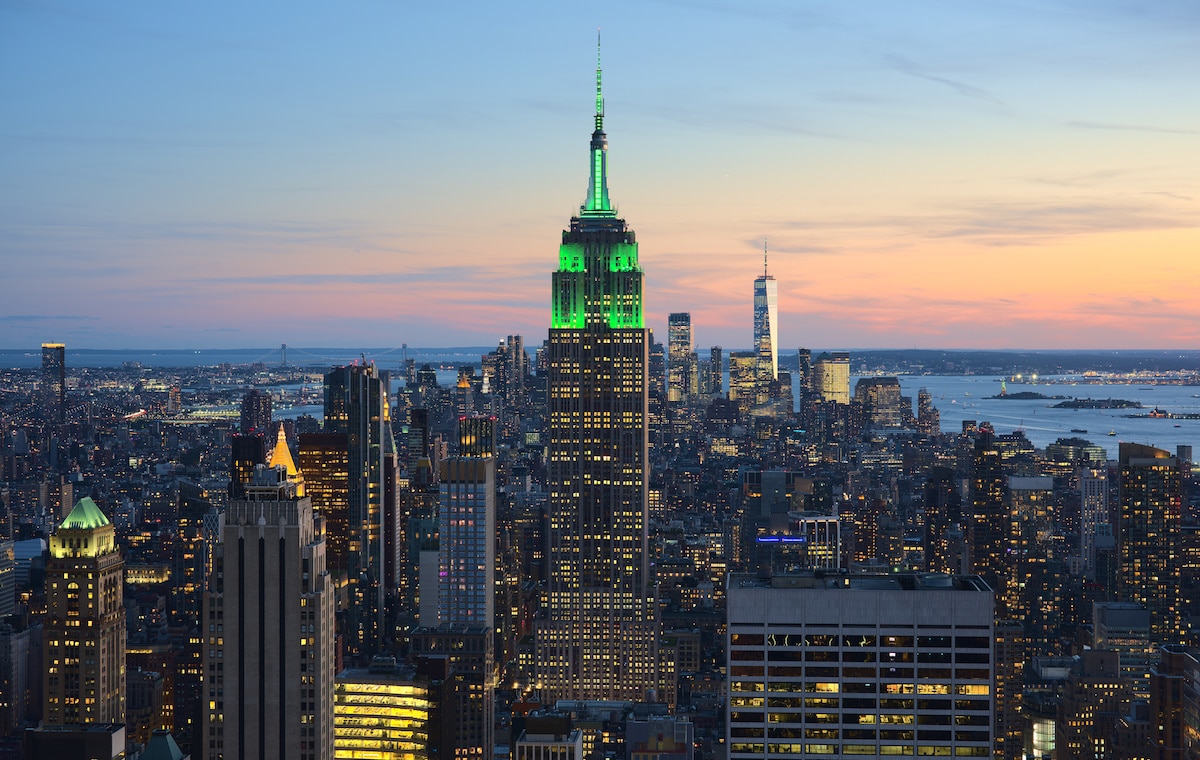
Top Photo: Wikimedia Commons by dllu