Everyone loves a cushion, don’t they? To prop you up when you’re reading, or breastfeeding a baby, to rest a swollen ankle or place worn feet upon, to have pillow fights against today’s sworn enemies, to build nests and encampments when you’ve made up your differences aged six. To snuggle up and watch the telly…
But when did they become part of interior design to match curtains and covers? Surprisingly, it was the 17th Century with embroidering and tasselling; in fact, pillows have been around since the Middle Ages, but it was the Victorians who saw them as ornamental. In the 1930’s, the Duchess of Windsor had embroidered ones that read – “You can never be too thin or too rich.” How very tasteless, Modom! (Oh Do Keep Calm and Carry on) But then have the Royal Family ever been known as arbiters of taste? But when did cushions replace art hanging on walls, as they appear to have done now? Scatterings of fine art upon sofas and beds in an absurd display of mix-and-match art styles, Constables, Haywain next to a Botticelli cupid available from every national gallery and in homes from Penzance to Loch Lomond. What does it say about art when it becomes ‘Homeware’? Isn’t that Martha Stewart’s territory; is that why she was imprisoned? Crimes against decor.
There is a difference in making a cushion as a repro of a Renaissance masterpiece, to an abstract embroidered piece of art as Sophie Tauber-Arp first did in 1916 in Zurich(now reproduced by Tate) or Sonia Delaunay in Paris, and the German Bauhaus movement when architecture and everything in the home becomes art, people included. The Arts and Crafts movement did it in Pre-Raphaelite fashion in England, with William Morris, from wallpaper to furniture (you can have a nice day out @theredhouse, in Bexleyheath @NationalTrust), to what is being sold online and in gallery shops, where edited versions of paintings become cushion covers. A bit of a Monet or Klimt, or the latest in Frida Kahlo, can elevate every living room into a place of culture, or can it? Will a £150 scatter cushion with an abstracted Picasso lady really prove you have a hundred quid more class than any £24.99 Van Gogh on the sofa? And what would Vincent, Pablo or Frida have made of it all?
This explosion of merchandising didn’t begin with Tate Modern or the new extension of the National Gallery; it’s been going on since 1911, over a hundred years, when they began selling postcards. But it is Tate that has made the shops in its galleries as much a part of the museum experience as the galleries themselves. In its latest huge Frida show, The Making of an Icon, it proves how powerfully the art world can detract from an artist’s work by retaining her image as the thing that sells rather than her actual work. Frida was no Marilyn Monroe. Frida invented her own image, the iconography of herself in traditional Oaxacan Zapotec women’s costume, adopting her mother’s ancestry; her father was German, and they were a modern, mixed-heritage, middle-class family living in Mexico City. The equivalent of me dressing in traditional Welsh costume (because my mother was Welsh) and painting all my self-portraits in costume- would that be Hysterical Cultural Appropriation? Frida’s hunger for success and fame is well documented and equal to the tragedy of her bus accident and the suffering of her tumultuous love affairs, all made real in her paintings, which made them so emotionally impactful. More political than Diego Rivera (her husband’s murals that plastered the cities of Mexico and America), by not showing external prettiness but her mashed and bloodied internal scars, as in Memory or The Love Embrace or Constructing a Life(none of these is in the show).
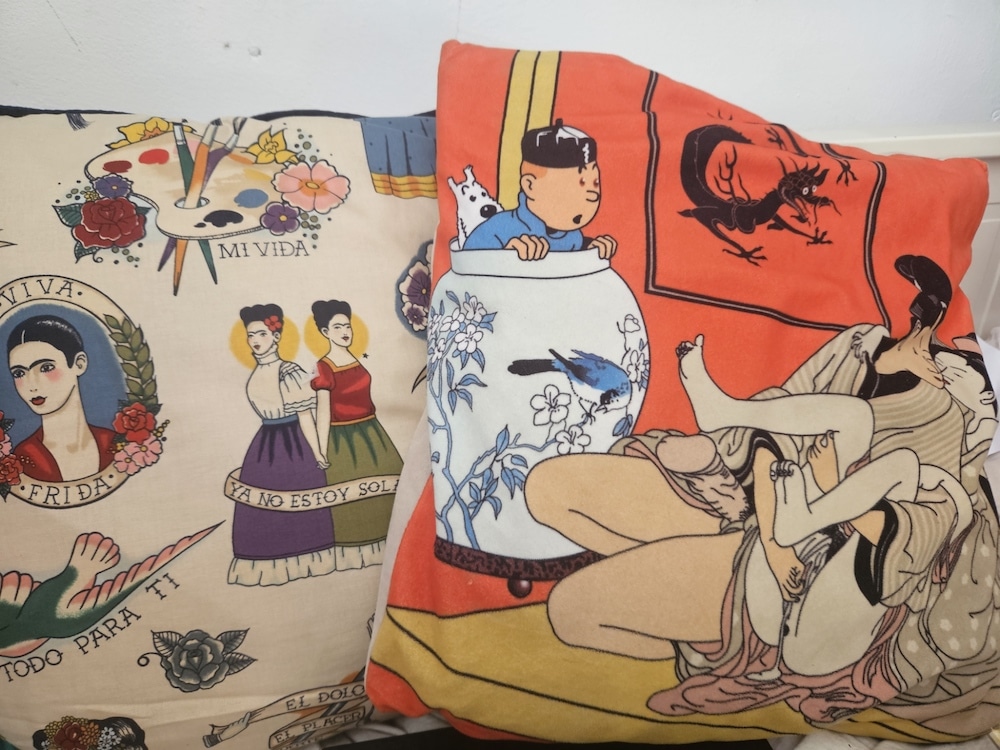
@Nick.x.Reynolds Tintin cushion or fake Frida, what is art?
The shock tactics that these paintings first had on me when I saw them at The Whitechapel Gallery in 1982 have been literally reduced by being shrunken and put on cushions, fridge magnets, hand mirrors, coasters, and, in the final indignity, to make my feet colourful in socks! As Saint Frida, a monobrowed image with flowers in her hair (as in the Tracey Emin photographic reenactment by Mary McCartney), we lose her as an artist, and as her paintings are photographed and put onto objects, they lose their power as paintings; they remain simply an image drained of the energy of the original passionate art, some coloured soft furnishings. The essence of reproduction is its loss of originality. As with Whistler, also on at the Tate (Britain), what is the point of a T-shirt or cushion of Nocturne: blue and silver-Chelsea. Better – Stand and absorb the painting, which is masterful and magical in its use of colour and light; feel its energy. It is not a graphic image, so it cannot work as a reproduction. Whistler, himself a wonderfully colourful character who loved self-promotion, I think, would have been appalled, along with Turner, by this turn of events. I think Frida, as a Surrealist, would have loved this amazing Kahlo-lisation of a major London gallery, out through the city and streets, and into homes. A little bit of Frida, scattered like fairy dust cushions, everywhere. But I think she would have wanted her gory paintings rather than a redraw of her self-image as a textile.
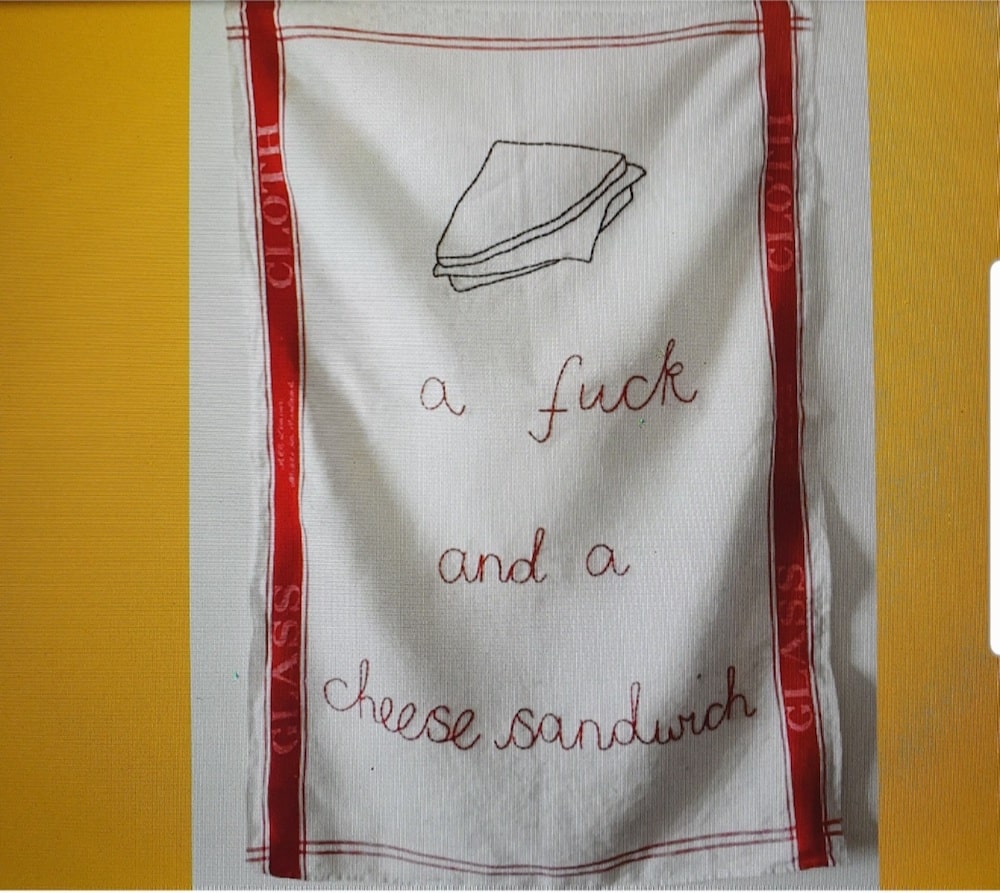
A fuck and a cheese sandwich by @juliamaddison
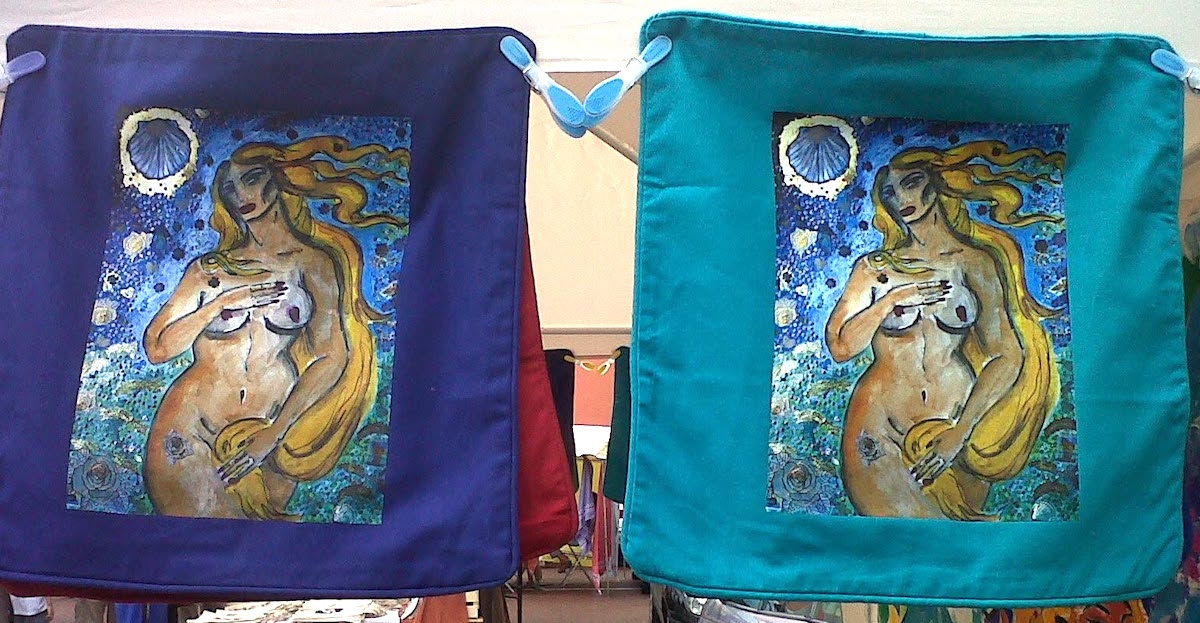
Now that everyone via technology can design their own cushion covers, putting pictures of their babies’ birth, or naked boyfriends’ body parts upon them (why keep them in a photo album something to do with Dick pics?), why have a museum piece? Why not create it yourself or buy from a living artist who does it for you? @WilmaJohnson one of The Neo Naturists took to controlling her own means of production with replicating her powerful Venus collage photographed by her, as an iron on transfer onto cushion covers, and selling them @Artcarbootfair (next one on Sept 5th), As art has a way of doing, collectors’ began putting them in frames and hanging them on the wall, just as they did with @JuliaMaddison hand embroidered tea-towels, not meant for drying up but for proclaiming – A Fuck and a cheese sandwich(the sandwich is embroidered the rest left to your imagination). As well as her 2017 embroidered ‘cunty’ pants in homage to Muriel Belcher, in Colony Room green, a surreal juxtaposition as they sit in frames, not on bottoms. Whilst Bella Freud’s tastefully small Hello Cunty t-shirt, made in 2021, I haven’t seen it framed.
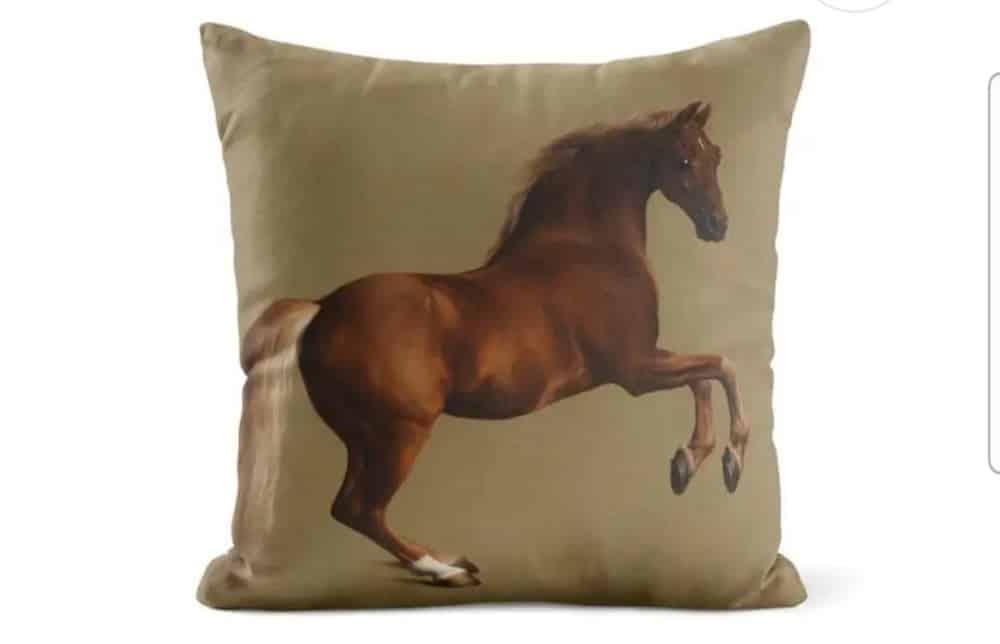
Whistlejacket by George Stubbs @NationalGallery £35, but would you put it next to Veronese or Van Gogh’s Sunflowers?
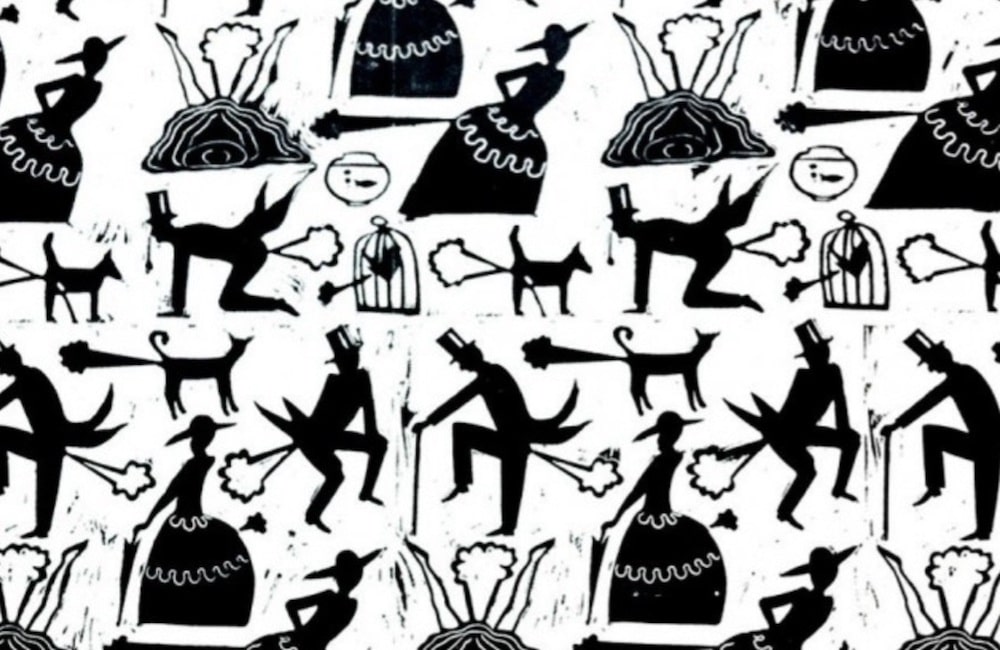
If art is about anything, it is about reimagining the world in a different context, your personal eye view, and saying – This Is Art. If Marcel Duchamp can say it about the German Dada artist Baroness Elsa von Freytag-Loringhoven’s pissoir fountain, why can’t we? I’m not saying art on cushions or interiors is a bad thing; there are plenty of artists now inventing original wallpapers (TimnaWoollardstudios.com, TomMaryniak.com), as opposed to having Van Gogh’s Farm near Auver dominating your rustic dining room; you could have Victorians Farting as seen in the loos of Literary Club, The Academy! As well as elevating interior decoration (see @Tonmagazine), bringing art into your club, office or home shows your inventiveness should be fun and a trust in your own taste for creation outside of beige. I fully intend to iron on transfers of my paintings onto baby grows and have babies instead of cushions crawling all over the sofa for my next At Home with Sophie Soirees! Have fun, go wild; see it as Kitsch, not tasteful, funny not serious. To have The National Gallery and Tate in competition, with George Stubbs’ Whistlejacket rearing off your armchairs majestically, then go one better and put another in a frame and hang it on the wall too.
Top Image Wilma Johnson @GalleryWilma cushion covers of Birth of Venus @Art_Car_Boot_Fair