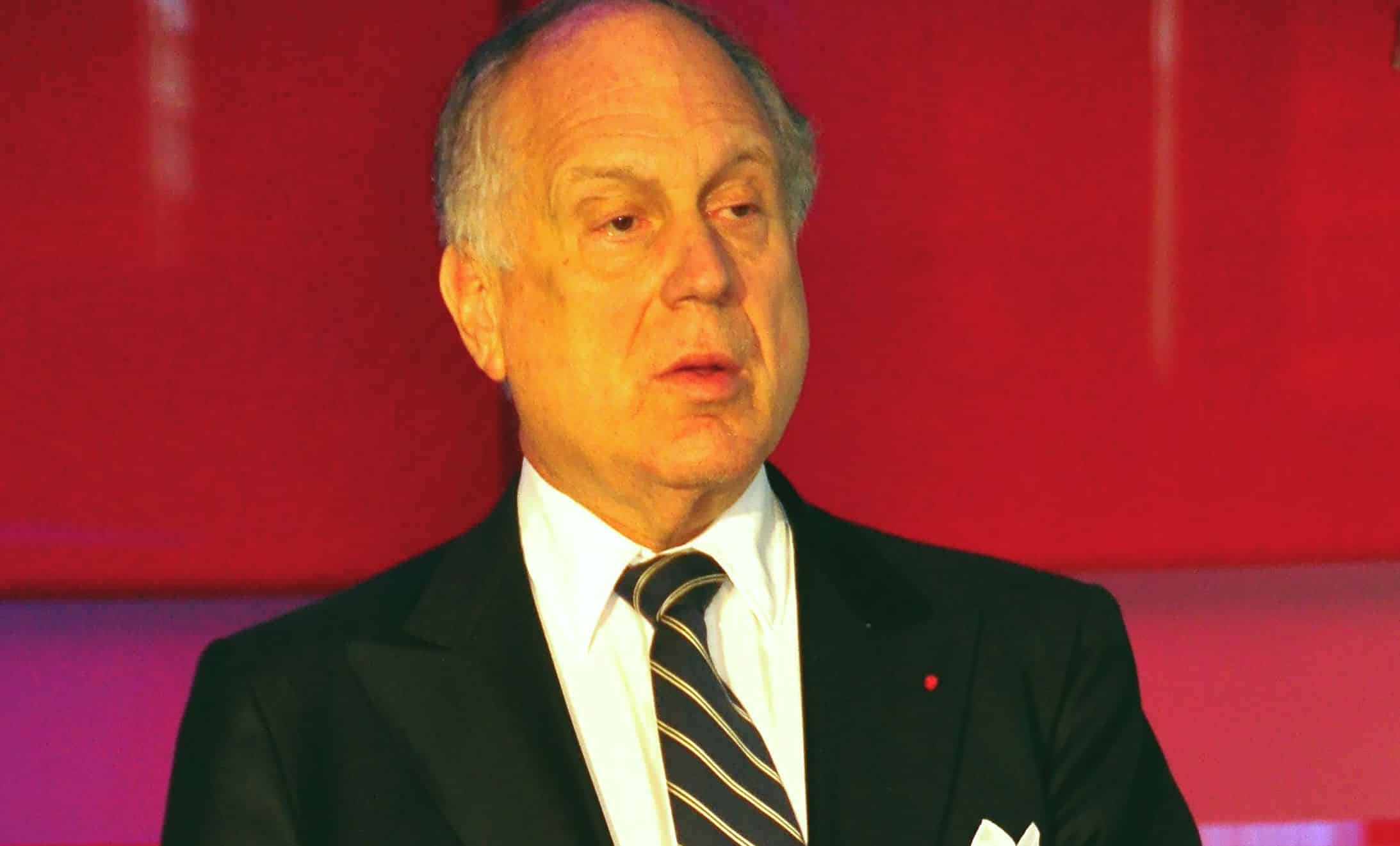
Ronald S. Lauder, the billionaire cosmetics heir, art collector and philanthropist whose political gifts supported New York Republican politics for decades, has allegedly closed his campaign chequebook, raising significant questions about the future of conservative funding in his home state and prompting closer scrutiny of the financial pressures surrounding one of America’s most prominent cultural patrons.
Campaign finance records reviewed by the New York Times show that Lauder, who is 82, has not made a single political donation to Republicans in New York this year. The super PAC he maintained for years to support Republican candidates and causes has gone quiet. Behind the scenes, he has dismissed a substantial team of advisers, advertising consultants and political staff, some of whom had worked for him since his own short-lived mayoral campaign in 1989.
His motivation is not entirely straightforward. Three associates told the Times that Lauder had confided in them that his adult children had encouraged him to reduce his spending across politics, art and philanthropy, and that he had reluctantly acknowledged he could no longer sustain the levels of expenditure he once did. The context for that acknowledgement is not hard to find. The Estée Lauder Company, the family business from which his wealth derives, has seen its stock fall approximately 77 per cent from its peak at the end of 2021, wiping at least $1.2 billion from the value of Lauder’s personal stake.
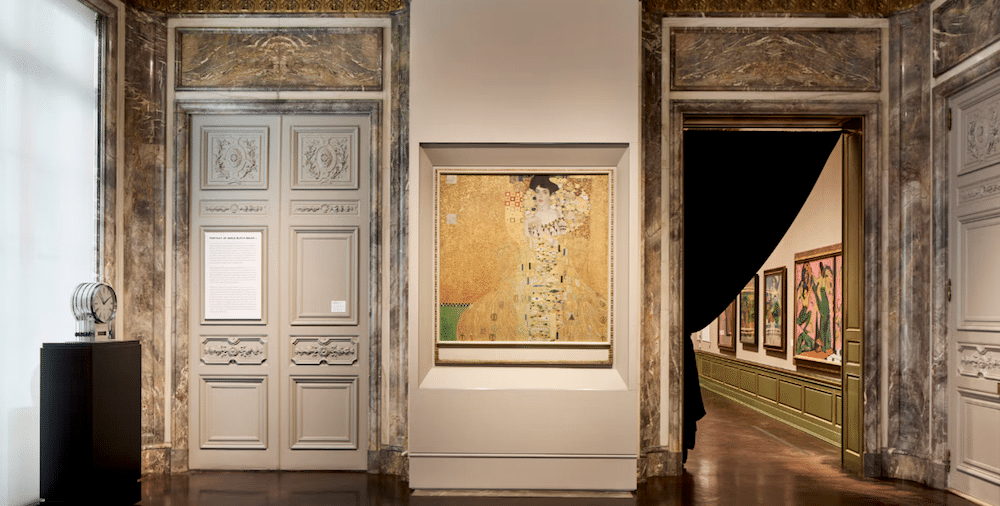
Installation view of the Klimt Gallery at Neue Galerie New York. Photo: Annie Schlechter Courtesy Neue Galerie
A person close to the family states there was no suggestion of financial difficulty, insisting instead that the retrenchment was a deliberate decision by Lauder and his children to simplify the scope of his activities as he entered the final chapter of his life, concentrating instead on the art and philanthropic projects most likely to secure his legacy. In his own written statement, Lauder gave nothing away, affirming his continued commitment to democratic principles and to New York without addressing any of the specific questions put to him about his finances or decision-making.
Gerard Kassar, chairman of the New York Conservative Party, said a former adviser to Lauder had told him that the billionaire had decided to scale back his political involvement at this stage of his life. Asked whether another donor could fill Lauder’s role in New York politics, Kassar was unequivocal: “The simple answer is no.”
The scale of what Lauder has contributed to Republican causes over the years makes that assessment credible. Public records show he spent more than $40 million on state and federal races over the past decade alone. He bankrolled the successful campaign for term limits in New York City in the 1990s, helped fund legal action to overturn a gerrymandered congressional map, and as recently as four years ago put close to $13 million into races that helped Republicans flip control of the House. Last year he gave $5 million to MAGA Inc., a super PAC linked to Donald Trump, and a further $1 million to oppose Zohran Mamdani’s New York mayoral campaign.
The political withdrawal is not the only significant shift in Lauder’s affairs. Several of his recent moves look consistent with the kind of estate planning typical of someone of his age and wealth. Still, they have also had the effect of reducing his financial obligations considerably.
The most high-profile was the announcement in May that his Neue Galerie, the Upper East Side museum he founded to showcase the art and culture of pre-war Austria and Germany, would merge with the Metropolitan Museum of Art. Both institutions presented the merger as a means of preserving the Neue Galerie’s legacy beyond Lauder’s lifetime, and it will indeed do that. But it will also relieve him of the millions he contributes annually toward the museum’s operating costs. The Neue Galerie houses some of the most significant works in his collection, including the Gustav Klimt portrait of Adele Bloch-Bauer I, which Lauder purchased in 2006 for $135 million, at the time the highest price ever paid for a painting at auction.
He has also recently sold a Philip Johnson-designed Manhattan townhouse for $20 million in an off-market transaction in late 2023, sold 30 acres of land in the Hamptons to a preservation fund for $56 million in late 2024, and placed his collection of World War II fighter aircraft on the market.
His financial arrangements with the Estée Lauder Company have attracted attention. Securities filings disclose that he has pledged nearly all of his remaining shares in the family business as collateral against loans, a common practice among the asset-rich but one that carries significant risk when share prices have been so volatile. The stock, which peaked at around $370 in late 2021, was trading at approximately $85 recently.
The contrast with his older brother Leonard, who died last year, was often noted within the family. Leonard, who spent his career leading the company, once told an admirer who had confused the two brothers: “I’m the one who makes the money. He’s the one who spends the money.”
It is not known whether Lauder’s withdrawal from political life is permanent or temporary. What is not in doubt is that the combination of a sharply reduced share price at Este Lauder, a restructured personal office operating under new financial controls, and a family consensus to focus on legacy rather than the here and now represents a meaningful shift for one of New York’s most consequential private patrons of art and culture.
Top Photo: Michael Thaidigsmann Creative Commons Attribution-Share Alike 4.0