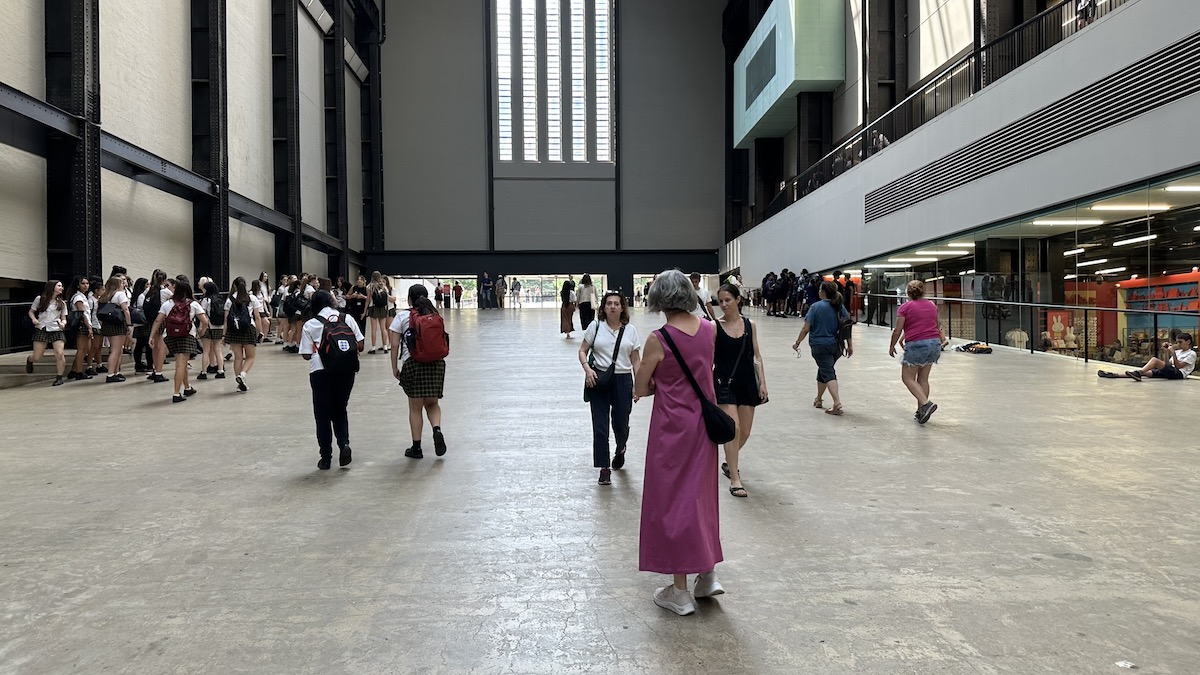
The government has confirmed that entry to Britain’s fifteen national museums will remain free for everyone, with no charges introduced for international visitors either, a decision cultural leaders across the country have welcomed with what can only be described as genuine relief.
Culture Secretary Lisa Nandy announced at an event hosted by Art Fund and The Cultural Policy Unit at Tate Liverpool, a fitting location given that the gallery is itself preparing to reopen next year, free to all, following a major transformation. The timing carries extra weight this year too, since universal free entry to the national museums, first introduced on 1 December 2001, turns twenty-five later this year, a policy that has quietly become one of the more enduring achievements of the last Labour government, upheld consistently by every administration since.
The numbers behind that endurance are fairly striking. Visits to the fifteen national museums have climbed 96 per cent since the policy began, rising from 22.77 million in 1999 to 2000 up to 44.67 million in the most recent year on record. Six of the ten most-visited attractions tracked by the Association of Leading Visitor Attractions in 2025 were national museums, a position that free museums have held consistently since 2004. International tourism data tells a similarly strong story. In 2024, 11.82 million inbound trips to Britain included a museum or gallery visit, accounting for just over 30 per cent of all overseas visits, with those travellers spending £12.66 billion across their stays, among those holidaying in London specifically, nearly 58 per cent made time for a museum.
Far from undermining the museums financially, free entry appears to have had the opposite effect. High footfall, including 19.4 million overseas visits in 2024 and 2025 alone, has translated into high income from exhibitions, retail, catering and donations, with the fifteen national museums generating £563 million in self-earned revenue that year, according to figures from the National Audit Office.
Nandy stated the decision in fairly emotive terms, describing museums as places that light up the world and remind people of shared history, arguing that they should remain free forever, for everyone. Jenny Waldman, director of Art Fund, made a similar point more plainly, noting that the collections belong to everyone and that keeping entry free ensures nobody is turned away at the door.
Museum directors themselves were quick to add their voices. Nicholas Cullinan at the British Museum pointed back to the institution’s founding in 1753 as the world’s first public national museum, created specifically to be free for what its founders called all persons, a principle he said hundreds of millions of visitors have benefited from since. Sir Gabriele Finaldi at the National Gallery called free entry one of the UK’s greatest cultural assets, while Sir Tristram Hunt at the V&A described it as a critical part of what makes Britain a cultural superpower.
Laura Pye at National Museums Liverpool welcomed the continuity it offers for drawing visitors into the city, and Karin Hindsbo, interim director at Tate, spoke of the policy as a source of international envy, one that helps foster genuine understanding of art and culture across the country. Victoria Siddall at the National Portrait Gallery reflected on twenty-five years of opening up art and history to millions, calling it both a source of inspiration and national pride.
Artists weighed in too. Dame Bridget Riley called the decision wonderful news, describing the simple value of being able to drop into a museum to refresh the mind as something that cannot be overestimated. Dame Rachel Whiteread struck a slightly more urgent note, arguing that access to great art matters now more than ever given current political instability and the growing presence of artificial intelligence in daily life, calling the government’s decision a welcome continuation of an important tradition.
Bernard Donoghue, chief executive of ALVA, summed up the broader sentiment fairly directly, describing the original 2001 policy as inspirational and calling its continuation a gift not just to the people of Britain but to visitors from around the world. With the anniversary approaching later this year, the announcement effectively locks in another chapter of a policy that has, by almost every measure available, done exactly what it set out to do a quarter century ago.
Top Photo: © Artlyst 2026