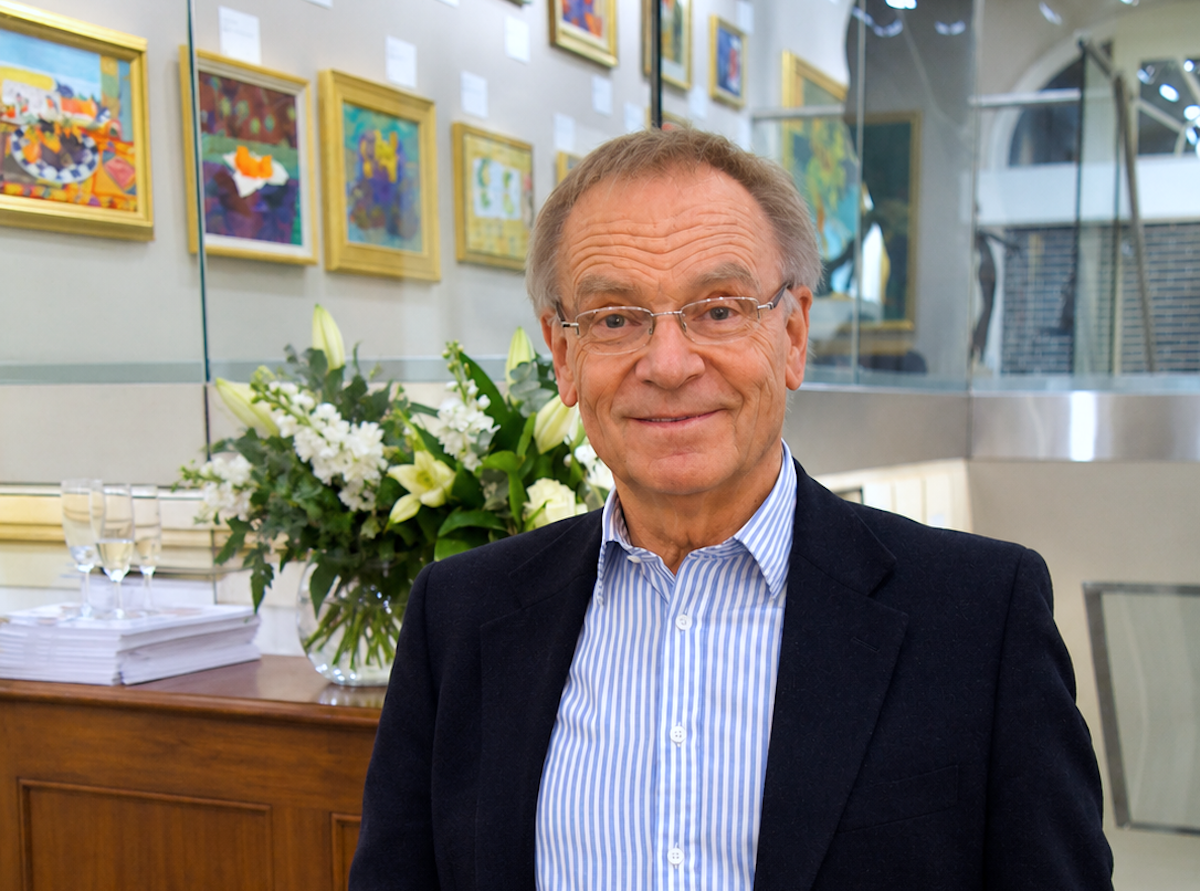
Jeffrey Archer died peacefully at home on 5 October at the age of 86. Most people will remember him as the bestselling novelist and disgraced Conservative deputy chairman. A smaller group will remember that, for a few years in the late 1990s, he owned one of the largest private collections of Andy Warhol anywhere, and that he made no secret of why.
He began buying art some twenty years earlier, mostly post-impressionist drawings, before he became outgoing about it. His first Warhol came in 1991. Then the buying turned systematic. Over roughly seven years he employed researchers, five of them at one stage, to comb collections from California to Australia. By the time he went public, the tally was in the region of at its peak; Archer’s holding famously comprised around 42 oils/acrylics and over 320 to 340 prints, though the sources disagree on how it was divided between canvases and prints. Ten Marilyns, ten Maos, ten Campbell’s soups, three Lenins, four Reagans, plus Jagger and Mickey Mouse. Estimates ran to about £20m/ £25m.
Hardly anyone knew. Visitors to his penthouse above the Thames saw Warhols hanging beside Monet, Lowry and Picasso, but nobody guessed at the scale. When Sotheby’s sold ‘Orange Marilyn’ in New York for £10.6m, well over what anyone expected, Archer took it as his cue. He said he had always collected for commercial reasons and the works were for sale. Asked whether he needed the money, he replied that he was down to his last £100m. It was a joke, mostly.
The sale was staged at a gallery on Bruton Street, with 65 pieces on view at a time. Among them was a black-on-black Marilyn valued at £60,000, at the time. Alongside ran an exhibition of 83 signed Hockney prints from the artist’s own stock, made between 1952 and 1996 and priced from £500 to £16,000. Hockney rarely showed in London then, and that pairing did as much for attendance as the Warhols.
What he kept back says more about him. The green Diana, a portrait of Princess Diana from 1982, he had tracked down through the Warhol Foundation after hearing it existed. A portrait of Prince Charles turned up too, along with three drawings, two of Diana and one of Charles, which established the provenance. “Diana is not for sale,” he said, and for a good while it wasn’t. Postcards of the image were sold for the Red Cross landmine campaign.
Over the following decades, the rest drifted away. Christie’s held The Jeffrey Archer Sale: Decades of Collecting on 28 June 2011, with a Cow, a Marilyn and Flowers among the lots. The collection shrank, but he went on rearranging what remained, and it was still on his walls at the end. A Hockney self-portrait is said to have been among the pieces he held on to.
The Diana portrait did finally go under the hammer. It sold at Phillips in London on 7 March 2024 for £2,407,500, including fees, against an estimate of £1.2m to £1.8m, and set a record for a Warhol depiction of the Princess. The Charles followed in October that year at £1,016,000, close to expectation. Phillips described the pair as the singular directness of Warhol’s late Pop portraits, and that is fair enough.
Archer was never a connoisseur in the scholarly sense, and he didn’t pretend to be. He was a seller’s buyer with a good eye for the market and an instinct for staging. Warhol would likely have approved.
Top Photo: P C Robinson © Artlyst 2026