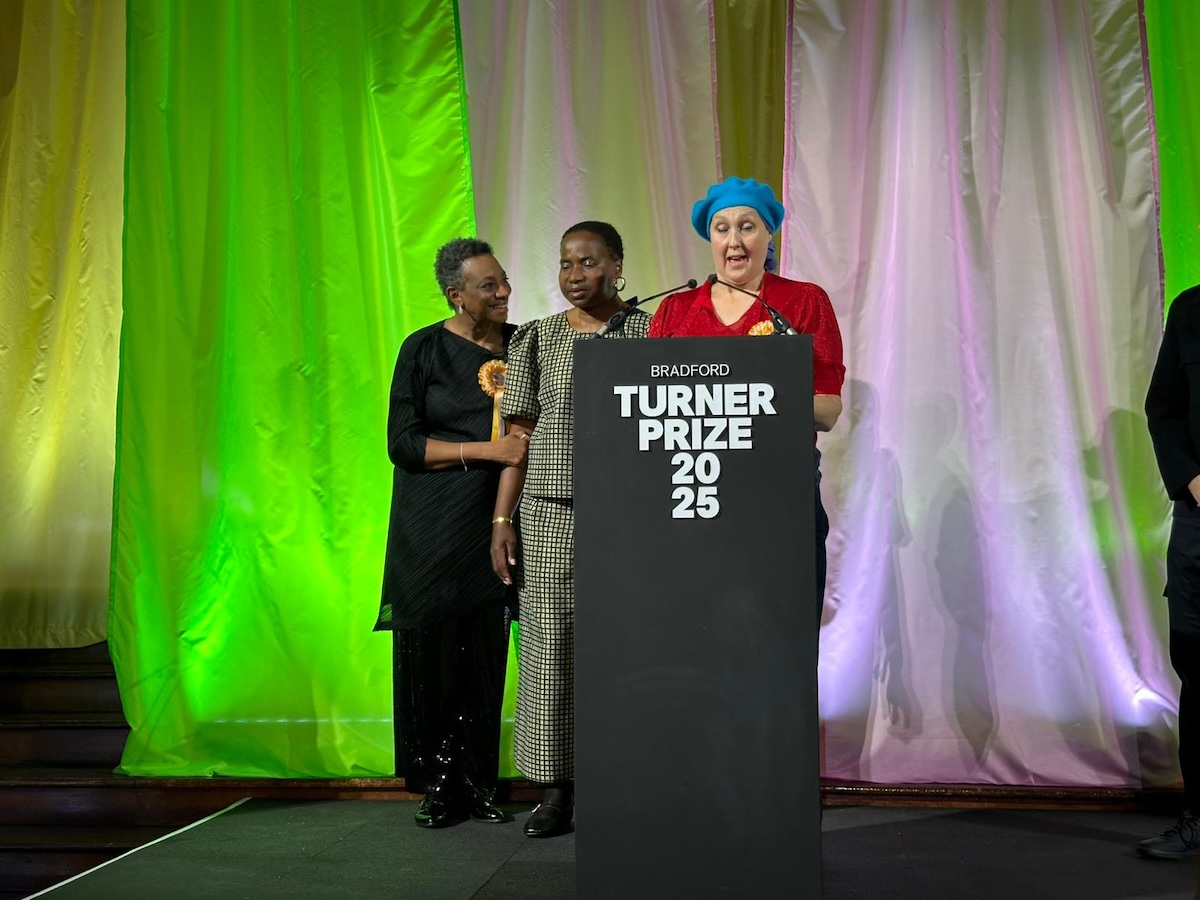
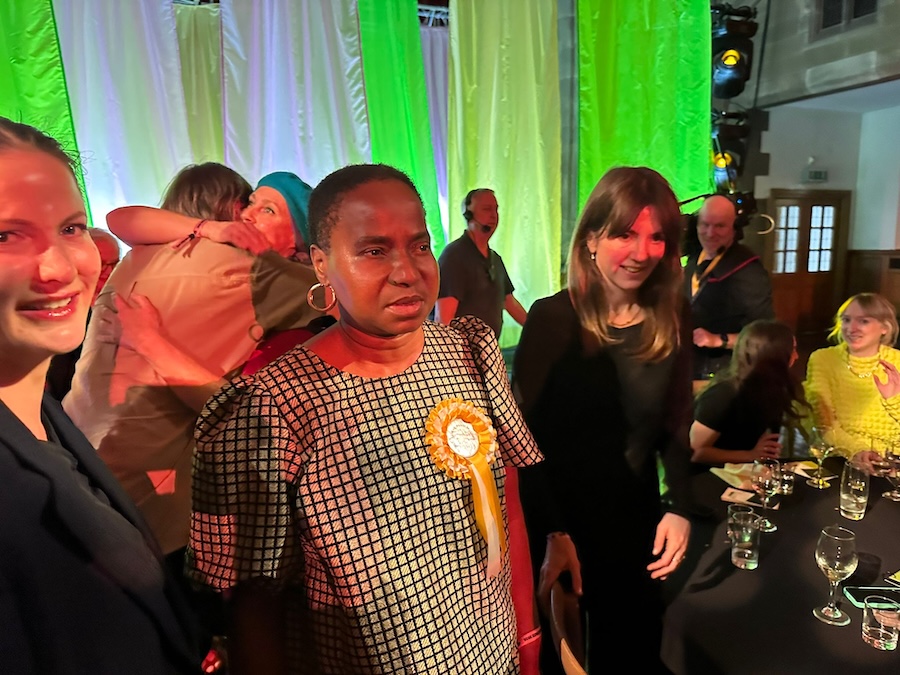
Nnena Kalu has won the coveted Turner Prize 2025 in Bradford, the current UK city of culture. According to this year’s Demos–PwC Good Growth for Cities Index, Bradford has been handed the unenviable title of the UK’s second-worst place to live — only Walsall fares worse. You do wonder whether the researchers hit “publish” before glancing at the cultural calendar. Bradford isn’t exactly hiding under a grey cloud right now: it’s the UK City of Culture, and Cartwright Hall — that handsome Victorian pile — is hosting the Turner Prize 2025. Hardly the profile of a city sinking without a trace.
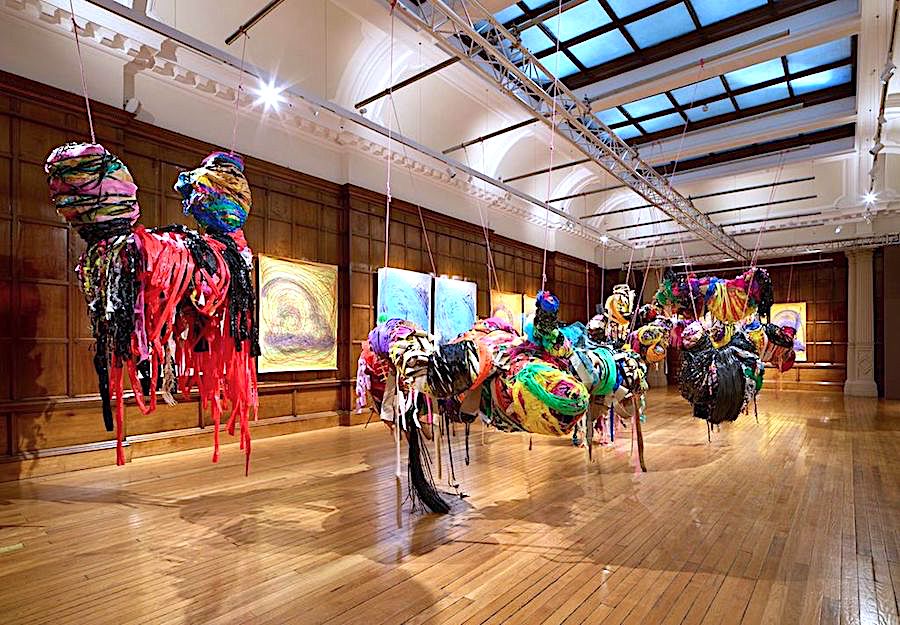
Nnena Kalu. Courtesy of the Artist and ActionSpace.
It raises the old question that has trailed the Turner Prize ever since it began its regional roadshow. Gateshead in 2011, Derry-Londonderry in 2013, Margate in 2019, Liverpool as far back as 2002 — each chosen with the belief that contemporary art can spark revival, nudge civic pride, and coax new audiences into the fold. But does it actually work? And more to the point, are the artists on offer likely to speak to anyone beyond the well-worn triangle of curators, gallerists and art-school alums?
In the early years, the Turner Prize thrived on a joyous uproar. The shortlist could start a bar fight. Winners went from notoriety to the kind of commercial ascent reserved for a very small, very lucky few. It even provoked the Stuckist protest in 2000 — a ragged but spirited attempt to mock both the prize and the Tate for abandoning painting in favour of video loops, installations, and whatever else was making trustees twitch that season.
The prize itself, founded in 1984 by the Patrons of New Art under Tate Director Alan Bowness, was meant to encourage the public to engage with contemporary art. For a long stretch — 1991 to 2017 — it was strictly under-50s only, the idea being to catch artists mid-flight rather than after they’d settled into canon. Big names passed through: Chris Ofili, Anish Kapoor, Damien Hirst, with every Daily Mail reader asking the perennial question, “But is this art?”
And here we are again, decades later, asking whether the thing still has any bite. The judging panel is now a rotating cast of freelance curators, festival directors, and institutional heads — knowledgeable, yes, but operating within an ecosystem that increasingly rewards optics over risk. There’s a sense that boxes are being dutifully ticked: identities, disciplines, geographies. Respectable enough, though you won’t find a Morandi quietism or a Matisse line anywhere near it. Even Duchamp’s urinal and Manzoni’s tins of excreta feel like provocations from a bolder era.
So, what is the Turner Prize for now? Inclusivity? Cultural signalling? Or showcasing the best British art currently has to give? At the moment, it seems suspended between missions, and that hesitation shows.
Bradford may deserve more credit than a gloomy report card suggests. Whether the Turner Prize helps shift that story, or passes through with polite applause, is another matter.
Nnena Kalu works in a language of texture and affirmation. She binds, wraps, coils and fastens materials—paper, tape, fabric, cellophane—into vivid, suspended forms that feel half-cocoon, half-beehive. The drawings alongside are stormy, swirling, almost musical in their repetition. Critics love the physicality, the pace, the boldness of touch. Adrian Searle (Guardian) has already all but engraved her name on the trophy. There’s no question her nomination is culturally significant—a rare Turner moment for the Turner’s first non-verbal artist whose practice is highly personal and vulnerable. Kalu asserts presence. But intimacy can be a gamble in a competition that often rewards spectacle.
Which brings us to Mohammed Sami, the painter repeatedly slated as this year’s possible favourite. His large, haunted canvases—empty rooms, empty chairs, patterns that hold their breath—are soaked in the aftershock of war and exile. It’s all done with striking painterly control. Critics from The Times and The Telegraph have practically crowned him already. Sami is the “quality” contender, the one whose work presumably appeals to the jury’s institutional backbone: morally serious, visually resonant, formally accomplished. If Turner juries were machines, Sami would win. But Turner juries are human, prone to surprises.
And then there is Zadie Xa, whose installations don’t so much occupy a room as summon one out of thin air. Her world is woven from Korean folklore, tidal rhythms, soundwork, textiles, painting, sculpture—yes, it sounds like too much, and sometimes it is. A few critics called the piece overwrought. But even they conceded the ambition, the theatricality, the strange oceanic pull of it. Xa builds worlds, and Turner juries have a soft spot for artists who create environments rather than objects. Her presentation in Bradford feels like the show’s most cohesive whole: immersive, seductive, ritualistic. You walk into it and feel rearranged, just slightly, by colour and sound.
Rene Matić, by contrast, gives us the interior life of Britain through photographs, objects, and a soundscape that hums like a half-remembered memory. Their installation is emotional but controlled, personal but quietly political: heritage, queerness, grief, joy, tenderness; everything held together with the kind of sincerity that younger critics tend to call “urgent.” It’s the most socially resonant project of the shortlist, but also the one reviewers describe as fragmented. Some love the vulnerability, others want more thunder. Turner juries can occasionally be sentimental; more often, they’re drawn to the total artwork, the one that fills a room with an argument.
Steven Frayne, formerly known as Dynamo, presented the award to a packed room.
This year’s judges were Alex Farquharson, Director of Tate Britain (Chair), Andrew Bonacina, Independent Curator, Sam Lackey, Director of Liverpool Biennial, Priyesh Mistry, Associate Curator of Modern and Contemporary Projects at The National Gallery and Habda Rashid, Senior Curator of Modern and Contemporary Art at the Fitzwilliam Museum.