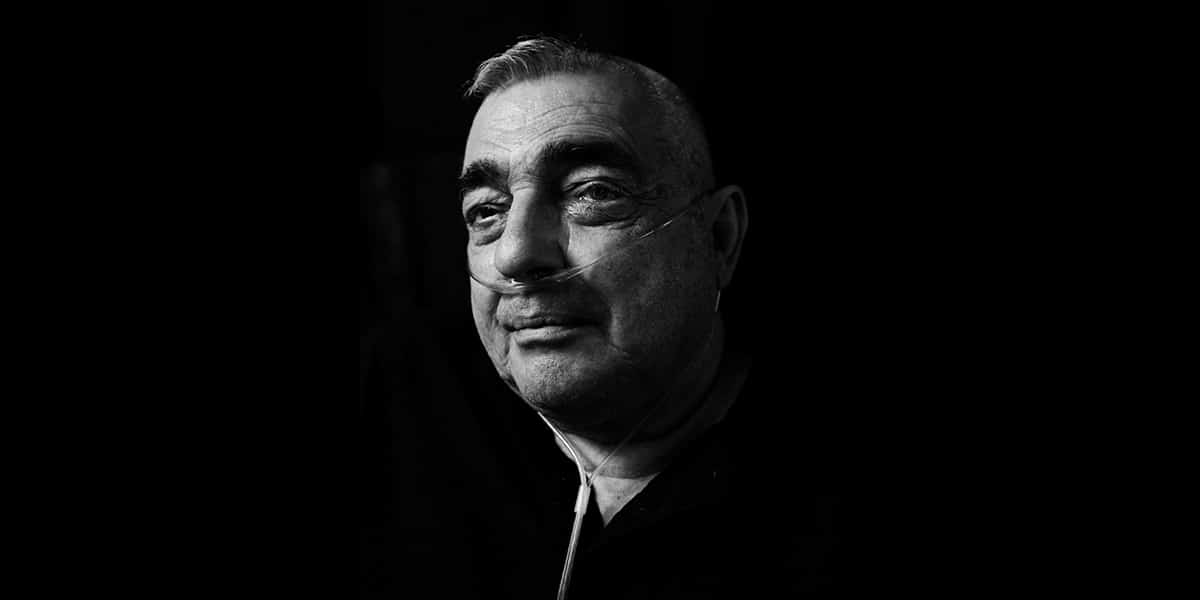
Ally Van Tillo, who founded the UK AIDS Memorial Quilt after being moved by the American NAMES Project across the Atlantic, has died. Formerly known as Alastair Hume, Van Tillo spent years coordinating the creation of quilt panels stitched by grieving families, friends and partners across Britain during the darkest stretch of the AIDS crisis, building something that would eventually stand as one of the country’s most significant pieces of community art.
The project gave people a way to grieve publicly at a time when public grief for AIDS deaths was rarely permitted. Stigma and discrimination often meant that those who died were mourned quietly, if at all, their cause of death left unspoken even among relatives. By gathering hundreds of individually sewn panels into a single collective work, the Quilt turned private sorrow into something shared, part memorial and part protest, refusing to let the epidemic’s victims disappear into silence.
Van Tillo carried the Quilt to venues across the UK throughout the early 1990s, building toward its first full display in Hyde Park in 1994, an event that placed names and personal histories directly in front of a public largely fed fear rather than facts about HIV and AIDS. Where much of the surrounding discourse reduced people living with the virus to statistics or cautionary tales, the Quilt insisted on the opposite, restoring individual identity to a crisis that had stripped so many of theirs.
Colleagues who worked alongside him describe someone notably uninterested in claiming credit for what he built. Van Tillo consistently treated the Quilt as belonging not to him but to the hundreds of panel makers, families and volunteers who had poured their grief into its construction. Siobhán Lanigan, who chairs the UK AIDS Memorial Quilt Partnership, reflected on that legacy following news of his death. “Ally’s vision and dedication gave the UK a way to remember people the country had too often chosen to forget,” she said, adding that the Partnership’s ongoing work remains rooted in what he started, and that a considerable debt is owed both to him and to the many volunteers who stitched the Quilt into existence alongside him.
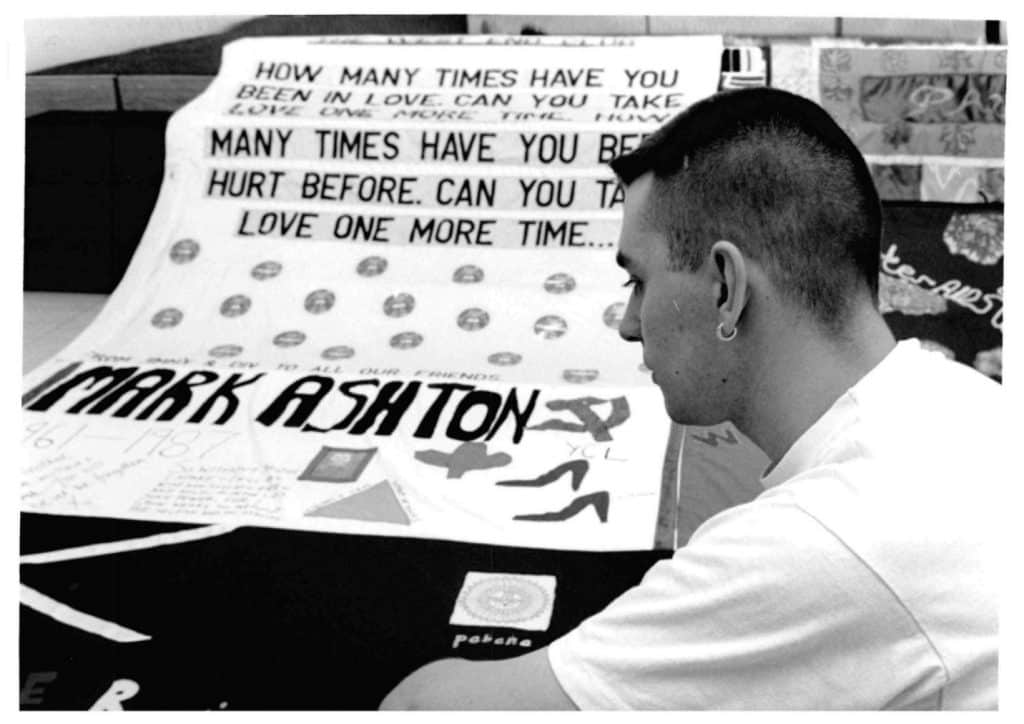
Ally Van Tillo with the UK AIDS Memorial Quilt. Photo courtesy of Waverley Care
Today the UK AIDS Memorial Quilt commemorates more than 600 people who died from HIV and AIDS. It comprises 335 individual panels, each measuring three feet by six feet, a deliberate choice of dimensions to echo a standard grave plot, later joined together into larger twelve-foot blocks suitable for public exhibition. Every single panel was made by someone with a direct connection to the person it represents, whether a partner, a parent, a sibling or a close friend, meaning the Quilt functions less as an abstract artwork and more as an accumulation of thousands of intimate, specific acts of remembrance.
That distinction mattered enormously given the era in which the project began. Many people who died from AIDS in the 1980s and early 1990s were buried quietly, sometimes without their families acknowledging the true cause of death, a silence enforced by shame and social pressure rather than choice. Against that backdrop, the act of stitching a name, a face, a favourite object or a phrase onto fabric and displaying it publicly amounted to a direct challenge to the stigma surrounding the disease. The Quilt did not ask permission to exist. It simply insisted that these were people who had lived full lives, with passions and friendships and families, and that their absence deserved to be marked rather than hidden.
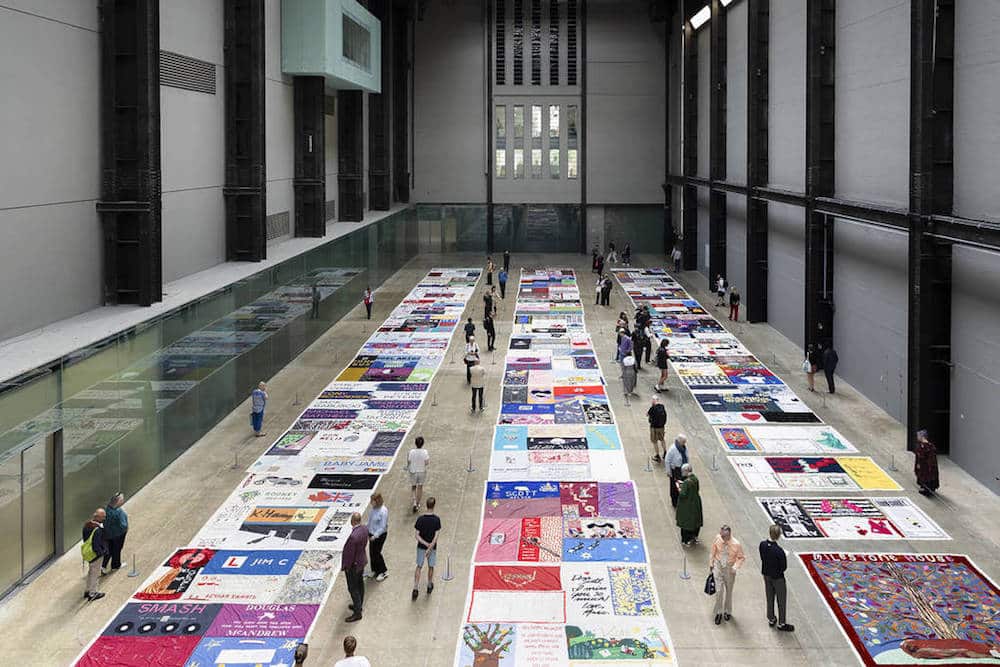
Ally Van Tillo AIDS Quilt © Tate (Photo: Kathleen Arundell)
Van Tillo’s influence will be especially visible this month, as the complete Quilt travels to Scotland for the first time in its history, going on display at Tramway in Glasgow. The location carries particular resonance, since Van Tillo first began assembling the UK Quilt in Edinburgh in the late 1980s, effectively bringing the project full circle to the country of its origin. Organisers have said the accompanying public programme will now double as a tribute to Van Tillo himself, offering a space where former collaborators, panel makers and anyone whose life was touched by the project can gather to remember both him and the people the Quilt commemorates.
The UK Quilt forms part of a much greater international effort that began in the United States in 1985, when activist Cleve Jones launched the original NAMES Project as a response to the mounting toll of the epidemic in San Francisco. That American initiative remains the largest community art project in the world, and it directly inspired Van Tillo to bring the same model to Britain, adapting it to the specific texture of the UK’s own epidemic and its own culture of silence around AIDS deaths.
Since 2014, responsibility for conserving and exhibiting the Quilt has rested with seven UK HIV support charities, which together formed the UK AIDS Memorial Quilt Partnership specifically to ensure the collection would continue to be cared for and shown to new audiences. Under that stewardship, the Quilt has continued to function simultaneously as a memorial, a historical record, and an ongoing act of activism, a role that Van Tillo’s death is unlikely to diminish, given how firmly he embedded the belief that the work belonged to its community rather than to any single founder.
Top Photo: Portrait of Ally Van Tillo, 2025 By Joe Magowan