The Fair:
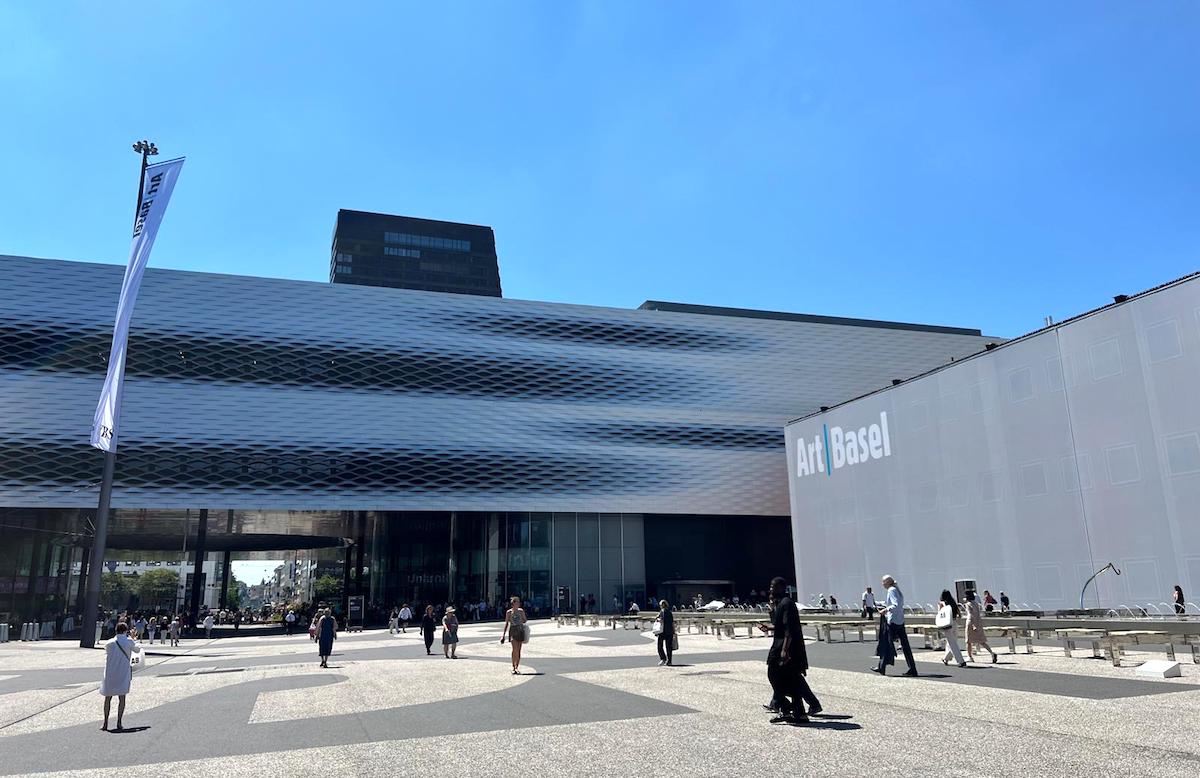
Art Basel closed its 2026 edition in Basel on 21 June, completing a run that began with Preview Days on 16 and 17 June and opened to the public through to the final days of the week. The edition was led by Director Maike Cruse and brought together 290 galleries from 43 countries and territories, with presentations spanning modern and postwar masterworks, historical rediscoveries, contemporary and emerging positions, large-scale installations and cross-media practices. Attendance reached 90,000 visitors across the week, drawn from 103 countries, with particularly strong European participation alongside collectors and arts professionals from the Americas, Asia, the Middle East and Africa.
Representatives from more than 270 museums and foundations attended, a year-on-year increase that underscored Basel’s role as a hub for the global institutional community.
Among the institutions represented were the Metropolitan Museum of Art, MoMA, the Whitney Museum of American Art, the Walker Art Centre, and the Guggenheim in New York; the Centre Pompidou, Tate Modern, the Rijksmuseum, Moderna Museet and the Louisiana Museum of Modern Art from Europe; and Zeitz MOCAA, Guggenheim Abu Dhabi, M+ and the Art Gallery of New South Wales from further afield. The breadth of institutional attendance has become one of the fair’s defining characteristics, and 2026 extended that pattern considerably.
Art Basel 2026 Photo Clayton Calvert © Artlyst
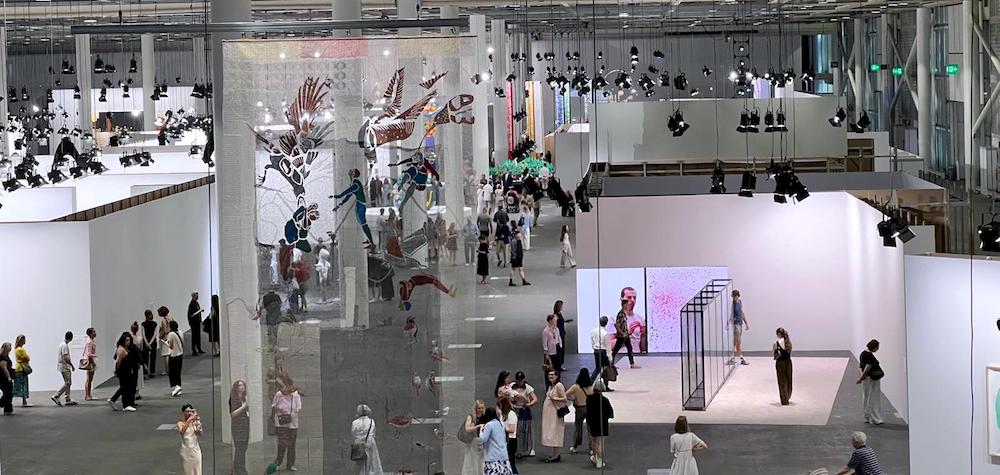
Several new and expanded initiatives shaped the edition’s identity. Basel Exclusive, introduced for 2026 and developed in close collaboration with participating galleries, reserved significant works for their public unveiling at the Preview opening, generating momentum from the first hours of the fair. More than 190 galleries from the main sector took part. Zero 10, Art Basel’s dedicated initiative for artists working with digital technologies, made its European debut in an expanded presentation co-curated by digital strategist Eli Scheinman and artist Trevor Paglen, its largest presentation to date. Unlimited, the sector for large-scale works that cannot be accommodated in standard booth presentations, was curated for the first time by Ruba Katrib, Director of Curatorial Affairs at MoMA PS1, and brought together 59 projects spanning installation, sculpture, performance, film and immersive environments.
The citywide programme extended the fair’s reach across Basel. Parcours, curated by Stefanie Hessler, Director of the Swiss Institute in New York, unfolded under the theme Conviviality across 21 site-specific installations, sculptures, interventions and performances in dialogue with the city’s civic and architectural spaces. Two major public commissions by the 2025 Art Basel Awards Gold Awardees debuted in the city: Nairy Baghramian’s Modèle vivant (S’empilant) on Messeplatz and Ibrahim Mahama’s immersive sculptural installation The God of Small Things on Münsterplatz, positioned on opposite sides of the Rhine and tracing a path between Basel’s historic centre and the fair itself. The Conversations programme, held in a new auditorium at the Eventhalle, attracted a record 3,600 attendees, with highlights including one-on-one dialogues with Art Basel Awards Medalists Arthur Jafa, Maria Magdalena Campos-Pons, Farah Al Qasimi, Diego Marcon and Precious Okoyomon, and a panel on gallery longevity moderated by Ben Luke with Márcia Fortes, Claes Nordenhake and Karen Jenkins-Johnson.
The second cycle of the Art Basel Awards, presented in partnership with BOSS, held its Medalist Ceremony at the historic Rathaus Basel on 18 June, honouring 33 Medalists across nine categories. The edition also introduced the Gallery Legacy Award, with the inaugural prize presented to Paula Cooper Gallery. As part of the award’s mentorship component, Paula Cooper Gallery nominated Chapter NY as a next-generation gallery to support, with Art Basel contributing a grant of up to USD 50,000 toward that gallery’s participation in 2027.
The public programme included Warehouse Artefacts, an immersive one-night event by Thomas Bangalter, Julian Charrière and Rampa, staged in Hall 1.1 as a deconstructed dance floor bringing together art, sound, political history and underground culture, produced by Nordstern Basel in cooperation with Art Basel and Fondation Beyeler.
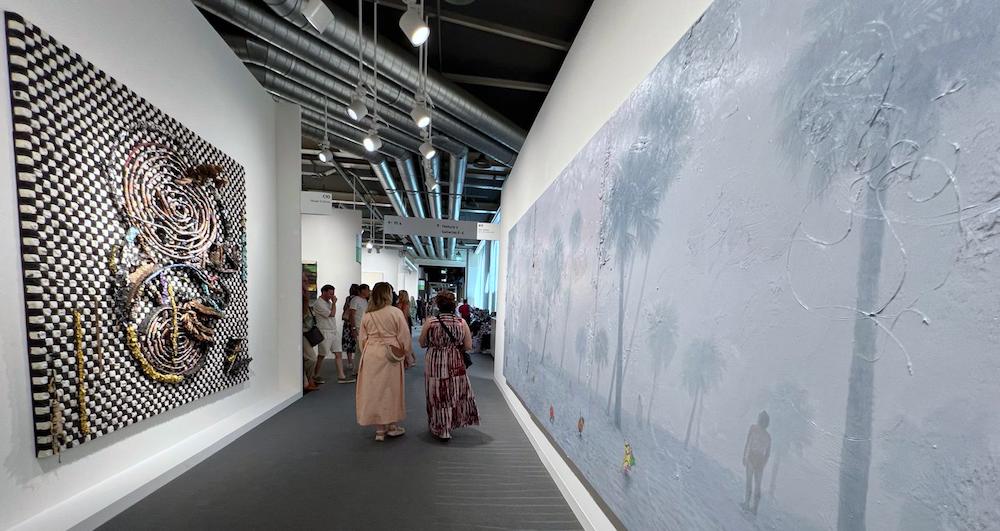
Art Basel 2026 Photo Clayton Calvert © Artlyst
What Sold
Sales were reported as strong across sectors, price points and market segments from the opening hours through to the final days. The top end of the market was active early. Hauser and Wirth reported three significant transactions: Pablo Picasso’s Le peintre et son modèle dans un paysage from 1963 sold at an asking price of USD 35 million; Gerhard Richter’s Abstraktes Bild (940-7) from 2015 went for USD 20 million; and Louise Bourgeois’ Les Fleurs from 2009 sold for USD 2.5 million. Within the first hour of the Preview, Gagosian sold Willem de Kooning’s No Title (1984) for a high seven-figure sum to a private collection in Asia.
David Hockney’s death earlier in June cast a particular light on works by the artist appearing at the fair. GRAY sold Studio Interior #2 from 2014 for USD 8.5 million. The Arrival of Spring in Woldgate, East Yorkshire, a 2011 work, sold for USD 650,000. Galerie Lelong and Co. reported the sale of a Hockney painting for EUR 1 million through the Basel Exclusive initiative.
Helen Frankenthaler was another artist whose presence at the fair was amplified by the institutional context, with a major retrospective of her work running concurrently at Kunstmuseum Basel. Thaddaeus Ropac sold Frankenthaler’s Sudden Wave from 1982 for around USD 3 million. Yares Art sold the Gliding Figure from 1961 for USD 2 million. Thaddaeus Ropac also sold Pierre Soulages’ Peinture, measuring 146 x 97 cm, from 31 janvier 1954, for around USD 3 million.
White Cube reported two notable sales: Lynne Drexler’s Untitled (1960) for USD 2.5 million, and Doris Salcedo’s Untitled (2008) for USD 1.35 million. White Cube also sold Tracey Emin’s Knowing My Enemy from 2002 for GBP 1.25 million, placed through the Unlimited sector. Niki de Saint Phalle’s Blue Obelisk from 1992 was also reported to have been sold through Galerie Georges Philippe and Nathalie Vallois, and placed with a private museum in France for more than EUR 1 million.
Through the Basel Exclusive initiative, Almine Rech sold a Pablo Picasso painting for USD 6-6.5 million. David Zwirner sold Elizabeth Peyton’s Transmission (E, rose) from 2026 for USD 1.2 million.
SprüthMagers sold a work by John Baldessari for USD 500,000.
In Unlimited, Isa Genzken’s Untitled from 2018, presented jointly by Galerie Buchholz, Hauser and Wirth and David Zwirner, was acquired by a European museum for EUR 1.2 million.
Zero 10, making its European debut, generated its own sales activity. John Gerrard’s STANDARD from 2022 sold through Fellowship for USD 500,000 to a significant private collection in the United States. Multiple works by Rafael Lozano-Hemmer, presented by bitforms and Max Estrella, found buyers, as did 12 works by the Hungarian computer art pioneer Vera Molnár, placed with collectors in Europe and the United States through Interface Gallery and Oniris Gallery.
Mary Lovelace O’Neal was among the artists whose work generated institutional interest, with an important 1990s painting sold to a European museum, a transaction cited by several dealers as characteristic of the edition’s energy.
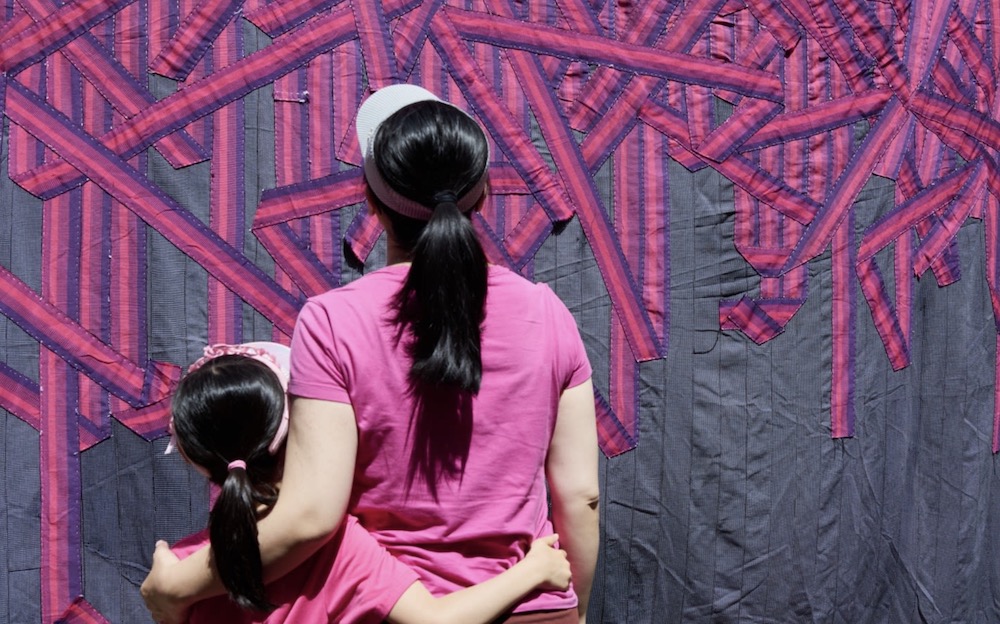
Ibrahim Mahama Photo Courtesy of Art Basel
What the Dealers Said
The consensus among galleries was that 2026 had been a strong edition, and the testimonials that emerged over the course of the week reflected a market that had arrived focused and remained engaged throughout.
Millicent Wilner, Managing Director of Gagosian, described the fair’s energy as brisk, noting strong engagement across the variety of important works the gallery was presenting. The characterisation of the fair as starting strong and staying strong was a recurring sentiment across dealer accounts.
Andreas Gegner, Senior Director of Sprüth Magers, was more emphatic. Art Basel remains the most important fair of the year, he said. You feel it the moment the doors open.
Xavier Hufkens, founder of the Brussels gallery bearing his name, pointed to the quality of collector engagement from opening hours as setting the tone for the entire week. Collectors arrived focused and ready, he said, and that determined everything that followed.
Marianne Boesky, founder of Boesky Gallery, described the edition as having one of the strongest energies she could remember, citing, in particular, the sale of Mary Lovelace O’Neal’s painting to a European museum as an example of the kind of institutional engagement that had characterised the fair.
Fabrizio Padovani, co-founder of the Bologna gallery P420, called the fair incredibly dynamic from the first hours, citing early sales and robust institutional interest in the gallery’s programme as evidence of an edition that performed well beyond expectations.
Aleya Hamza, Gallery Director of Gypsum Gallery in Cairo, spoke about the reception given to Hana El-Sagini’s large-scale installation as having generated the kind of response that tends to mark a turning point in an artist’s trajectory, a comment that resonated with several other dealers who noted the fair’s openness to work from galleries and artists outside the traditional Euro-American circuit.
Maike Cruse, Director of Art Basel in Basel, drew the week to a close with her summary assessment. From Unlimited and Parcours to the launch of Basel Exclusive and Zero 10’s European debut, she said, galleries presented exceptional works to a highly engaged international audience. The quality of the presentations, the conversations in the halls, and the energy felt throughout the city made this edition a powerful expression of what Basel does best.
The 2027 edition of Art Basel in Basel will take place from 17 to 20 June, with Preview Days on 15 and 16 June.