

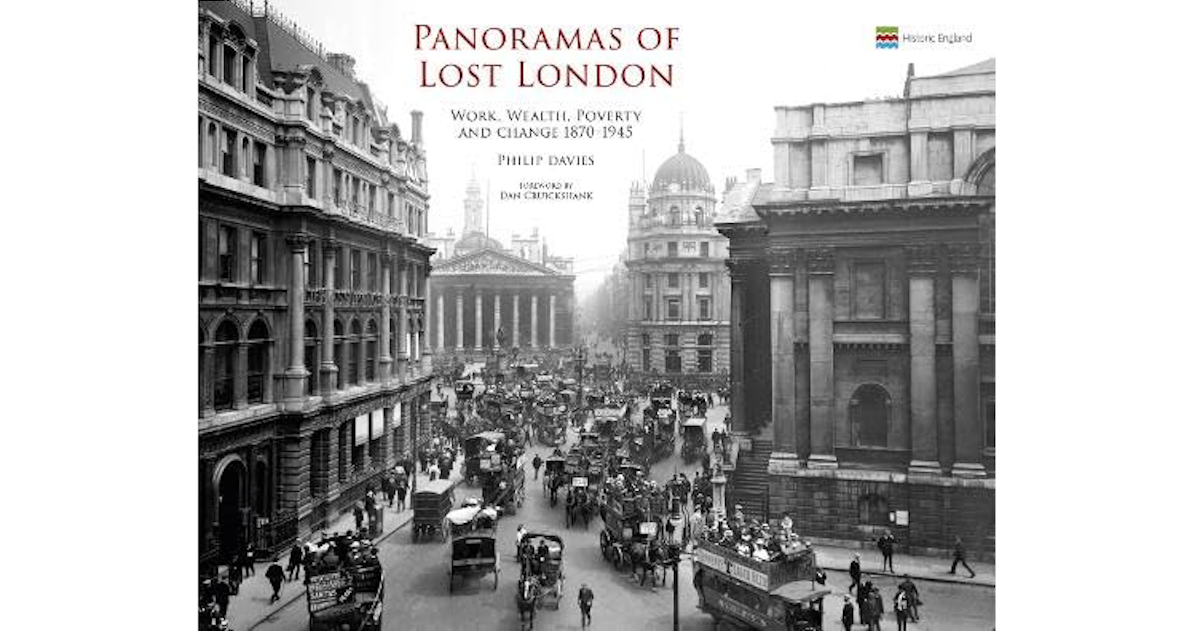
Every so often, a vintage photography book is published that doesn’t just document the past but seems to drag you bodily into it. Panoramas of Lost London is one of those rare beasts — a brick of a volume that could double as gym equipment, yet somehow feels nimble on the eyes. Victorian and Edwardian London has been pored over so often that you half-expect diminishing returns, but Philip Davies manages to sidestep the clichés. His images don’t merely show the old city; they breathe it out at you.
Part of the pleasure is sheer scale. The book is enormous — unapologetically so — and the photographs get the space they deserve. You don’t peer or squint or wish you’d brought a jeweller’s loupe. The detail is outrageous: faces in crowds, signage in shop windows, soot settling on brickwork. It teeters on the edge of time travel without tipping into the usual syrupy nostalgia. Davies, to his credit, isn’t trading sentimentality; he’s assembling a piece of social history that feels properly grounded.
What separates this from the conveyor belt of heritage tomes is the way it lets London’s messier edges speak. The unfamiliar corners are often more gripping than the grand landmarks, and that’s part of the charm — a reminder that the city’s character has always lived in the cracks as much as in the monuments. You come away with the sense that, yes, the place has changed beyond recognition, but so much of its restless energy was already there.
Davies is a man who knows his terrain. Decades spent buried in the planning battles and preservation dramas of London give him an instinctive feel for how places evolve and why they matter. His stewardship of sites from Trafalgar Square to Bletchley Park isn’t just résumé padding; it sharpens his eye for what’s at stake in the photographs. This isn’t a historian rummaging in the archives for curiosities — it’s someone who has spent a lifetime negotiating the city’s past and present and understands the weight of both.
There’s a companion volume, Lost London, and together they form a kind of visual archaeology for anyone who wants to understand the capital beyond the usual tourist trails. Libraries will love it, schools should have it, and ordinary readers — the ones who think they already know London inside out — will find themselves lingering far longer than expected.
Yes, the book is heavy. Comically so. It could flatten an unbraced coffee table and make your postman swear under his breath. But weight, in this case, feels like part of its argument: London’s history is not something flimsy or polite. It’s dense, unruly, layered — precisely what this book captures at full tilt. And for that, Davies deserves the praise he’s been getting. The price tag is almost suspiciously reasonable considering what’s inside.
Call it a tribute, a resurrection, or simply a joy to leaf through — Panoramas of Lost London earns its place on your bookshelf. – PCR
Read More
Visit