

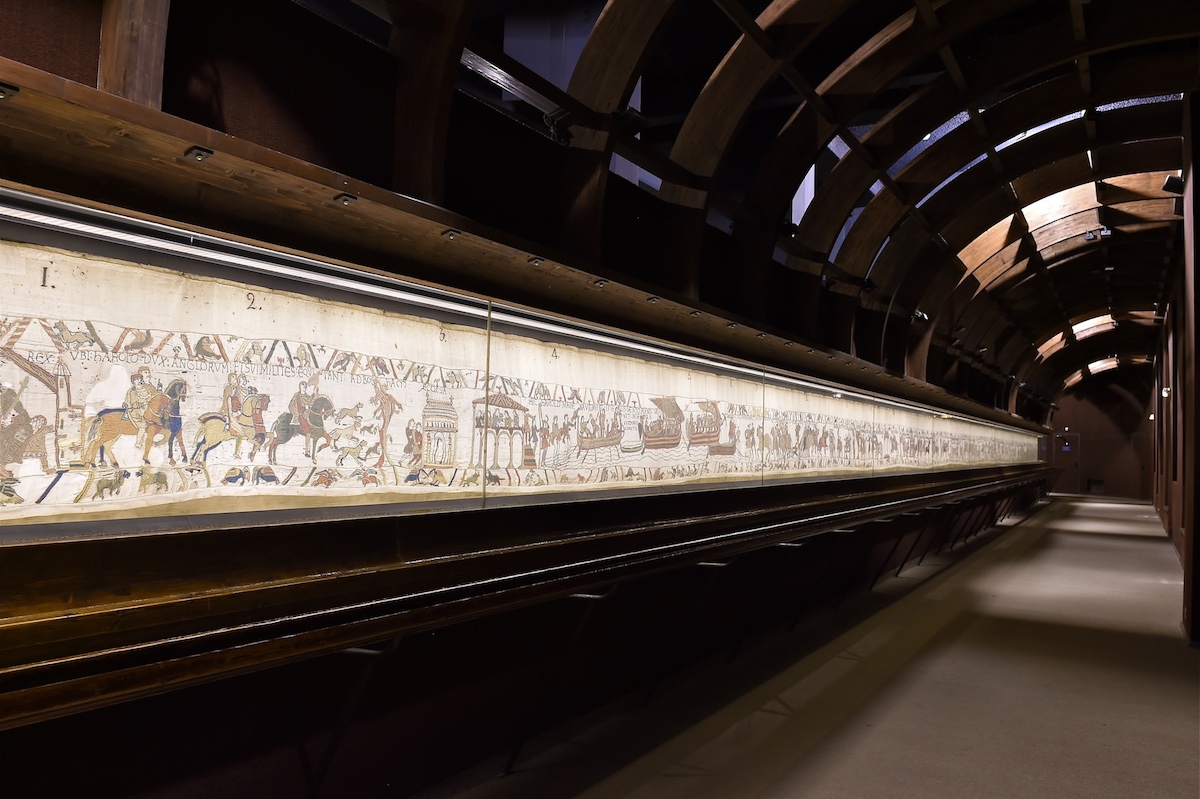
Belarus-born, US-based hedge fund billionaire Igor Tulchinsky has committed to sponsoring the British Museum’s display of the Bayeux Tapestry this autumn. In a deal thought to be worth around £5mn, one of the largest exhibition sponsorships in the museum’s 273-year history.
Tulchinsky, founder of quantitative investment firm WorldQuant, said he was drawn to the tapestry’s “mathematical aspects” and its status as a singular historical object. Speaking to the FT, he described it as “a real piece of history made almost 1,000 years ago,” and said many people should see that as possible. Neither Tulchinsky nor the museum confirmed the figure publicly.
The 70-metre embroidery, widely regarded as one of the most important surviving works of medieval art, will go on view from September 2026 to July 2027, following a landmark loan agreement with France. British Museum chair George Osborne has positioned the exhibition as a once-in-a-generation event, comparable in scale to the landmark Tutankhamun show of 1972.
Created in the 11th century, likely by English embroiderers for a Norman patron, the tapestry chronicles the events leading to the Norman Conquest and the Battle of Hastings in 1066 — the last successful invasion of England and a defining moment in the formation of the modern monarchy. Despite its central role in British history, the work has never been exhibited in the UK before.
Part historical document, part visual narrative, the tapestry unfolds depicting ships, fortifications, warfare, feasting, dress, and everyday life in remarkable detail. Its return to England marks not only a major cultural moment but also the temporary homecoming of an object that has shaped the country’s historical imagination for nearly a millennium.
The tapestry consists of some fifty scenes with Latin tituli, embroidered on linen with coloured woollen yarns. It is likely that it was commissioned by Bishop Odo, William’s half-brother, and made in England—not Bayeux—in the 1070s. In 1729, the hanging was rediscovered by scholars, who at the time were displaying it annually in Bayeux Cathedral. The tapestry is now exhibited at the Musée de la Tapisserie de Bayeux in Bayeux, Normandy, France
The designs on the Bayeux Tapestry are embroidered rather than woven, so it is not technically a tapestry. Nevertheless, it has always been referred to as a tapestry until recent years, when the name “Bayeux Embroidery” has gained ground among certain art historians. The tapestry can be seen as a perfect example of secular Norman art. Tapestries adorned both churches and wealthy houses in Medieval western Europe, though at 0.5 by 68.38 metres (1.6 by 224.3 ft, and apparently incomplete, the Bayeux Tapestry is exceptionally large. Only the figures and decoration are embroidered on a plain background, which clearly shows the subject, and this required covering large areas.
Public tickets to see the Bayeux Tapestry will go on sale on 1st July 2026. Tickets to see the 70-metre-long tapestry will first be available for entry on dates between September and December 2026. Two further ticket releases will be made in October and January for access between January and March and April – July 2027.