
Christine Ruiz-Picasso died on 6 April at her home in Provence, France. She was 97. The museum she helped bring into being, the Museo Picasso Málaga, which opened in 2003 and has since welcomed more than ten million visitors, announced her passing with the attention it deserved, describing her as “an essential figure in the creation of this institution and a tireless advocate of the artistic legacy of Pablo Picasso.” Both of those things are true, and neither quite captures the full measure of what she did.
She was born Christine Pauplin in France in 1928. She met Paul Ruiz-Picasso, Picasso’s eldest son, sometime in the 1950s. They had a son, Bernard, in 1959, and married in 1962. Paul died in 1975, and it was in the decades after his death that Christine came fully into her own as a guardian of the Picasso legacy, not as a custodian performing a duty, but as someone who had genuinely taken the work and its meaning to heart.
The Málaga museum had been Picasso’s own idea. In 1953, he had approached the city’s Provincial Delegate of Fine Arts about establishing a museum in the coastal Andalusian city where he was born in 1881. Nothing came of it. The plan sat unrealised for decades, the kind of institutional dream that gets deferred and eventually forgotten. Christine didn’t forget it.
Her connection to Málaga began with two exhibitions at the Episcopal Palace in 1992 and 1994, both of which she helped organise. By 1996, she had decided to formalise what had begun as an exhibition programme into something permanent. The following year, she and her son Bernard donated 223 works by Picasso to the foundation established to manage the proposed museum. The Andalusian government acquired the Buenavista Palace as its site. The pieces were in place.
The Museo Picasso Málaga opened in 2003 — exactly fifty years after Picasso had first imagined it. King Juan Carlos I and Queen Sofía performed the inauguration. Christine Ruiz-Picasso was named the institution’s honorary president. That same year, she received the Grand Cross of Alfonso X the Wise and the title of Hija Predilecta de Andalucía, Beloved Daughter of Andalusia, an honour that acknowledged something real: that she had given this city back a piece of its own history that it had almost lost.
In the two decades since its opening, the museum has mounted more than eighty exhibitions. The auditorium was renamed in her honour to mark the twentieth anniversary.
What stays with you, reading about her life and this project, is the quality of the commitment. She described the impulse behind the museum as “a kind of mysterious will”, a phrase that resists easy paraphrase. It’s not quite duty, not quite devotion, something more instinctive and harder to name. The museum’s current artistic director, Miguel López-Remiro Forcada, found in the catalogue for the inaugural exhibition a question she seemed to have addressed to Picasso himself: “Will it live up to what you envisioned for your native city?” He has described that question as a guiding reference and a demanding standard for the institution ever since. It’s the kind of question that can only be asked by someone who understands that a museum is not a monument but a promise — one that has to be renewed continuously.
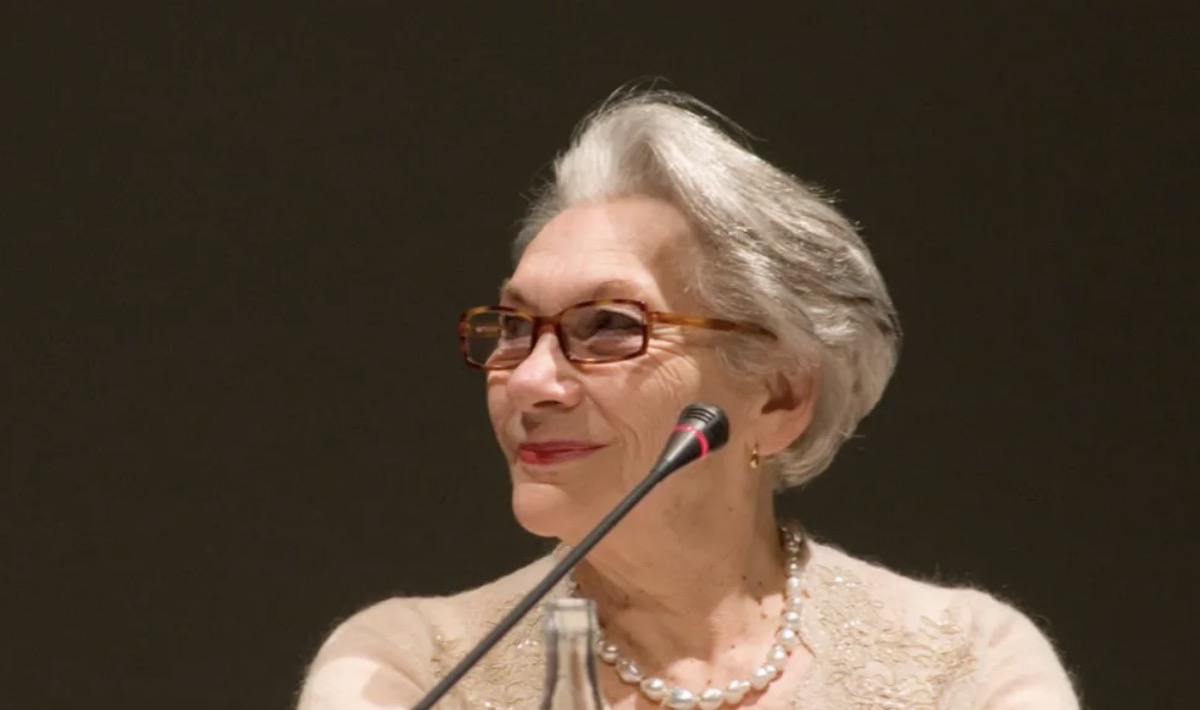
Top Photo: Christine Ruiz-Picasso.PHOTO MARIANO GUTIÉRREZ/©MUSEO PICASSO MÁLAGA
She waited fifty years to keep Picasso’s promise to Málaga. Then she kept it. Ten million visitors have walked through the doors since.