
Guy Wildenstein is stepping down. After 50 years in the family-run business, Wildenstein & Co., he has spent the last 35 years as president. The 80-year-old dealer is handing control over to the next generation. His son David, 46, will take over as president, with his daughter, Vanessa, appointed vice president. It is the end of an era that stretches back not just decades, but a century and a half.
“For 150 years, the name Wildenstein has been synonymous with scholarship, provenance, and access”
Wildenstein stated that the transition had been “carefully planned. The company’s board has signed off on what it calls a “smooth transition,” though the shift is anything but minor. Few names in the art trade carry the same historical weight, or the same accumulated authority, as Wildenstein. The firm was founded in 1875 by Guy’s great-grandfather, Nathan Wildenstein. Since then, it has survived wars, market crashes, shifting tastes, legal storms, and the slow evaporation of the old dealer model.
David Wildenstein, previously vice-president overseeing investment strategy and the firm’s real estate holdings, now assumes the whole leadership. Vanessa Wildenstein, who has long directed the London gallery, will also take charge of the New York operation. The siblings inherit a business that no longer resembles the one their great-grandfather built — but still trades on the same core currency: scholarship, provenance, and access.
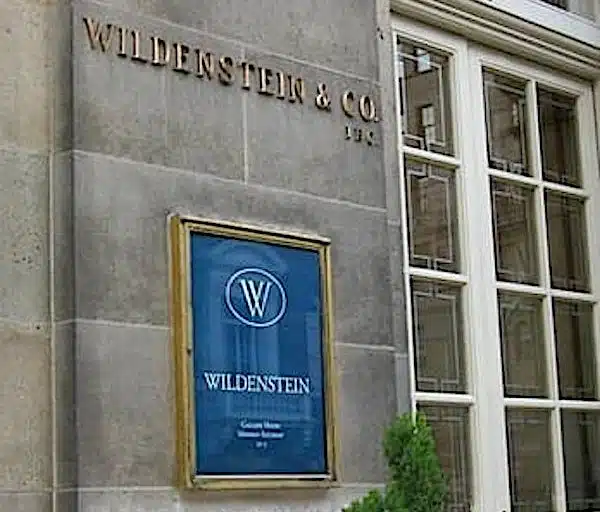
Guy Wildenstein also presided over the Wildenstein Institute, continuing a family tradition that fused commerce with scholarship. The Institute’s partnership with the Hasso Plattner Foundation resulted in freely accessible catalogues raisonnés for artists including Monet, Gauguin, and Jasper Johns. The family’s library, one of the most significant private art-historical collections assembled in modern times, was donated jointly to the University of Texas at Dallas. These gestures mattered. They positioned the firm not just as a market force but as a gatekeeper of knowledge.
Asked about the long-running legal proceedings he faces in France over fiscal matters — still unresolved and pending before the High Court — Wildenstein insists they played no role in his decision. He says the timing reflects confidence, not retreat. The company, he argues, is stable. The succession is ready. Whether the market believes that distinction is another question, but the handover has been framed firmly as generational, not reactive.
“Serving as President of Wildenstein & Co. has been the greatest honour of my life,” Wildenstein said. It is a rare moment of personal sentiment from a figure who has always preferred discretion. He credits his colleagues, not just his lineage, and points to what the firm has achieved collectively rather than what it has survived.
The story of Wildenstein, of course, begins far earlier. Nathan Wildenstein was not born into art. He was a tailor from Alsace who stumbled into dealing after agreeing — against better judgment — to sell an Old Master portrait for a client. He educated himself in the Louvre, wandering what he called a “heavenly disorder,” and discovered a vocation. One sale became a business.
His son, Georges, formalised that instinct into a method. Joining the firm in 1912, Georges brought a historian’s obsession to the trade, building libraries and archives and developing a research model that would define the Wildenstein catalogues raisonnés. He expanded into Impressionism and the avant-garde, even partnering briefly with Paul Rosenberg in an exclusive arrangement with Picasso—a move that unsettled his father but proved prescient.
After the war, Georges prepared his son Daniel for succession. Daniel, who took over in 1963, transformed the Paris gallery into a research institute and oversaw an extraordinary publishing programme, culminating in his monumental five-volume Monet catalogue. This project took more than fifty years to complete. It remains one of the defining scholarly achievements in the field.
Guy Wildenstein inherited that legacy in 1990. Under his leadership, the firm staged major exhibitions, including The Arts of France in 2006 and a landmark Monet tribute in 2007. More quietly, he shepherded the firm through a changing art world that no longer favours dynasties or patience.
Now the reins pass again. The Wildenstein story continues, but the voice at the top has changed. What remains to be seen is whether scholarship, discretion, and longevity still carry the same weight in a market that increasingly rewards speed and spectacle.