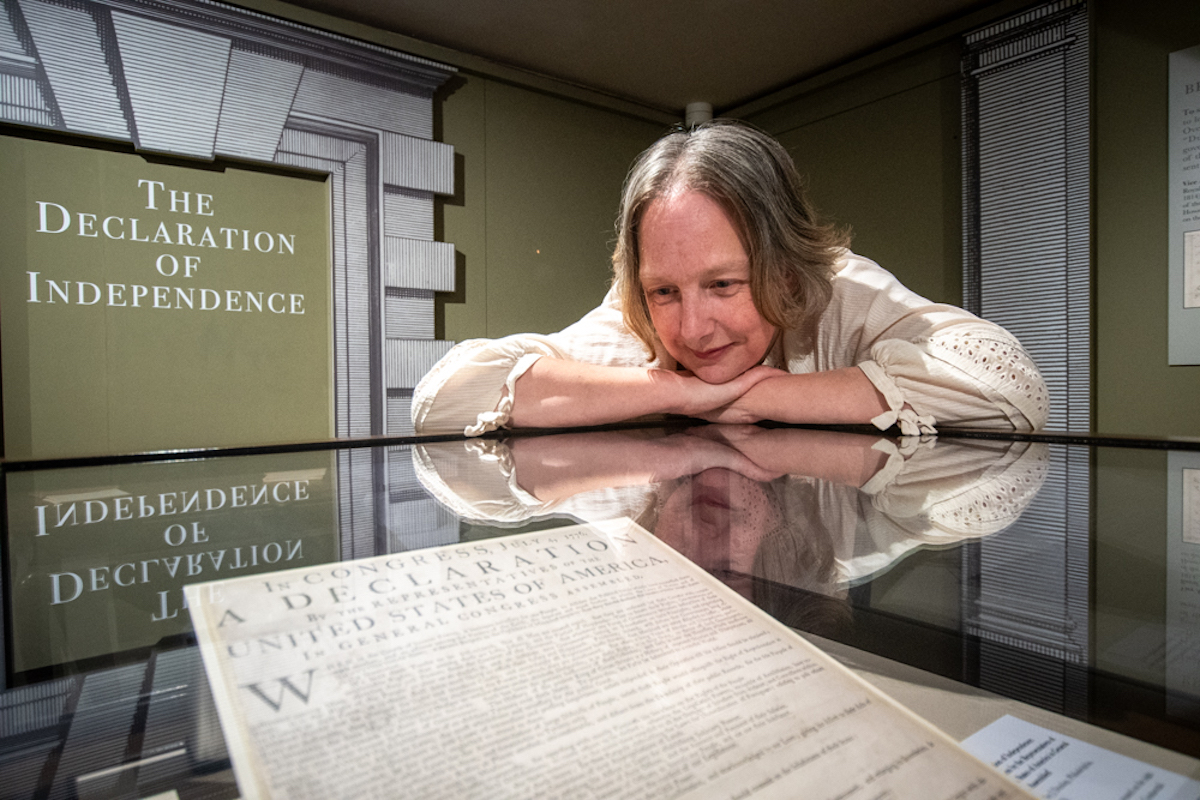
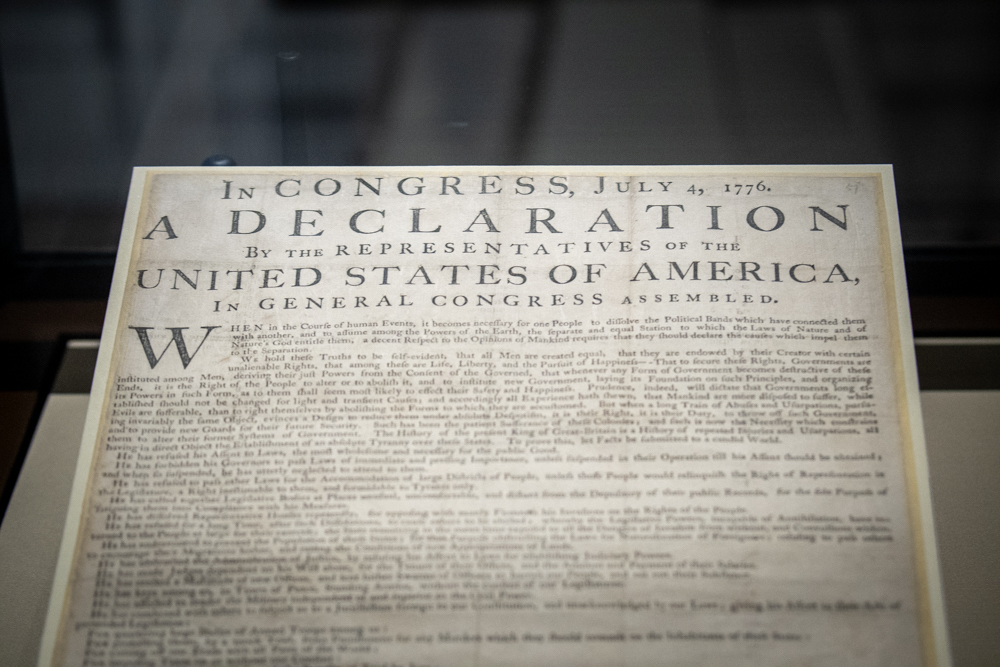
There are 26 known surviving copies of the Dunlap printing of the Declaration of Independence. This is the only one that was intercepted by British forces in 1776, annotated by officials in the Colonial Secretary’s office in London, and then filed away in what is now the National Archives. It goes on display at the American Museum and Gardens in Bath on 16 June 2026, as part of the museum’s America 250 programme marking 250 years since the founding of the United States. It is the first time the document has been exhibited in England during the anniversary year.
The story of how it got to London is worth telling. John Dunlap printed the Declaration on the night of 4 July 1776. Five weeks later, on 11 August, a copy was captured and sent back to Britain by Vice Admiral Richard Howe and his brother William Howe, the Royal Navy and British Army commanders in North America, respectively. The brothers were also serving simultaneously as King George III’s peace commissioners, which gives some sense of the peculiar diplomatic and military tangle the British found themselves in. They sent the document to George Germain, Secretary of State for the Colonies, with a letter explaining that it had accidentally fallen into their hands and describing, in notably restrained terms, the news that the colonists had declared themselves entirely free of allegiance to the Crown.
When the document arrived in London, it was turned over and annotated on the reverse by officials managing incoming correspondence. The annotations are bureaucratic, matter-of-fact. They record it as The Declaration of Independence, 1776, and note the accompanying materials. What is striking, and the museum is right to draw attention to this, is the gap between the administrative tone of those notes and the weight of what they were filing. The officials were cataloguing one of the most consequential documents in modern political history as if it were routine correspondence, because to them it was. It was one item among many in a stream of intelligence from a distant rebellion.
Intercepted Declaration of Independence Unveiled at Bath Museum For America 250
News took six to ten weeks to cross the Atlantic in each direction. The British government was managing a crisis in something close to slow motion, dependent on captured documents and newspaper extracts to understand what was happening on the ground. The Howes also sent copies of the New York Gazette with their letter, describing the formation of new independent governments in New Jersey and Virginia. These materials were the government’s primary means of monitoring the situation. The Declaration arrived as intelligence before it arrived as history.
The document is on loan from the National Archives, which holds the largest single collection of original Dunlap broadsides in the world. Its display at Bath sits within a broader America 250 programme that runs throughout 2026 and includes a specially curated trail through the museum’s Manor House, where period rooms dating from the Revolutionary era itself provide context for the Declaration’s arrival, the culmination of the route. A commissioned video from the Museum of the American Revolution in Philadelphia accompanies the display.
The wider programme at the American Museum and Gardens extends well beyond the document itself. A lecture by historian David Olusoga on the history of the Revolution took place at the Guildhall in Bath on 1 June. Jazz evenings are planned for 4 and 5 July in the museum’s landscaped gardens, which were designed to recreate the Upper Garden at George Washington’s Virginia home, Mount Vernon. There are family days, concerts and exhibitions of quilts by artists of the American South, a body of work that sits within African American cultural tradition and has been increasingly recognised for its significance within American art and design more broadly.
Throughout the week in July, the museum is offering tickets at £2.50, compared with a standard adult admission of £17. That reduction is significant enough to bring the Declaration within reach of visitors who might otherwise not consider the trip. The loan was made possible following a research visit to the United States supported by a Jonathan Ruffer curatorial grant from the Art Fund.
The American Museum and Gardens is a few minutes from Bath city centre. The Declaration is on display throughout the summer.