

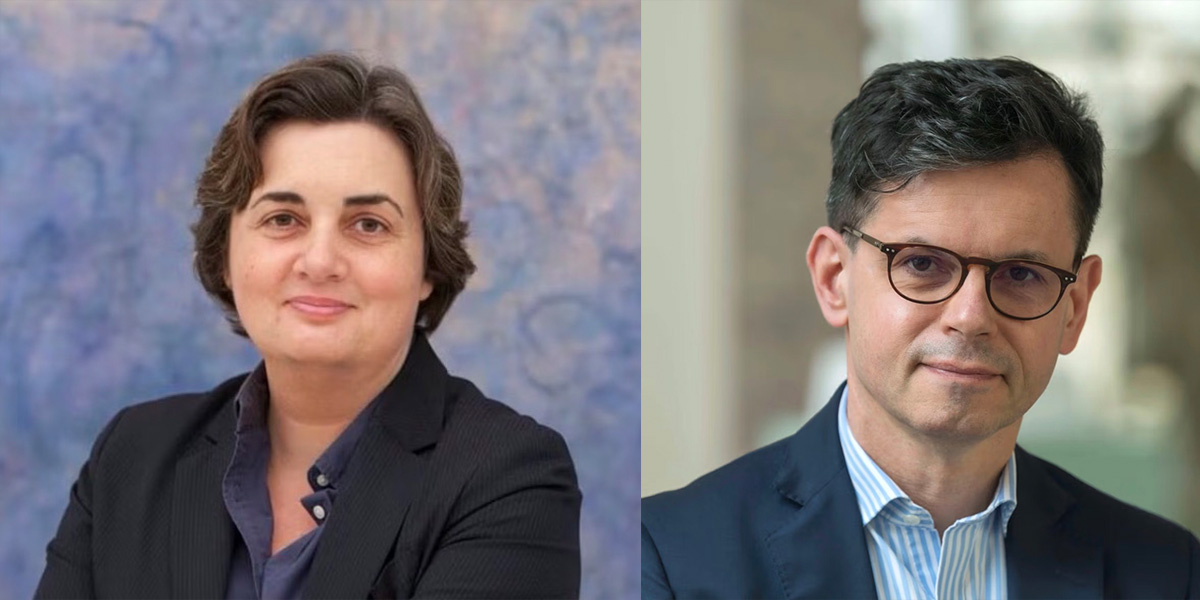
Musée du Louvre: Christophe Léribault will replace Laurence des Cars following her resignation after a short, rocky tenure. She was the first woman to be at the helm of the Louvre in its history. Annick Lemoine will now take up the vacant position after the sudden death of Sylvain Amic’ long been regarded as one of the most capable figures in the French museum establishment. The Louvre, that granite symbol of state power and cultural inheritance, is in deep trouble following strikes, over-budgeting on building works, and high-profile thefts.
Following resignations at the Louvre and a death at the Musée d’Orsay. Annick Lemoine steps into a vacancy left since the sudden death of Sylvain Amic last August. The recommendations came from Culture Minister Rachida Dati, herself poised to exit the Rue de Valois to run for the Paris mayoralty. It is all timed theatrically.
Léribault steps into the Louvre at an awkward time. The theft of France’s crown jewels last October lingers as a national embarrassment that still smarters. Then came the ticketing fiascos, now under police investigation. Unions are also pushing hard for pay rises. Behind closed doors, Macron has floated the word “appeasement.” It’s a loaded choice. Efficiency, mending fences, and perhaps admitting fault over the robbery. None of this will be solved quickly. Léribault will need patience, resilience, and nerves that don’t fray under pressure.
Léribault also inherits an architectural headache: Des Cars’s proposed new entrance, ambitious and expensive, divided opinion before she left. Just days before her departure, she presented a budget allocating €100m to preliminary studies for the scheme, and a comparatively modest €17m for technical masterplans addressing the museum’s ageing infrastructure. The figures are staggering. Léribault must now decide what survives and what is quietly shelved.
As qualifications go, Léribault possesses the necessary ability. Sixty-two, scholarly, steeped in the régime of French art history. His doctoral thesis focused on Jean-François de Troy; a monograph followed in 2002. He began at the Musée Carnavalet in 1990, later joining the Louvre’s drawings department, before directing the Musée Delacroix, housed in the painter’s former studio.
His trajectory includes the Petit Palais in 2012, then the Orsay in 2021 after Des Cars moved across the Seine. His tenure there was brief, less than two and a half years, before he was dispatched to the Château de Versailles when Catherine Pégard retired. Paris is a small world at this altitude. Pégard, now close to the Élysée, is widely tipped as a possible successor to Dati. One senses the same names circling, reappearing in new guises.
Lemoine’s profile is no less assured. Fifty-six, a specialist in 17th- and 18th-century European painting, she too emerged from the network of Paris city museums. She oversaw the Musée Cognacq-Jay’s 18th-century collection before succeeding Léribault at the Petit Palais in 2022. Her doctorate examined Nicolas Régnier, and her curatorial record carries weight: The Baroque Underworld: Vice and Poverty in Rome at the Villa Médicis and the Petit Palais; a focused exhibition on Valentin de Boulogne at the Louvre. She previously led the art history department at the French Academy in Rome and directed the Fontainebleau.
Two seasoned administrators stepping into roles weighted with expectation and, in the Louvre’s case, repair. Crisis, renewal, continuity. shouldn’t dull its focus. These museums are emblems of national confidence. Their leadership changes matter. For now, the cast has been announced, and the stage reset. Paris, as ever, watches closely.