
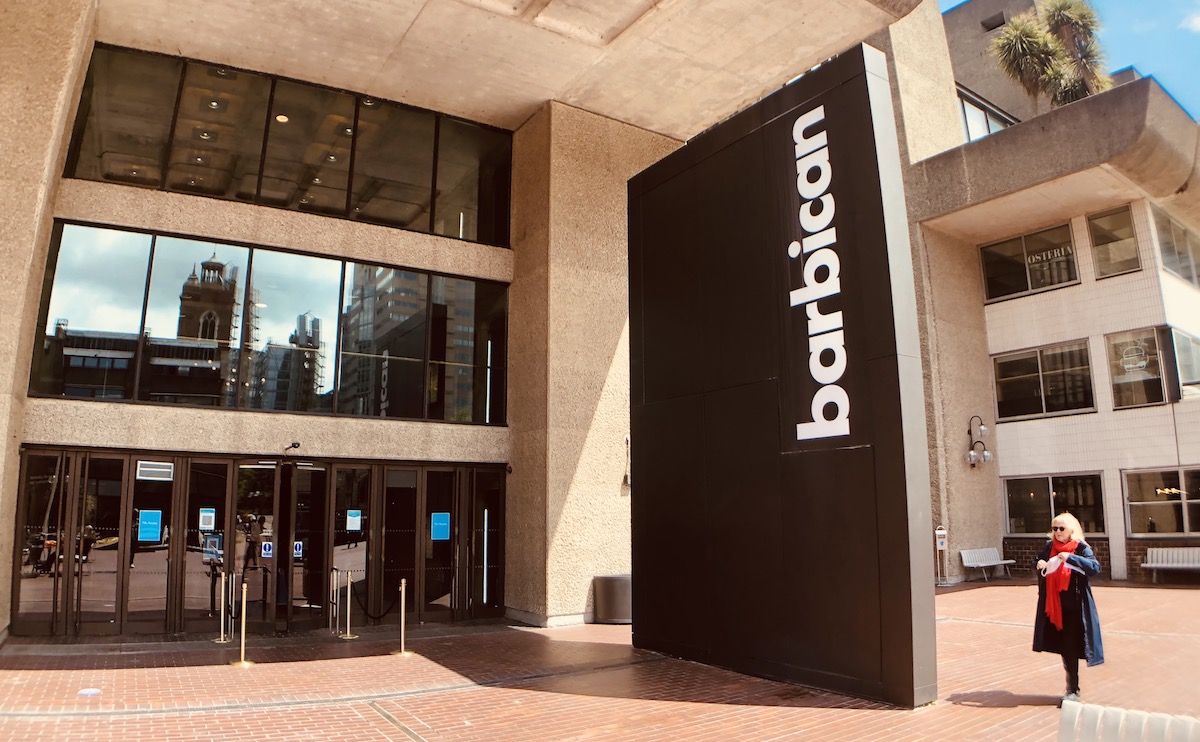
After years of studies, consultations, revisions, and the familiar handwringing that follows any attempt to touch a listed giant, the City of London Corporation has approved the delivery plan for the Barbican Renewal Programme. The figure attached to the decision is £191 million— £240 million, a lot of money. But then the Barbican owns a lot of buildings, and neglect at this scale is never cheap. The Brutalist masterpiece will now close in June 2028.
This isn’t a cosmetic refresh or a branding exercise dressed up as civic ambition. It’s an acknowledgement that one of Britain’s most important cultural institutions has reached the point where affection alone won’t keep the doors open—concrete ages. Systems fail. Accessibility expectations have shifted. The Barbican — admired, misunderstood, occasionally loathed — needs work, or it risks sliding from icon to liability.
Opened in 1982 and ceremonially blessed by Queen Elizabeth II as “one of the wonders of the modern world,” the Barbican was itself a statement of postwar resolve. Culture planted on rubble. A utopian idea rendered in raw concrete and walkways that seem designed to test one’s sense of direction. Forty-plus years on, the idea still resonates. The fabric, less so. Millions move through the Centre each year, and the building shows it. Pipes are tired. Infrastructure is stretched. Some spaces feel frozen in time; others feel worn down.
The first phase of Renewal targets the places where that tension is most visible: the monumental foyers, the lakeside terrace, and the Conservatory — that improbable indoor jungle hovering above the City. These are the spaces where the Barbican meets the public, and where its contradictions are most sharply felt. The plan is restoration rather than reinvention. No smoothing of edges.
The plan is to carry out real environmental heft, and a quieter symbolic charge too. Original Conservatory glass isn’t being swapped out for something shinier; it’s being reused. The old pavers aren’t headed for landfill but reborn as terrazzo. Demolition is treated as a last resort, not a default.
New energy systems, upgraded glazing, LED lighting, rainwater harvesting, a climate-responsive rethink of the Conservatory — all of it aimed at cutting emissions without sanding down the building’s identity. Sustainability here isn’t a buzzword. It’s a limit, and an unavoidable one, given the weight and awkwardness of a Grade II-listed structure of this scale.
Accessibility sits alongside that as the programme’s other hard line. The Barbican has never pretended to be friendly. For some, it’s the difficulty that’s the point. For others, it’s been a locked door disguised as architecture. Renewal doesn’t try to charm its way out of that history, but it does address it head-on. More toilets — long overdue. Multi-faith and quiet rooms. Sharper wayfinding. Ramps that actually work. Wider doors. Step-free access across the Curve. Full access to the Conservatory. These are practical moves, yes, but they also mark a shift in tone: complexity is delicate; exclusion isn’t.
Public response suggests that distinction has landed. More than 90 per cent of consultation respondents backed the plans — a rare show of consensus for a project this large. That support likely comes from the Barbican’s careful positioning. This isn’t about taming Brutalism or smoothing its edges. It’s about letting more people use the building without draining it of what makes it stubborn, strange, and distinctive.
There will be disruption, and no one is pretending otherwise. To ensure the most invasive work is done safely, most programmes within the Centre will pause for a year, from late June 2028 to June 2029. The Beech Street cinemas will stay open. Elsewhere, activity will continue in altered form, through partnerships with residents, festivals, and long-standing collaborators.
The London Symphony Orchestra — not a tenant but a pillar — will shift its operations to LSO St Luke’s, expanding concerts, broadcasts, and learning rather than disappearing from view.
From the City’s point of view, the improvements are resolutely infrastructural. Chris Hayward, Policy Chairman of the City of London Corporation, framed the decision as securing the Barbican’s future as a “world-leading cultural and economic powerhouse,” pointing to jobs, tourism, and long-term value. Sir William Russell, Chair of the Barbican Board, reached for something more poetic, calling it a “new dawn” for one of the UK’s largest listed sites. Big words, perhaps — but then, this has never been a small building. Big language, but possibly unavoidable when dealing with a building that was never modest to begin with.
Inside the project, the tone is steadier. Philippa Simpson, Director for Buildings & Renewal, spoke more about continuity than transformation — about confidence, certainty, and the ability to plan appropriately. She drew a line between the Barbican’s origins on a bombsite and its next chapter, framing the reopening in 2029 as an echo of the optimism that shaped the original vision, rather than a rejection of it.
Funding, inevitably, remains part of the story. The City’s £191 million contribution covers roughly 80 per cent of the first five-year phase, running from 2025 to 2030. The remaining funds will be raised through a Barbican-led fundraising campaign. Some works are already underway, with essential theatre upgrades scheduled for early 2026, major construction beginning in 2027, and completion aligned with the Barbican’s 50th anniversary.
Renewal won’t remove that friction. But it may finally make the experience less punishing, more open, and more equitable. For a building born of postwar idealism, it feels less like a compromise and more like a responsibility.
The building houses three art gallery spaces.