
Frank Gehry, the Canadian-American architect who spent more than half a century bullying gravity into improbable shapes and coaxing cities into believing in spectacle again, has died aged 96. His passing closes a chapter on a career that took the medium of sculpture and married it to the budgets of anxious developers — a combination that shouldn’t have worked, but somehow changed the cultural climate everywhere it landed.
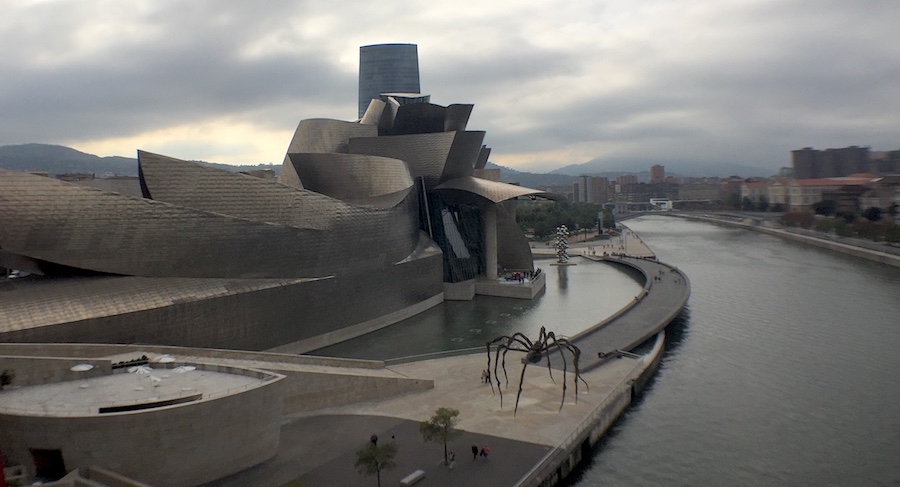
Most architects leave behind buildings that age quietly into the skyline. Gehry left objects — proud, argumentative, sometimes maddening things — whose presence still provokes the same startled double-take decades after the ribbon-cutting ceremonies faded. The Guggenheim Bilbao, opened in 1997, is the most mythologised: a vast titanium bloom crouched beside the Nervión River, blamed (or praised) for ushering in the whole “starchitect as urban saviour” doctrine. Say what you like about that building — it made a post-industrial port city feel like the centre of the art world for a summer that has, in many ways, never quite ended.
Gehry’s early work was scrappier, held together by exposed plywood, corrugated metal and sheer nerve. His Santa Monica house of the late 1970s, a cubist collision of chain-link fencing and glass, remains one of the few examples of a major architect essentially vandalising a suburban bungalow and calling it home. It was an announcement of intent: irregular angles, no patience for polite geometry, and a willingness to let buildings look as if they’ve just crash-landed.
By the 1990s, with digital modelling in his pocket and arts institutions hungry for architectural landmarks, Gehry hit his stride. The Walt Disney Concert Hall in Los Angeles shimmered like a ship that had drifted off course and chosen downtown LA as its accidental harbour. Chicago got its swooping Millennium Park pavilion; Paris, the Fondation Louis Vuitton, which resembles a cloud of glass sails briefly caught in a crosswind. Even when the commissions were modest, the effect was not. Gehry made exuberance feel like a civic duty.
His detractors — and there were many — accused him of showmanship, of prioritising surface over utility. He waved them away, memorably flipping the finger at one critic during a press conference in Spain. But behind the theatre was a man genuinely obsessed with movement: fish forms, sails, scales, folds of fabric, crumpled paper models tossed across a studio table. He once joked that he designed buildings in the same way a jazz musician approaches a solo: follow the line, chase the feeling, tidy it up later.
For all the bluster, Gehry could be unexpectedly gentle in person, soft-voiced, almost shy. What he hated — genuinely despised — was banality: the grey mediocrity that creeps across cities when accountants outnumber dreamers. He fought that instinct with every commission, even the compromised ones, even the projects that locals initially loathed and later adopted with the reluctant affection reserved for odd, brilliant relatives.
Art institutions adored him because he made them look brave. Politicians invited him because his buildings were shorthand for “world-class.” Artists trusted him because he didn’t treat them as colourful accessories to his architecture. Bilbao showed what happened when an ambitious museum and an ambitious architect aligned: suddenly, the entire world wanted a piece of the phenomenon. The “Bilbao Effect” became both a legend and a cliché, but the truth is more straightforward — Gehry allowed cities to imagine themselves anew.
He received every award going: the Pritzker Prize, the Praemium Imperiale, and the Légion d’Honneur. His influence has endured for generations of young architectural students who have discovered, usually with horror, that attempting to imitate Gehry requires both computational gymnastics and the hide of a rhinoceros. For better or worse, he expanded the profession’s sense of what was executable.
Gehry worked well into old age, sketching, fiddling, arguing, designing as though retirement was a dull rumour that didn’t concern him. His late projects — softened slightly, less metallic bravado, more transparency and warmth — showed a man who had nothing left to prove but still found joy in the puzzle.
He is survived by his wife, Berta, children, grandchildren, and a body of work that continues to warp the horizon lines of the cities that welcomed (and occasionally endured) him.
Frank Gehry didn’t build monuments so much as stage sets for civic imagination. His buildings tilt, twist, shimmer, and occasionally misbehave — reminders that architecture, even when vast and expensive, can still surprise. With his death, the world loses one of its few true contrarians: an architect who insisted that buildings could feel alive, and who spent nearly a century proving it. – PCR 2025
Bernard Arnault LVMH Paid Tribute:
“I am profoundly saddened by the passing of Frank Gehry, in whom I lose a very dear friend and for whom I shall forever retain boundless admiration. I owe to him one of the longest, most intense, and most ambitious creative partnerships I have ever had the privilege to experience. His oeuvre, crowned by the Pritzker Prize, is immense. He will remain a genius of lightness, transparency, and grace. Frank Gehry—who possessed an unparalleled gift for shaping forms, pleating glass like canvas, making it dance like a silhouette—will long endure as a living source of inspiration for Louis Vuitton as well as for all the Maisons of the LVMH group. With the Fondation Louis Vuitton pour la Création, he bestowed upon Paris and upon France his greatest masterpiece, the highest expression of his creative power, commensurate with the friendship he bore our city and the affection he showed for our culture. My wife, my children, and I express our deepest condolences to his wife, Berta, and his children.”
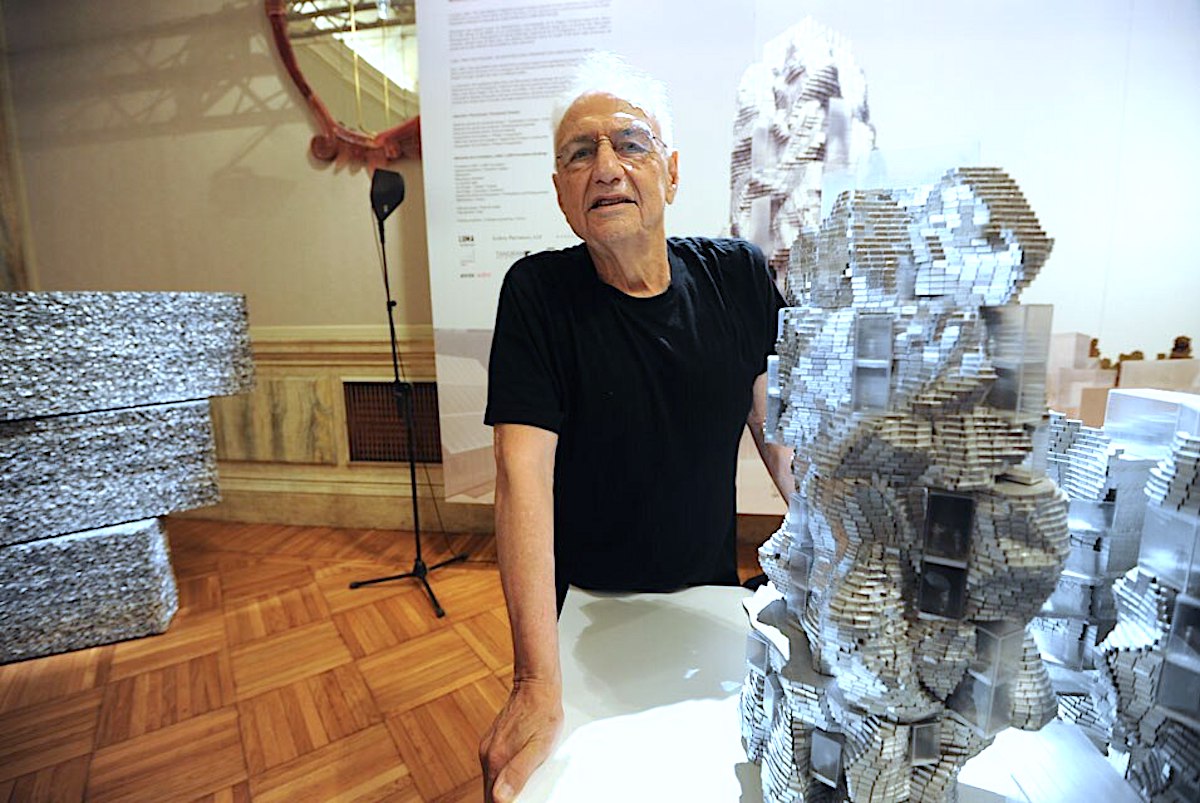
Top Photo: English: Frank O. Gehry – Parc des Ateliers Wiki Media Commons