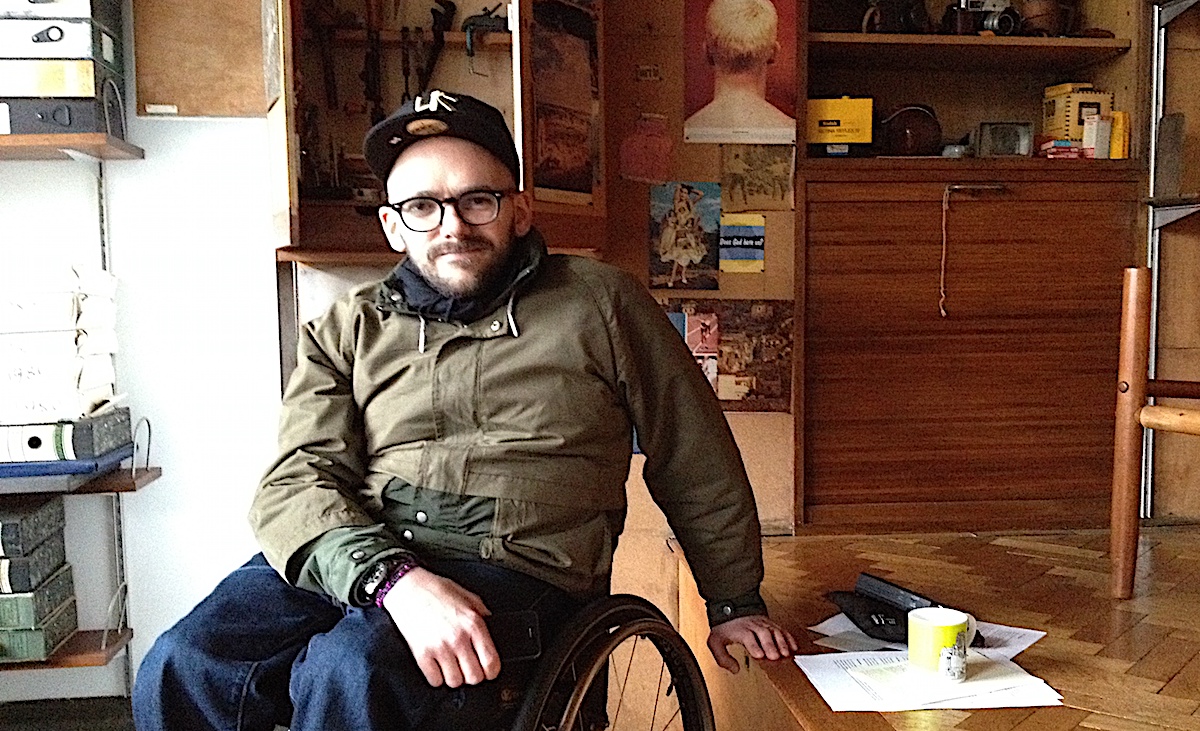
The Royal Academy has announced that Ryan Gander — artist, Royal Academician, and long-time champion of creative mischief — will coordinate the 258th Summer Exhibition in 2026, for a show that has survived revolutions, pandemics, and the slow churn of institutional decorum. Handing the reins to Gander feels like a deliberate attempt to loosen the screws a little.
Gander’s chosen theme, “Interconnectedness,” isn’t just another slogan spun from the RA’s archives of polite abstraction. He’s talking about entanglement: the odd overlaps, frictions, and accidental correspondences that occur when you let different kinds of work breathe in the same room. His ambition, he says, is to remind us that artists often share more than they admit — even when their practices look as if they come from opposite planets.
He’s thrown the doors wide open: process-based or content-driven work, rough or refined, traditional or experimental — nothing is off-limits. In typical Gander fashion, he wants painting beside architecture beside print beside sculpture, everything rubbing shoulders rather than politely lining up in separate bays. “Great artwork is cognitive first and retinal second,” he insists — a point that, depending on your temperament, will either thrill you or make you brace for impact.
There’s also a clear invitation to the next generation. Gander, who has never been shy about advocating for art education, is nudging degree students and recent graduates to send in work. The Summer Exhibition can be a mixed bag — democratic, unruly, occasionally incoherent. Still, it remains one of the few platforms where a student could feasibly end up hung next to a Royal Academician.
A committee of fellow RAs will join Gander, each entrusted with their own gallery: Eileen Cooper, Michael Craig-Martin, Oona Grimes, Katherine Jones, Goshka Macuga, Humphrey Ocean, and Peter St John (alongside Adam Caruso). Rebecca Salter, the RA President, will chair the committee. Taken together, it’s a strong and stylistically varied group — a reminder that the Summer Exhibition’s character depends as much on internal negotiation as curatorial vision.
Submissions open 7 January and run until 11 February — or sooner, if the 18,000-entry cap is reached, which it usually is. Around 1,200 works will eventually be cut. The process remains one of the RA’s more endearing rituals: an eight-day hang during which Academicians debate, negotiate, shuffle, reject, champion, and occasionally fight for what belongs on the walls. Merit, the Academy insists, is the only criterion.
Most of the works will be for sale, as always. The money flows back to the artists, the RA Schools (Europe’s last free postgraduate art programme), and the Academy’s broader activities. In that sense, the Summer Exhibition still fulfils its original purpose from 1769 — funding the art school through the public’s appetite for art, or at least for owning a slice of its annual spectacle.
Despite its age, the Summer Exhibition has never settled into a predictable rhythm. It has survived criticism, adoration, mockery, reform, and the occasional tabloid fuss. But its open submission structure — chaotic, generous, occasionally exhausting — remains its most democratic gesture. Thousands apply, a fraction get in, and every year the show becomes a snapshot of what artists are thinking, wrestling with, or resisting.
With Gander at the helm, 2026 promises a certain unpredictability — not chaos, but a kind of organised curiosity. If he delivers on his promise of true “interconnectedness,” expect less polite categorising and more unexpected juxtapositions. The sort of visual knots and collisions that make the Summer Exhibition enjoyable when it really works.
Doors open to the public from 16 June to 23 August. If past years are anything to go by, there will be queues, discoveries, and lots of men wearing grey shoes and at least one breakout star no one predicted.
Photo: P C Robinson © Artlyst 2025