
The Serpentine is gearing up for what promises to be one of its more intriguing spring-to-autumn propositions: an extended, slow-brewing return of Cecily Brown, the British painter who decamped to New York three decades ago and built an international reputation from there. Picture Making, opening 27 March 2026 at Serpentine South, reads as both a homecoming and a reminder that, for all the analysis orbiting her work, Brown remains at heart a studio animal — a painter’s painter — happiest wrestling with the medium rather than the discourse around it.
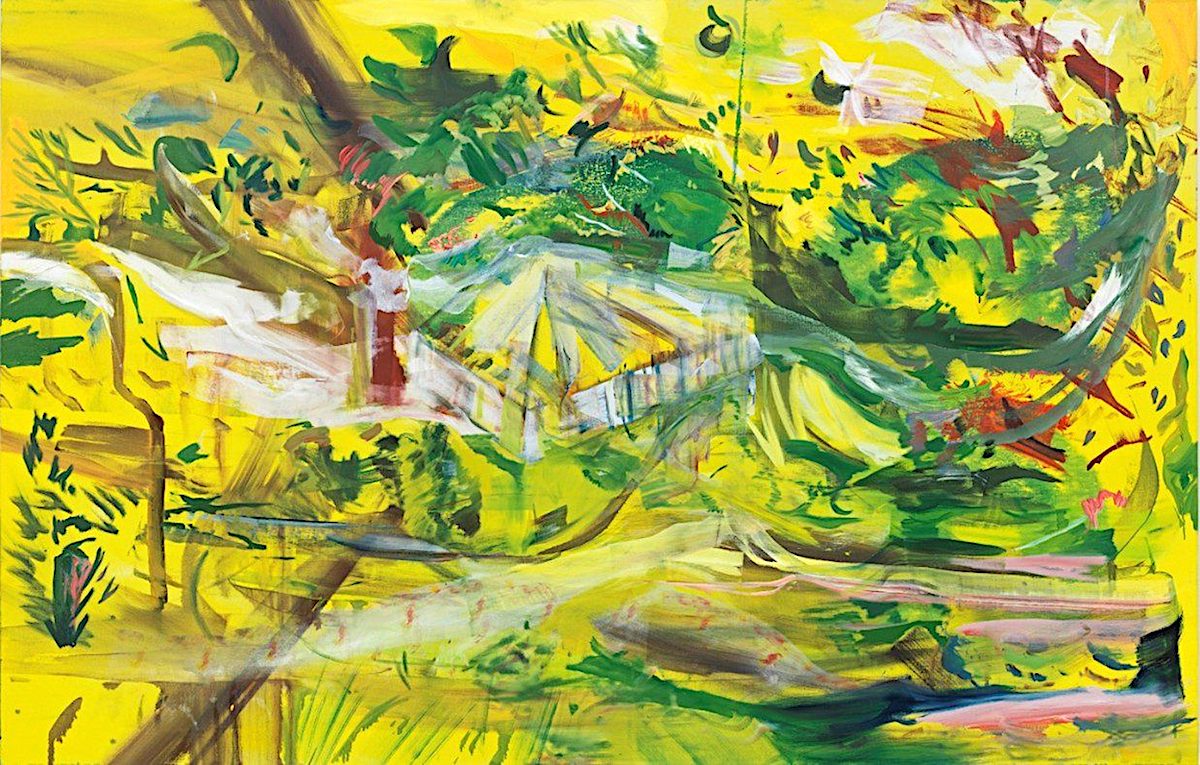
Brown’s relationship with Kensington Gardens predates the jet-lagged openings and museum circuits. As a London student, she haunted the Serpentine, absorbing its shows long before she could have imagined headlining one. So this exhibition carries a certain circularity, even sentiment. However, Brown’s sentimentality has always been tucked behind the veils of her brushwork — restless, muscular passages that swell into near-abstraction before resolving, just barely, into bodies, gestures, encounters.
The Serpentine’s pitch is straightforward: works shaped by the park’s landscape and its peculiar mix of leisure, romance, and threat. Brown hasn’t abandoned her familiar cast — lovers tangled in wooded glades, figures half-lost in undergrowth, children’s book sprites wandering into darker corners. What shifts here is the framing: the park as a site of memory, mischief, and Britishness, but filtered through three decades of American distance.
New paintings sit beside older anchors from the early 2000s, giving viewers a sense of the slow churn rather than a dramatic reinvention. And that’s truer to Brown’s practice anyway. She doesn’t pivot; she circles. A jigsaw illustration of a fallen log becomes a leitmotif for a suite of “nature walk” paintings explicitly made for this show — same scene, endlessly reworked, as if she’s testing how far the image will stretch before it breaks. Elsewhere, figures evaporate into foliage, or reappear in flashes: a Victorian fairy here, a glimmer of Beatrix Potter’s world there, an echo of those prim Ladybird storybooks that so many British childhoods grew up inside.
Her monotypes and drawings — often overlooked when the discussion turns to Brown’s big, heaving canvases — are given space to breathe. They reveal the illustrator lurking beneath the expressionist bravado, the artist who has always been as alert to line and tone as she is to the drama of colour. There’s wit, too, especially in the animal stand-ins — foxes, rabbits, cats — that often carry more emotional charge than the humans around them.
Brown herself speaks warmly about the Serpentine’s influence on her younger self, and there’s no doubting the significance of her first London institutional outing since 2005. The Serpentine’s leadership frames the exhibition as a conversation with the park, a kind of site-specific embrace — though one suspects Brown’s real conversation is still with painting, that inexhaustible argument between what can be shown and what refuses to resolve.
A catalogue designed by Irma Boom — and padded with correspondence between Brown and Celia Paul, plus a lengthy chat with Hans Ulrich Obrist — promises the usual Serpentine flair for parallel narratives. The show itself is shaped by Lizzie Carey-Thomas with Kit Gurnos. It will likely become one of those long-running London fixtures that reward a return visit, preferably at different times of day, the park muttering its own counterpoint just outside the glass.
Whether the exhibition will shift the broader arc of Brown’s career is beside the point. What Picture Making offers is something simpler and more valuable: a chance to see a major painter in dialogue with old ground, old ghosts, and a medium she still approaches with equal parts force, doubt, and pleasure.
Cecily Brown Picture Making at Serpentine South 27 March – 6 September 2026