
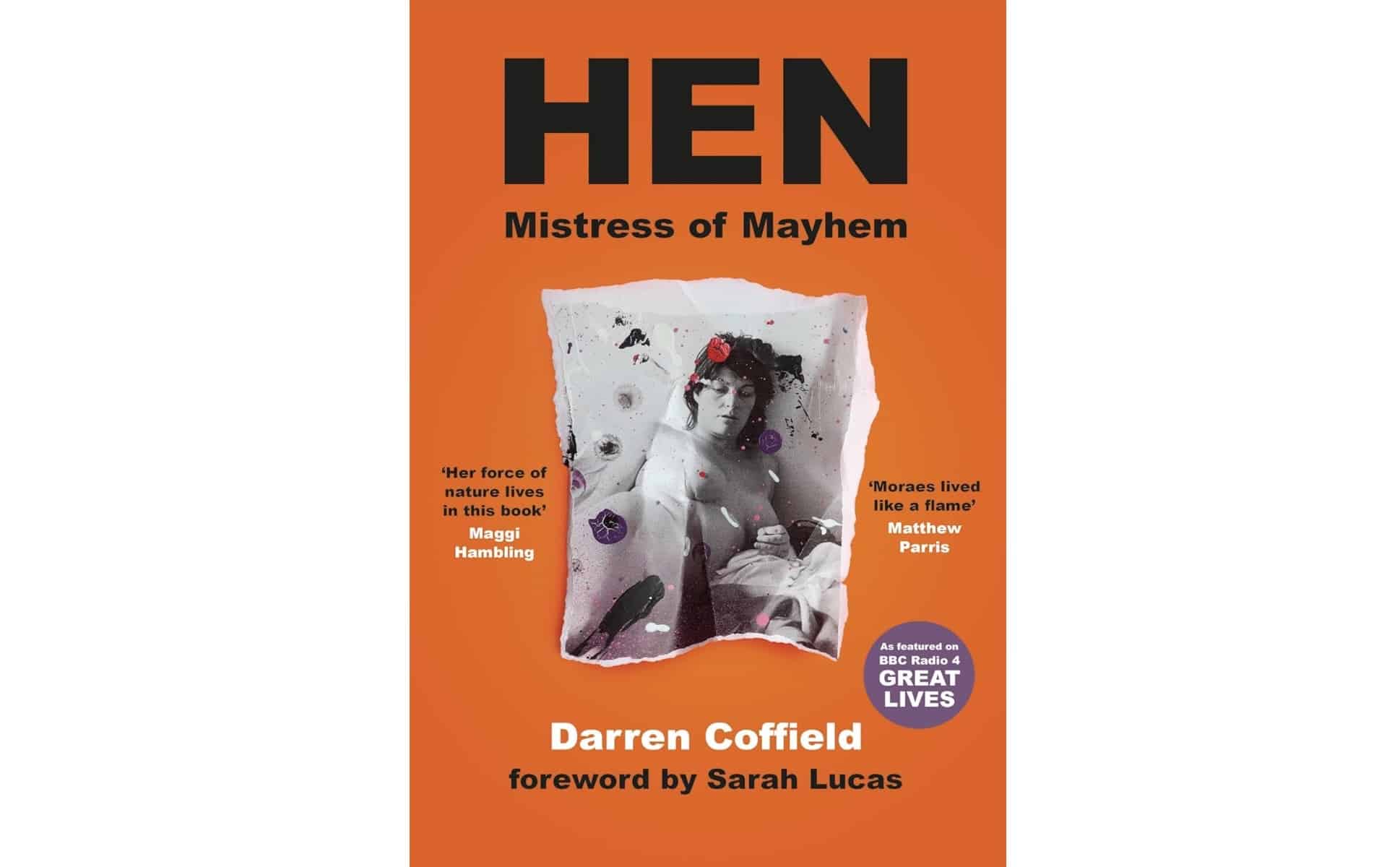
Hen: Mistress of Mayhem navigates London’s mid-20th-century streets with a high degree of success. Henrietta Moraes, the book’s subject, was one of those rare individuals for whom the conventional categories of biography do not apply. She was not an artist, not really a writer, not a socialite in any recognisable sense. She was something harder to name: a force of nature would be an apt description of how London’s cultural life was lived as surely as any of the painters and poets whose world she inhabited and occasionally upended.
She discovered Soho at eighteen, or so she tells us. The qualification is characteristic. Self-mythology was Henrietta’s most consistently practised art form, and Hen is partly a record of how she assembled and maintained the legend of herself with the same diligence that Bacon brought to his canvases and Freud to his sittings. She gate-crashed the parties she had not been invited to and worked the rooms of those she had been invited to, climbing to the summit of the 1950s/sixties bohemian scene with a combination of genuine charisma and complete shamelessness that the book captures with considerable relish. Social climbing was, by her own cheerful admission, her favourite sport. Heaven knows, she tells us, she enjoyed the exercise.
What gives this book (with a foreword by Sarah Lucas) its particular texture is the company she kept and what she made of it. At the Colony Room, French Pub, the Gargoyle Club, and the Cafe Torino, she circulated among the defining figures of postwar British art and letters, eventually becoming a muse to both Francis Bacon and Lucian Freud, two artists whose relationships with their models could hardly have been more different. Freud painted her slowly and with an attention she experienced as both intense and paternal. Bacon worked from erotic photographs taken by their mutual friend John Deakin. However, he also required her physical presence in the studio, a fact the book treats with characteristic lack of ceremony. She believed he painted her eighteen times. She was not entirely sure. The book treats this uncertainty as the unimportant detail it probably is.
The real achievement of Hen is its account of how Henrietta managed to be simultaneously inside the art world and entirely outside its conventional hierarchies. She was not there as a critic or a collector or even, in any straightforward sense, as an artist. She was there because her presence changed the atmosphere of any room she entered and because that change was, for the painters around her, creatively necessary. The book understands this without labouring the point.
The curriculum vitae assembled across the book’s pages is genuinely extraordinary. There are instructions, delivered with mock solemnity, on how to steal a best friend’s boyfriend, enchant and ensnare a husband, dress like a comic book superhero and become a comprehensive connoisseur of every illicit substance that medical science has named. And there is the interlude as a cat burglar, which ended, as these things tend to, in Holloway Prison.
Between the larger set pieces, the book finds its rhythm in smaller pleasures—the gentle art of drinks. The canny craft of charity shop shoplifting, the haphazardness of what she describes, with magnificent understatement, as steamy sex in second-hand bookshops. Henrietta Moraes moved through the world as though its rules had been written for other people, and the book conveys this not by dwelling on the transgression but by treating it as the natural state of affairs.
This is not a book that was ever going to resolve itself into a neat conclusion or hard-won wisdom. It is the record of a life lived at a gradient that most people neither reach nor particularly want to, told by a woman who remained, to the end, entirely unrepentant about every moment of it. – PCR
Buy This Book Here