
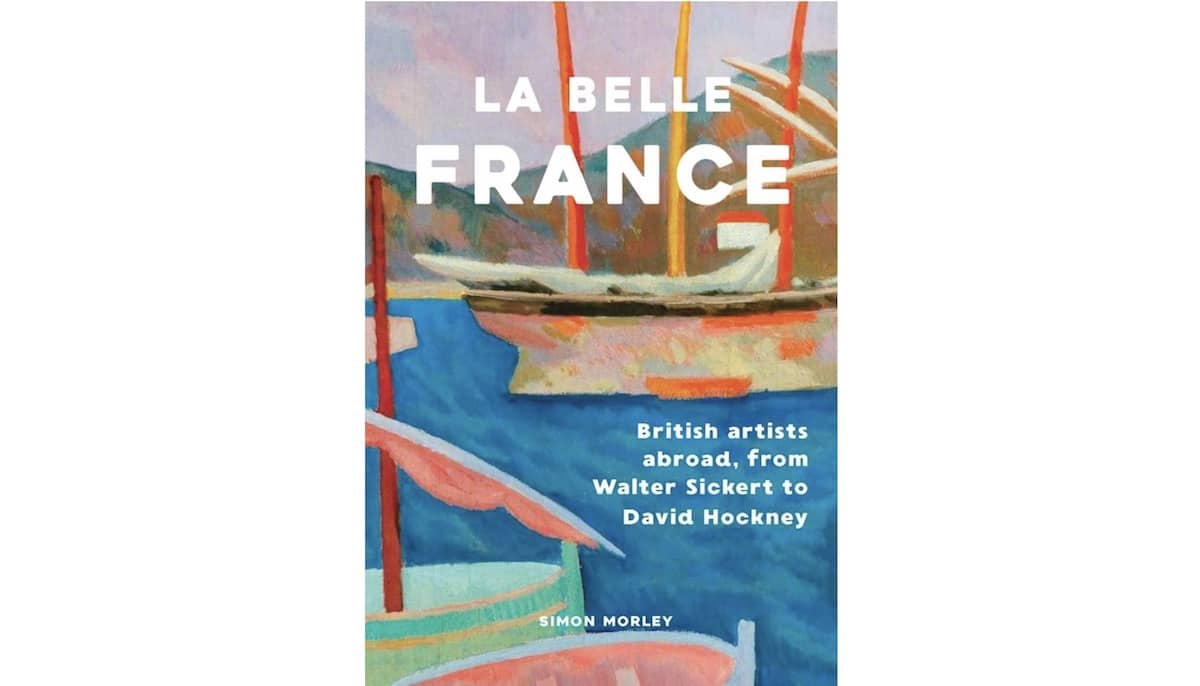
There is a genre of art-historical travel writing that seeks to do two things simultaneously: recover a cultural moment and inhabit a landscape. The best examples of it make you feel the connection between place and practice as something lived rather than merely argued. Simon Morley’s exploration of British artists in France during the modernist period belongs to this tradition, and it brings to the project both scholarly command and the particular authority of someone writing from within the geography he describes.
Morley writes from his house in central France, and that location is relevant. His writing is not assembled solely from archival material, though the historical groundwork is clearly there. This is a book written by someone who has chosen to live where his subjects worked and travelled, who moves through Normandy, Brittany, Provence and the Riviera with the accumulated attention of a resident rather than a tourist. The difference in register is felt throughout.
The period he addresses, from the late nineteenth century to the mid-twentieth, was genuinely transformative for British artists in their relationship to France. Paris offered what Britain could not or would not: renowned academies, concentrated exposure to the modern masters, galleries operating at the centre of the international avant-garde, and a bohemian social culture that treated artistic ambition as a legitimate way to organise a life.
The artists Morley follows, among them Francis Bacon, the Bloomsbury Group, Edward Burra, Leonora Carrington, David Hockney, Gwen John, Ben Nicholson and Walter Sickert, were drawn across the Channel by different combinations of these attractions.
The book is careful to distinguish between their varied relationships to French culture rather than treating them as a homogeneous wave of grateful escapees.
What united them, Morley argues, was a shared sense that France represented the most powerful expression of modernity available to them, and a corresponding perception of Britain as straitlaced and provincial by comparison.
That tension between the liberating foreignness of France and the constraining familiarity of home shaped the work these artists made, and the book traces it with genuine critical intelligence.
At four hundred pages, it earns its ambition. This is art history written with the attentiveness of someone who has made the journey himself, and it shows.
La Belle France: British Artists Abroad From Walter Sickert To David Hockney By Simon Morley