Books about overlooked artists or groups of artists tend to fall into one of two spheres. They either become exhaustive catalogues or they narrow their focus so tightly around a handful of canonical figures that the subject’s complexity disappears.
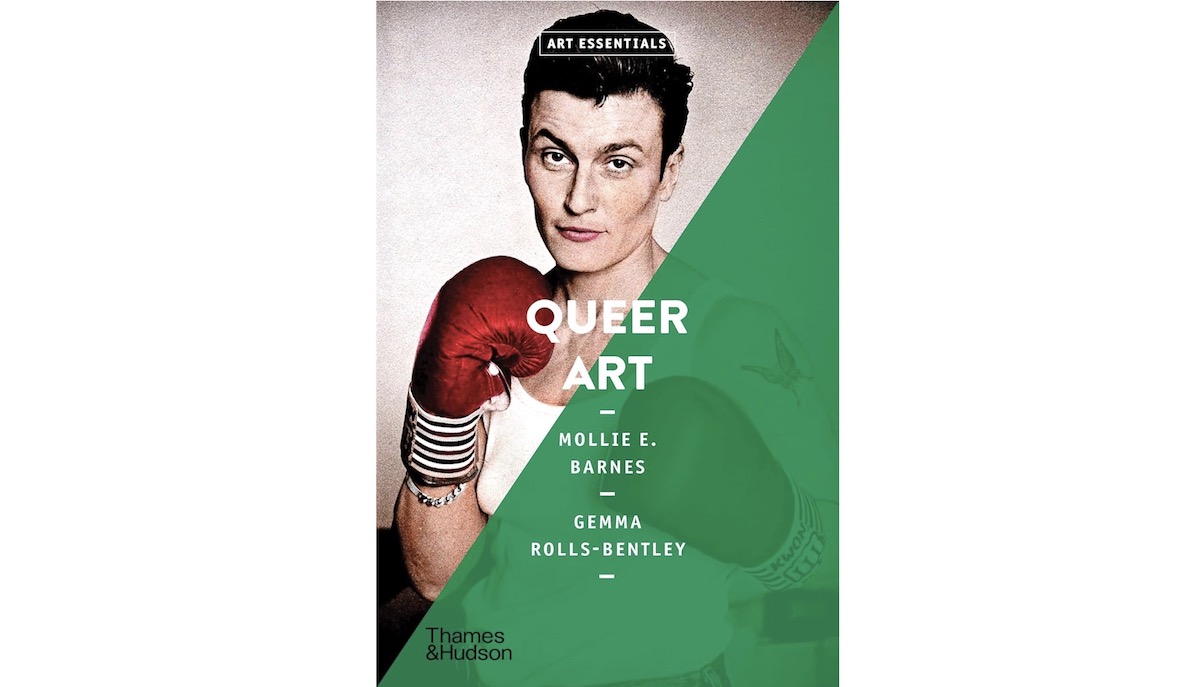
Queer Art, co-written by curators Mollie E. Barnes and Gemma Rolls-Bentley, avoids both pitfalls with considerable skill. It is concise, globally minded and genuinely thoughtful about what it means to frame Art under this particular heading, and it arrives as one of the more useful contributions to the growing literature on LGBTQIA+ visual culture.
The book spans the nineteenth century to the present, a range that could easily become unwieldy. Still, Barnes and Rolls-Bentley manage it through four thematic chapters organised around the concepts of liberation, intersectionality, reclamation and futurism. The structure does real work. Rather than arranging the material chronologically and allowing the reader to settle into a comfortable narrative of progress, the thematic approach forces unexpected juxtapositions and connections, placing historical figures alongside contemporary practitioners in ways that illuminate both. Keith Haring, Bhupen Khakhar, Hélio Oiticica, Catherine Opie, Lotte Laserstein and Xiyadie are among the artists who appear across these chapters, and the selection itself makes an argument about the breadth of what queer Art encompasses.
Barnes and Rolls-Bentley are interested in the full complexity of lived experience as it surfaces in visual practice. That interest opens the book to work and artists that a narrower definition would exclude. The result is a richer and honest account of what queer visual culture actually looks like across geographies and generations.
The endorsements the book has gathered speak to the range of its appeal. Kae Tempest describes being galvanised and reassured by it. Maggi Hambling, whose own position within queer art history is secure, calls it a long-overdue gazetteer. Russell Tovey’s response is perhaps more telling: he calls it the most beautiful way to know ourselves better. That kind of broad resonance, from artists, critics and cultural figures operating in very different registers, is not something a book earns through comprehensiveness alone. It comes from getting something fundamental about the subject right.
At its best, Queer Art does precisely what the most valuable survey writing does: it makes familiar figures unfamiliar again. It introduces lesser-known practitioners with enough context to make their significance immediately legible. It is a book that earns its place on the shelf and, more importantly, one that repays the effort of reading rather than merely browsing.
Queer Art by Mollie E. Barnes and Gemma Rolls-Bentley is available HERE