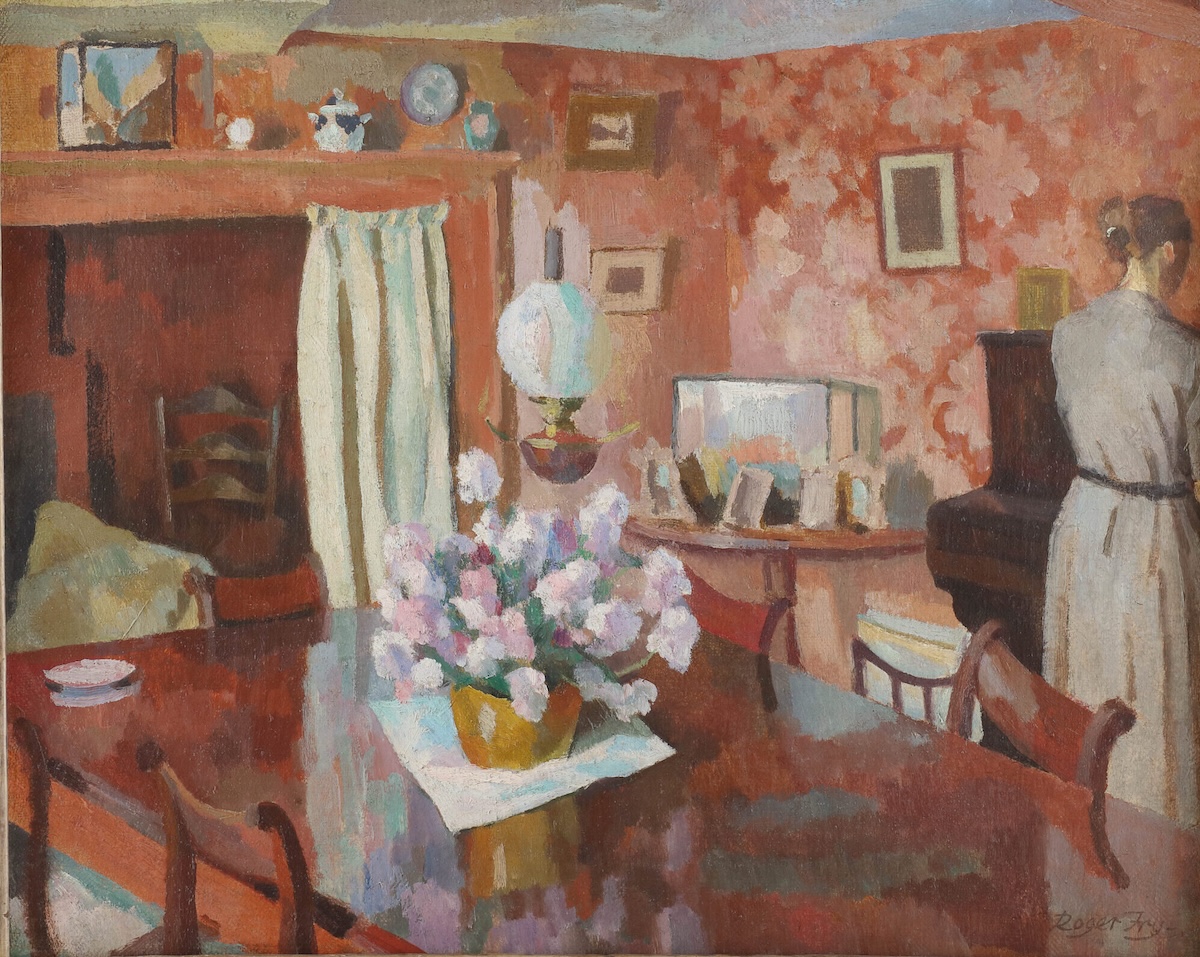
What more fitting venue for this Roger Fry show than the Bloomsbury aquarium at Charleston? The show gives Roger Fry his due as an artist. As generations passed on and time wore on, Roger Fry’s name waned. With no major exhibition of Roger Fry’s paintings in over 25 years, this exhibition is a quiet reintroduction to Fry’s place in the art world.
From myth-making to myth-breaking to a gentle rekindling, we see a more human, less theory-based persona at Charleston. Fry’s groundbreaking 1910 exhibition, Manet and the Post-Impressionists, at London’s Grafton Galleries, brought Paul Gauguin, Paul Cézanne, Henri Matisse and Vincent Van Gogh to a British public for the very first time. Something of a shock, this and a subsequent show paved the way for a new way of painting, and Fry was more responsible than anyone for generating this new historical context in England.
As a leading tastemaker in the world of art, Roger Fry’s paintings were accepted simply because he was so influential. Roger Fry would gravitate to Cézanne’s painting like a bee to honey; he was so enthusiastic. Virginia Woolf, in her biography on Fry, claimed Fry’s way as a painter was clarified by the Post-Impressionist aesthetic his shows opened up.
There were new approaches to what a painter could do. Young people loved it. The establishment did not! Advising Wall St. financier J Pierpont Morgan and the Metropolitan Museum in New York on purchases for their collections was not nothing. Nor was writing articles for The Athenaeum. Teaching and lecturing were yet another hat Fry wore. Henry Tonks captures it all so cleverly in his painting, The Unknown God – Roger Fry Preaching the New Faith, Clive Bell Ringing the Bell.
Courtauld
As a member of the Bloomsbury Group, Fry spent time at Charleston, delighting in the free, informal exchanges and open relationships there. An early portrait of the socialist, poet, and gay rights advocate Edward Carpenter, in what Fry called his anarchist overcoat (1894), is forthright and captivating. Likewise, an intriguing portrait of his sister, Margery Fry (ca. 1890), exudes introspective charisma. There is a wonderful, naturally styled gouache of his wife, Helen Fry (1899), whose commissions included decorating a harpsichord for none other than Arnold Dolmetsch.
Relations between the Bloomsbury group encouraged art, but these were comfortable utopias… There were the design textiles on the Chesterfield and the painted tiles; they were forthright attempts at reinventing décor and design, humanising the everyday. The “luxe, calme et volupté” of Bloomsbury was abhorred by Wyndham Lewis and Paul Nash. An all-too-calming aesthetic was adrift in the kitchens and ponds of bucolic self-examination. Was a stronger brew of avant-gardism needed? Who had a place in British art… and where?
Fry’s gospel came from colour, shape and line, not the object or subject world per se. Looking at the works in this show, one feels that, despite the theoretical clarity of his writing, Fry was quite indecisive as a painter… The Omega Workshops, with Vanessa Bell and Duncan Grant, introduced a new aesthetic for the English house. Art forms and various media were traversed at will, including pottery, ceramics, textile design, furniture, painting, and sculpture.
The Bloomsbury bubble was bashed by talented avant-gardists like Wyndham Lewis and Paul Nash. To see Fry adopting the colours and style of the Post-Impressionists is quite preconceived. A wall of dull green landscapes in this show does nothing for Fry’s reputation as a painter, nor for his legacy. There are some that have a formal brilliance, but they always “feel” like Fry is copying an idea of an aesthetic. These include Town in the Mountains with Poplars. Boats in a Harbour, San Tropez (1915) and Still Life with Coffee Pot (1915) are better.
Words versus paintings. I prefer to wander through the landscapes of words in Roger Fry’s art books and read his brilliant, vital thoughts on art and artists of that era. And yes, painting is not the mere representation of objects, as Fry proposed in difficult, changing times. His truly influential books, Vision and Design (1920), Duncan Grant (1923), Art and Commerce (1927), Cézanne (1927), and Henri Matisse (1930), were groundbreaking.
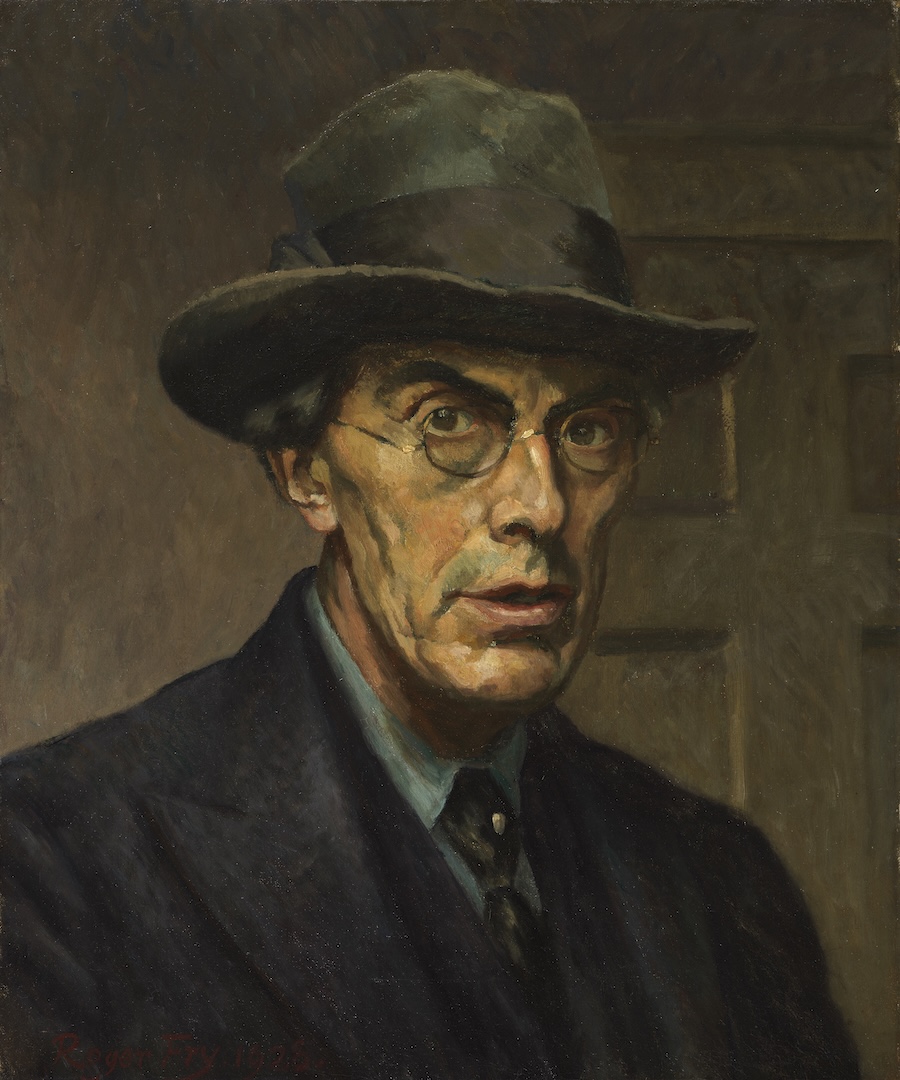
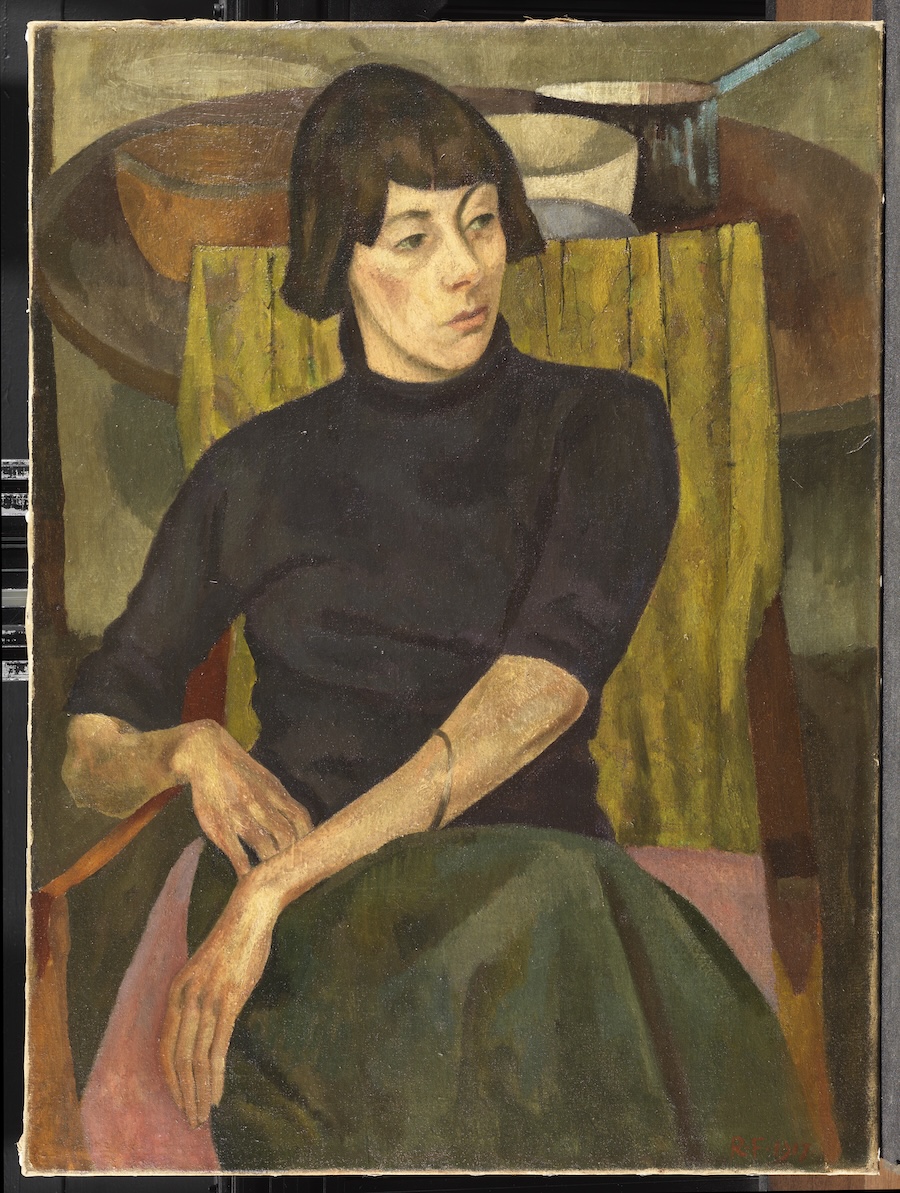
Roger Fry gets his due as an artist at Charleston. The portraits truly stand the test of time. There is an unforgettable one of a younger Aldous Huxley (1931), another of E. M. Forster with a curious look (1911), a gouache of Vanessa (Bell) Sleeping (ca. 1912), Vanessa in a Deck Chair (1911) and Nina Hamnet (1917). One wall has four Self-Portraits. In the Self Portraits, Fry (the subject) looks anxious, other times simply serious – a critic’s critic.
Roger Fry, Charleston Firle, 15 November 2025 – 15 March 2026
Visit Here