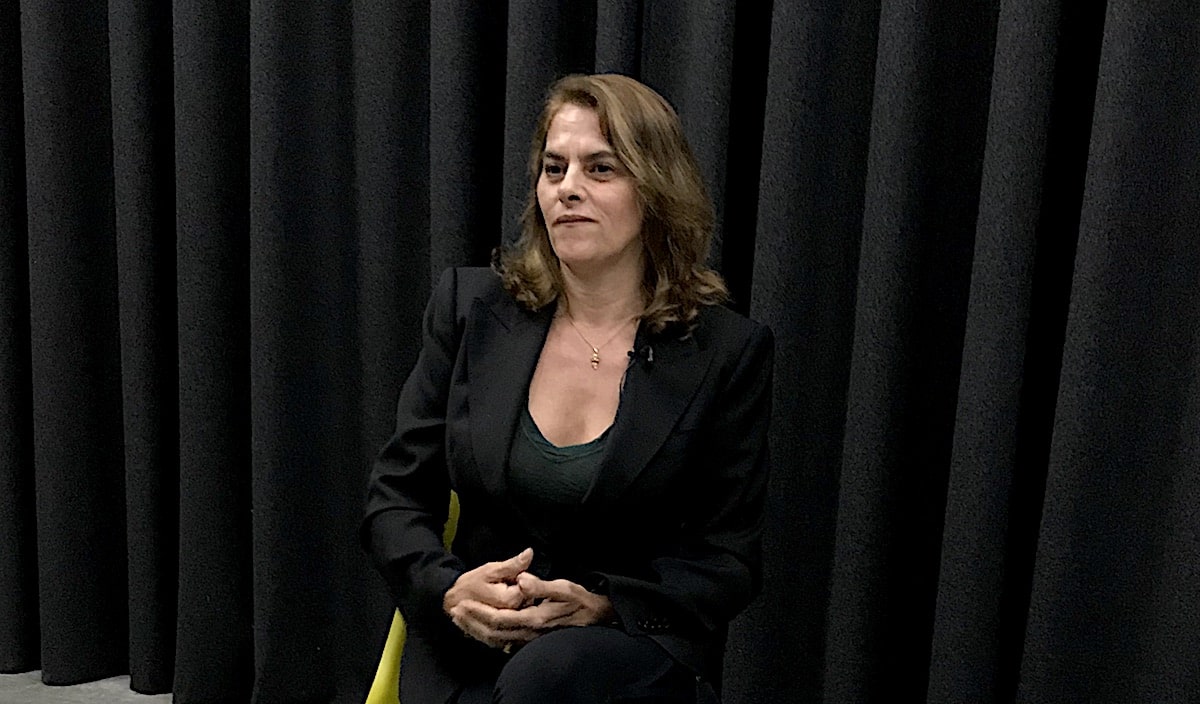
Tracey Emin has lent her voice to a campaign about what cannot be seen. An artist whose entire practice has been built on the courage to make private experience public, she brings to Transport for London’s Priority Seating Week an authority that no celebrity endorsement could replicate. The announcements, which began playing this week at ten central London Underground stations, including Bank, Canary Wharf and Liverpool Street, as well as at several bus stations, ask travellers to consider whether someone nearby might need a seat more than they do.
The campaign has personal weight. Emin, now 62 and one of Britain’s most acclaimed artists, was diagnosed with bladder cancer in 2020 and underwent surgery that involved a urostomy, leaving her living with a stoma bag. The experience transformed her relationship to public space and to the ordinary transactions of daily life that most people take entirely for granted. “Through my own experiences of cancer, which led me to having a stoma, I know just how much of an impact a health condition or disability can have on something like standing on a train,” she has said. The plainness of that statement is entirely characteristic, and it is more effective for it.
The broader point the campaign makes is worth repeating. Non-visible disabilities and health conditions are common, varied and frequently misunderstood by those who encounter their effects without being able to identify their cause. Someone who appears to have no obvious reason to need a seat may be managing chronic pain, fatigue, anxiety, a stoma or any number of other conditions that are invisible to the casual observer. TfL’s reminder that you cannot tell from appearance alone whether someone has a disability is not new information. Still, its delivery through Emin’s voice and the particular credibility she brings to it gives it a different kind of reach.
Giovanni Cinque, campaigns manager at Colostomy UK, has noted that the difficulties faced by people with stomas and other non-visible conditions on public transport can be genuinely distressing, and that a small act of kindness, such as an offered seat, can carry a significance entirely disproportionate to its apparent cost.
Priority Seating Week, now in its eighth year, extends beyond the announcements themselves. Events are taking place across the network, and stickers highlighting accessibility bays are being introduced on DLR train doors. Staff at Elizabeth Line stations, including Paddington, Romford, Woolwich and Ealing Broadway, will also be distributing Please Offer Me A Seat, Baby on Board and Babies on Board badges to customers who need them.
TfL’s customer director Emma Strain has described disability as something that can affect anyone, varying from person to person in ways that are often entirely invisible from the outside. Emin, who has spent her career insisting on the visibility of experience that others prefer to keep hidden, is a well-chosen voice for that message.
Top Photo: P C Robinson © Artlyst 2026