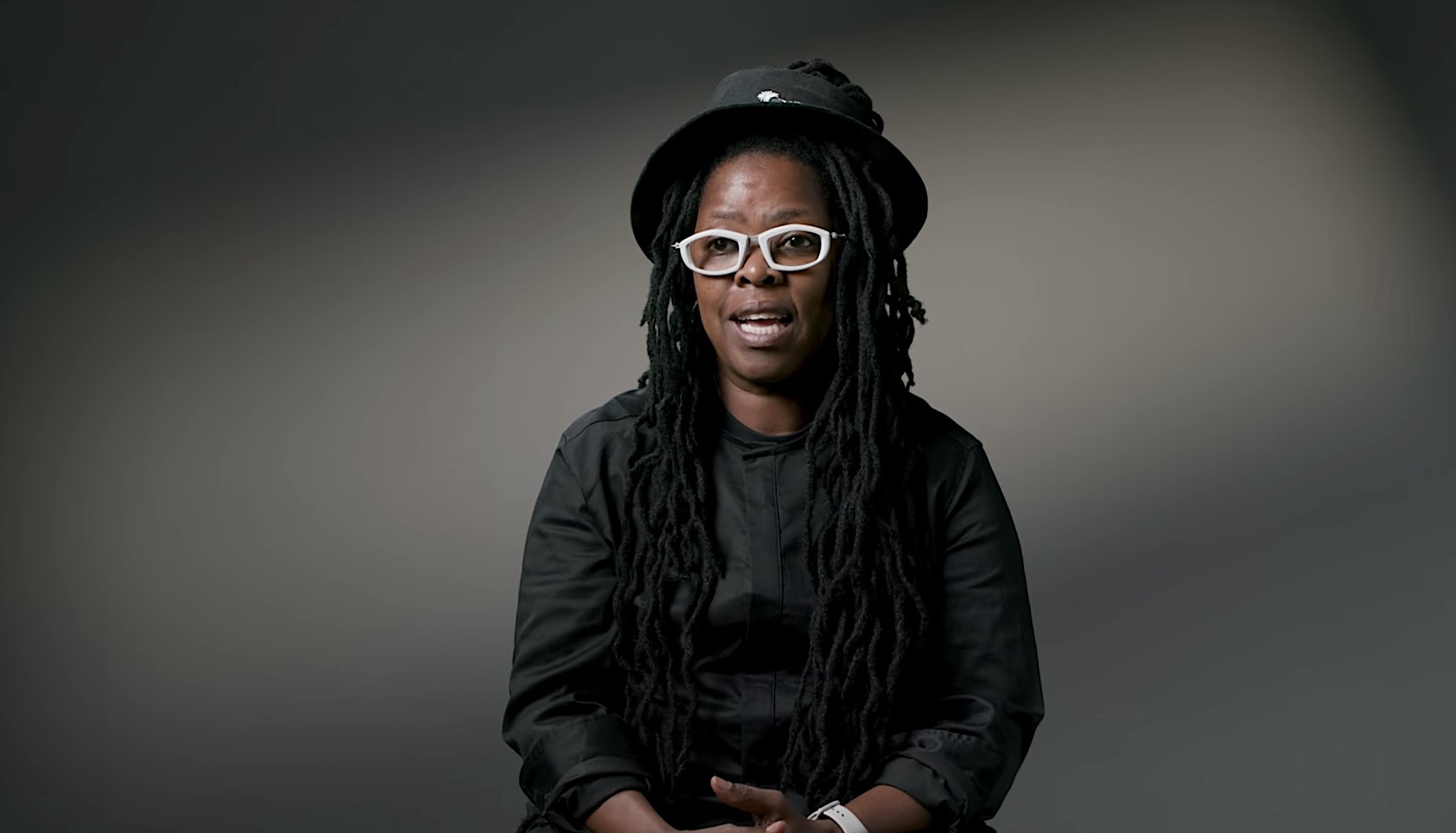
Since 1980, the Hasselblad Award list of laureates has included a syllabus for anyone interested in photography. Cartier-Bresson, Robert Frank, Eggleston, Nan Goldin, Cindy Sherman, Carrie Mae Weems, Wolfgang Tillmans. Names that define what the medium is there for and who it could speak for. Zanele Muholi, born in Umlazi, South Africa, in 1972, now joins that list as the 2026 laureate. It feels overdue, and also exactly right.
The prize itself is substantial — a gold medal, a Hasselblad camera, SEK 2,000,000, and a solo exhibition. But the real weight of it is what it says about whose work the art world has finally decided to place at the centre.
Muholi’s practice has never been interested in photography as aesthetics alone. From the beginning, the camera has been more like a political instrument — a way to assert visibility for Black queer people in South Africa at a time when that visibility carries genuine risk. The country’s 1996 constitution promised equality. The reality for its LGBTQIA+ community remains a great deal more violent and precarious than that promise suggests. The people who appear in Muholi’s photographs are not simply subjects. They are, in many cases, people whose decision to be seen at all is an act of courage.

The work most people will know is Somnyama Ngonyama — Hail the Dark Lioness — the ongoing series of black-and-white self-portraits begun in 2018 that drew enormous audiences to the Tate Modern retrospective in 2024. The images are formally precise and visually forceful, pulling from classical portraiture, fashion photography, and ethnographic tradition simultaneously, then turning those languages back on themselves. They challenge how Black bodies have been represented, framed, and consumed in visual culture. They are also extraordinary photographs.
Then there is Faces and Phases, conceived in 2006 and still growing. Now entering its twentieth year, it is an archive of images and testimonies from LGBTQIA+ individuals of colour — a record that accumulates meaning the longer it continues. The early Only Half the Picture from 2003–2004 documented lesbian lives and hate crime survivors. Brave Beauties, which has been ongoing since 2014, is a portrait series honouring trans women. Taken together, these bodies of work constitute something that goes beyond art-world categories. Muholi has said as much, repeatedly.
The community dimension of this practice is just as important as the images themselves. In 2002, Muholi co-founded the Forum for Empowerment of Women. In 2009, they established Inkanyiso, a forum for queer visual media. In 2022, the Muholi Visual Art Institute opened to support emerging artists across disciplines. The photography is the most visible part of the work. It is not the whole of it.
Muholi’s response to the award was characteristically generous and clear-eyed. “This prize is not mine alone,” they said. “I carry it with the many faces, names and histories that have trusted me with their stories.” That framing — deflecting individual recognition back toward the collective — is not false modesty. It is a precise description of how the work actually functions.
Kalle Sanner, CEO of the Hasselblad Foundation, described Muholi as making “powerful and significant works in which human rights are central.” Which is true, and also slightly inadequate to what the work actually does. But awards ceremonies require that kind of language, and the recognition itself is what matters here.
The ceremony takes place on 9 October. A solo exhibition runs at the Hasselblad Centre from 10 October through 4 April. Go if you can.