
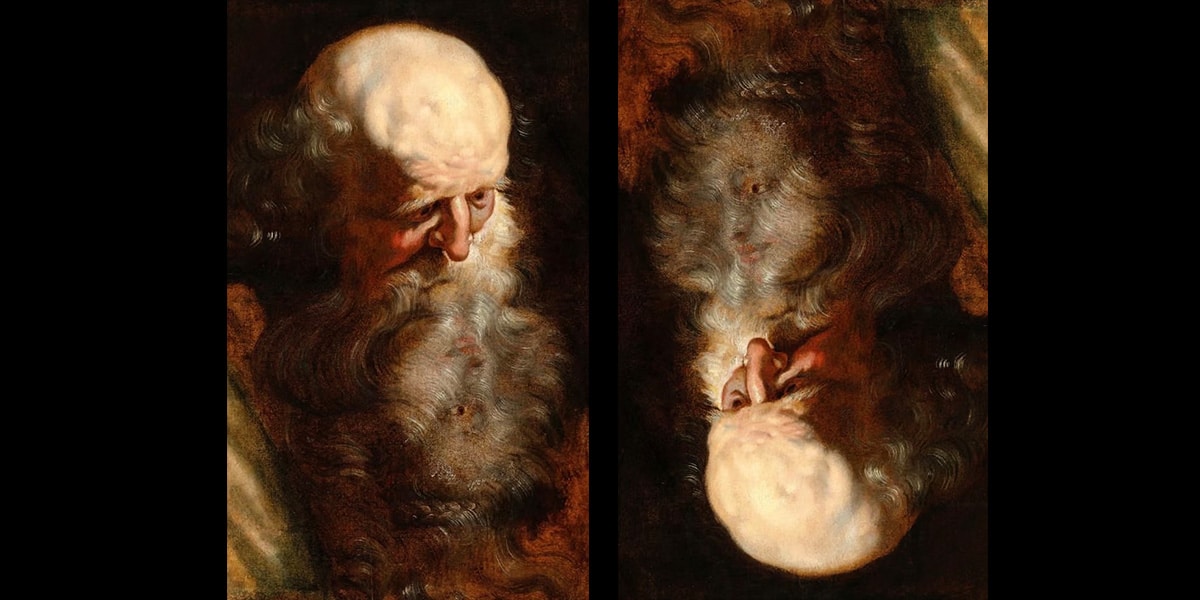
Three years ago, a Brussels-based art dealer, Klaas Muller, followed a hunch and bought a period study on paper of an old bearded man with a glazed, almost amused stare. He paid approximately 100,000 euros, a reasonable price, he thought, for a drawing of this quality. The style and age of the study ticked several boxes, suggesting it could be from the workshop of Peter Paul Rubens or perhaps from the master himself. The unnamed auction house that sold the lot was a small, northern European firm.
What arrived at his door looked tired, grimy, with a heavy coating of varnish darkened with age. Still, the markers showed through. It was familiar, somehow. When the sheet was rotated, something else appeared. The curve of a cheek. Flowing hair. A young woman, calm, almost smiling, sitting inside the beard of the older man like a memory.
The painting exhibited all the characteristics of a work by the Flemish artist Peter Paul Rubens. The attribution was a guess, not a conclusion. Muller owns shelves of books on the artist and has exhaustively tapped this resource for many years. “Addiction” is the word he uses, without apology. The drawing just felt right. The hand is confident. Lively. Unforced.
After months of prolonged study by Ben van Beneden, former director of the Rubens House, the work became increasingly plausible as a genuine study by the old master. Van Beneden is extremely cautious with attribution. The study was created as a working drawing, and the figure depicted has appeared in other works by the artist. In Antwerp Cathedral, the Raising of the Cross. In Madrid, red cloaked, as Melchior in The Adoration of the Magi, 1609 and 1628-29 Museo del Prado. In San Francisco, half hidden, peering past Christ in The Tribute Money. The same face again.
Rubens learned from the Italian painters to collect faces. Physiognomy: a stock of expressions was a reference library of images ready for reuse. A prototype head study of this man is thought to have existed and then vanished. This very well may be it.
The woman most likely came first. Paper was expensive. Rubens traced over an earlier image, letting it float beneath the surface. Today, the drawing hangs in Muller’s home. It will move to Brafa in Brussels. He wants it seen. Studies deserve that, he says. Even working scraps. Especially those. A museum loan would be ideal.
This study was never a finished work of art. It, however, has survived for centuries. Rubens’ studies have often sold for between £500,000 and £1 million in the past. Now cleaned and ready for market, it will undoubtedly achieve this sort of money.
Top Photo: Peter Paul Rubens/Klaas Muller/Brafa Art Fair 25 JAN – 1 FEB 2026 BRUSSELS EXPO