
An export bar has been placed on Claude Lorrain’s Landscape with Rural Dance, giving UK institutions a chance to secure the painting for the nation.
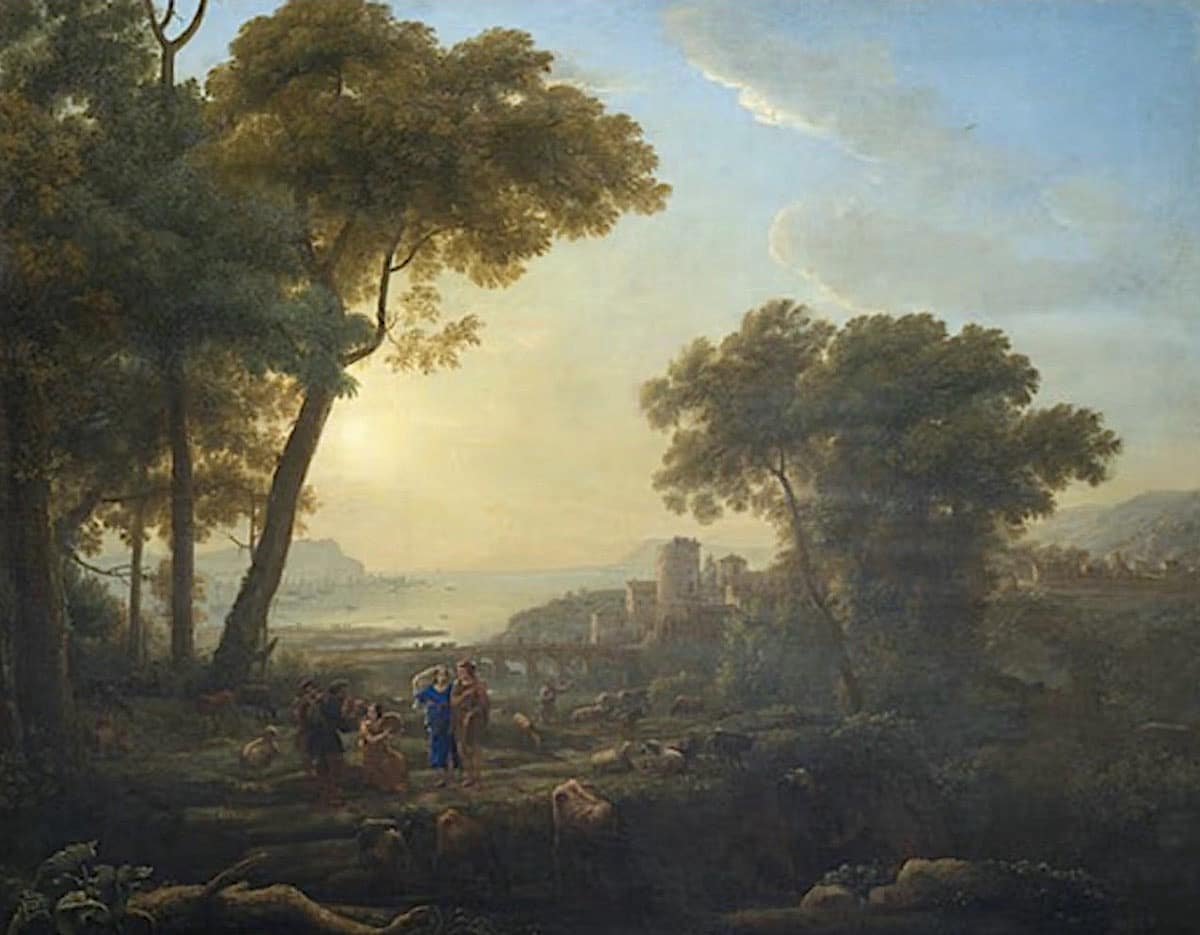
Painted in Rome around 1640, the large seventeenth-century canvas shows shepherds pausing from their labour to make music, their flocks grazing nearby. It is a familiar Claude motif: pastoral life imagined as unhurried, harmonious and gently removed from the pressures of the city. At close to four centuries old, the work belongs to the period when Claude’s reputation was consolidating across Europe.
Measured at 118 by 148.5 centimetres, Landscape with Rural Dance was ambitious by the standards of the time and remains so today. Its breadth allows Claude to do what he did best—stage light itself as the main protagonist. The low sun spills across water and land in a wash of gold, a trademark effect that made his Roman landscapes prized by aristocrats, diplomats and collectors almost as soon as they left his studio.
Art historians regard the painting as one of his best works. Its scale, assurance and handling place it among the finest examples of his mature style. The valuation, set at £9 million, reflects both that standing and the rarity of works of this calibre appearing on the market.
Claude Lorrain—born Claude Gellée in the Duchy of Lorraine to a peasant family—travelled widely before settling permanently in Rome. There, he built a career painting landscapes that fused classical harmony with close study of atmosphere and light. Landscape with Rural Dance was completed during this Roman period, when his work was increasingly sought after by elite patrons across Europe.
The painting has been in Britain for more than 250 years. It was first recorded in the collection of a Flemish merchant in Rome, before entering the holdings of the Dukes of Bedford and being displayed for many years at Woburn Abbey. That long association with British collecting culture was one of the factors behind the decision to defer its export.
Culture Minister Baroness Twycross described the work as “a stunning window into the pastoral idylls of the seventeenth century”, adding that Claude’s painting “draws you ever deeper into the scene with each exquisite detail”. She noted that the picture’s long residence in the UK strengthens the case for its continued public accessibility.
Christopher Baker, of the Reviewing Committee, placed the painting within Claude’s wider achievement. He said the artist “created a deeply seductive, escapist vision of the warmth of southern Europe”, and described the work as showing Claude “at the height of his powers”. Baker also pointed to its influence on British taste and landscape painting, arguing that “every effort should be made to secure it for a public collection”. The Minister’s decision follows advice from the Reviewing Committee. (RCEWA), which judged the painting to meet the second and third Waverley criteria—for outstanding aesthetic importance and for its significance to the study of Claude, his patrons and the development of landscape painting.
The export licence has been deferred until 15 April 2026. The committee is looking for a UK buyer to emerge; the owners will then have a 15-business-day period to consider any offer at the recommended price of £9 million, plus VAT of £1.64 million (reclaimable by eligible institutions). Should an option agreement be signed, a further six-month deferral period will follow.
The Minister can also look at reduced offers from public institutions via private treaty sales, a mechanism that has, in the past, helped museums and heritage bodies secure major works on more advantageous terms.