The National Gallery will stage the first major UK exhibition devoted to Francisco de Zurbarán (1598–1664) next spring, opening from 2 May to 23 August 2026. This long-overdue exhibition places Zurbarán alongside his great contemporaries Diego Velázquez and Bartolomé Esteban Murillo, reaffirming his position as one of the defining painters of 17th-century Spain.
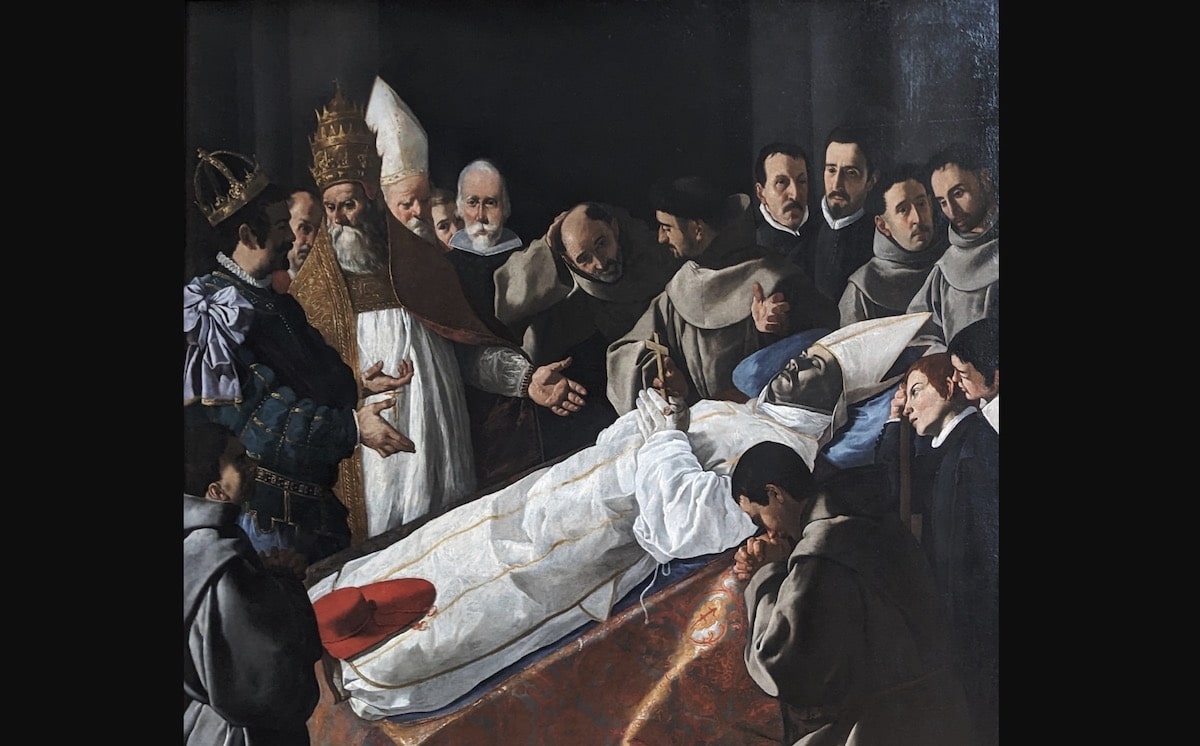
Zurbarán’s paintings unleash a powerful force. Saints appear, life scales with an unmissable presence. Altarpieces are composed with true architectural knowledge, and still lifes hold a hushed, devotional quality. The work is stark, suffused with a concentrated emotional weight. Bringing together nearly 50 paintings, the exhibition traces Zurbarán’s career across four decades, moving both chronologically and thematically. It draws on an exceptional range of public and private collections, uniting works from the Musée du Louvre, the Art Institute of Chicago and the National Gallery itself. These institutions are also partners in the exhibition’s subsequent tour to Paris and Chicago, scheduled for October 2026 to June 2027. Highlights include Saint Bonaventure on His Bier and Saint Apollonia from the Louvre; The Crucifixion and Saint Romanus of Antioch from Chicago; and key National Gallery holdings such as Saint Margaret of Antioch and Still Life with Lemons in a Wicker Basket by Zurbarán’s son, Juan.
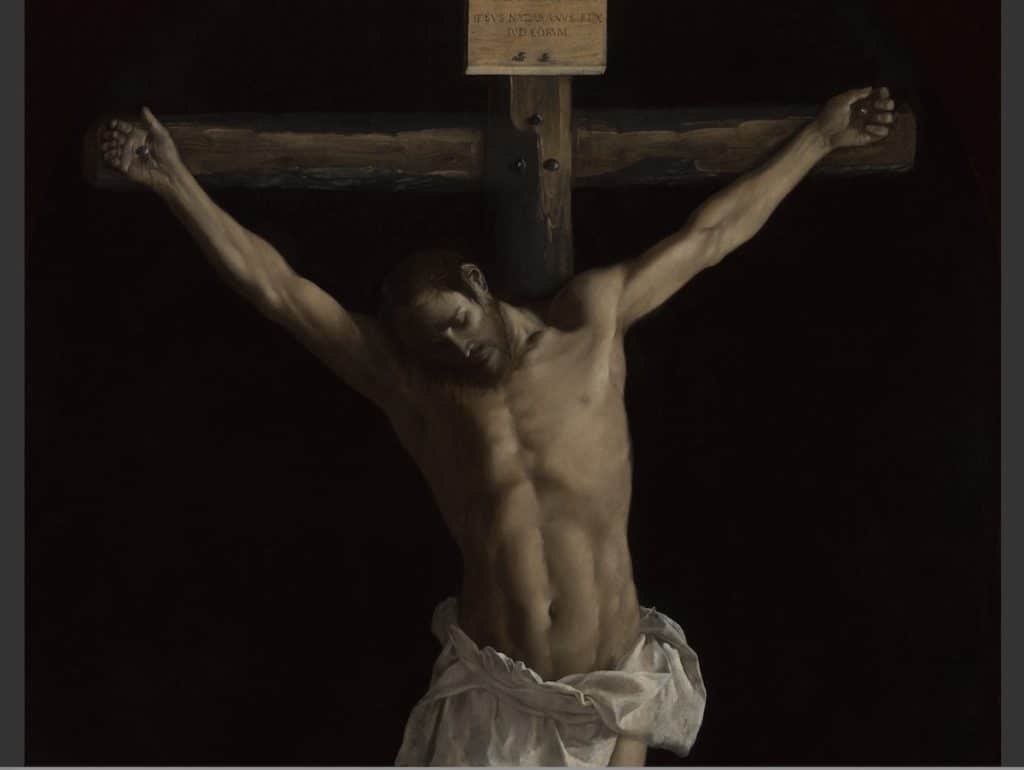
Francisco de Zurbarán (1598–1664) ‘The Crucifixion’, ‘Saint Romanus of Antioch’ and ‘Saint Barulas’ Art Institute of Chicago
Further major loans arrive from across Europe and the United States, including Agnus Dei and The Crucified Christ with a Painter from the Prado, Santa Casilda from the Thyssen-Bornemisza, and Christ and the Virgin in the House at Nazareth from the Cleveland Museum of Art.Together, these works form a wide-ranging portrait of an artist whose paintings continue to feel enigmatic, forceful and strangely modern. Zurbarán spent most of his working life in Seville, then one of Europe’s wealthiest cities and a centre of global exchange through its maritime links with the Americas.
The city’s powerful religious orders were his principal patrons. They commissioned vast quantities of paintings and monumental altarpieces. However, he also produced works for private collectors and, for a period, for the Spanish court in Madrid. Alongside this public output, Zurbarán was a piercing observer of the material world. His paintings for private devotion and his rare still lifes retain an immediacy that still resonates today.
The exhibition is organised in seven sections. The opening gallery introduces Zurbarán as a painter of vision and conviction, focusing on his capacity to inspire awe and to infuse familiar religious subjects with an unsettling intensity. Works such as The Apparition of Saint Peter to Saint Peter Nolasco and The Crucified Christ with a Painter establish his distinctive visual language.
The second room turns to Seville’s religious institutions, exploring paintings made for the city’s monasteries and convents. Here, Zurbarán’s command of scale and narrative comes into focus, along with his inventive approach to composition and iconography, as seen in works such as The Vision of Alonso Rodríguez.
In The Fabric of Saints, the third section, attention shifts to Zurbarán’s extraordinary handling of textiles. Saints appear clothed in wool, leather, embroidery and cord, rendered with such specificity that they seem rooted in the everyday world. The emphasis on fabric may reflect his father’s trade as a haberdasher, as well as the visual spectacle of Seville’s processions and theatrical culture.
The fourth room examines Zurbarán’s engagement with religious iconography, particularly the Immaculate Conception, a subject central to Sevillian devotion. By placing different treatments of the same theme side by side, the exhibition reveals an artist continually searching for new pictorial strategies to convey wonder, stillness and belief.
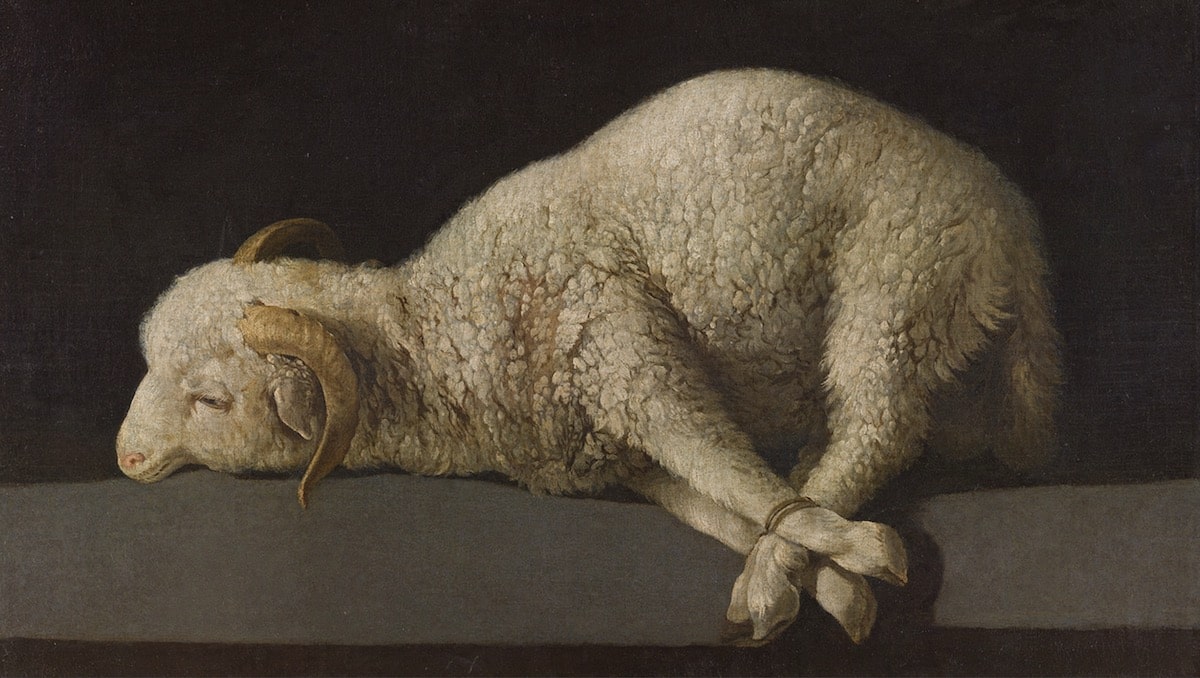
Francisco de Zurbarán (1598–1664) Museo Nacional del Prado, Madrid © Photographic Archive Museo Nacional del Prado
Beyond Seville, the fifth section examines commissions for patrons elsewhere, including Zurbarán’s prestigious invitation to Madrid in 1634 to contribute to the decoration of the Buen Retiro palace. Here, two paintings from his celebrated Labours of Hercules series—Hercules and Cerberus and Hercules and the Cretan Bull—testify to his ability to adapt his stark visual language to mythological subjects on a monumental scale.
Still life takes centre stage in the sixth room. It is thought that Zurbarán produced fewer than ten still lifes himself, making this grouping a rare opportunity to encounter this quieter strand of his practice. Works by his son, Juan, are shown alongside his own, including Still Life with Lemons, Oranges and a Rose, presented for the first time in dialogue with the National Gallery’s A Cup of Water and a Rose.
The final sections focus on paintings made for private devotion. Often modest in scale, these works are among Zurbarán’s most intimate, inviting, close, and reflective engagements. Together, they round out a portrait of an artist whose work moves fluently between grandeur and restraint, public spectacle and private contemplation.
The exhibition shows an artist shaped by faith, commerce and imagination. It is a rare chance to see the full range of his paintings, which resist easy categorisation and reward sustained attention.
Top Photo: Detail Francisco de Zurbarán (1598–1664) ‘Saint Bonaventure on His Bier’ and ‘Saint Apollonia’ Musée du Louvre, Courtesy Wiki Media