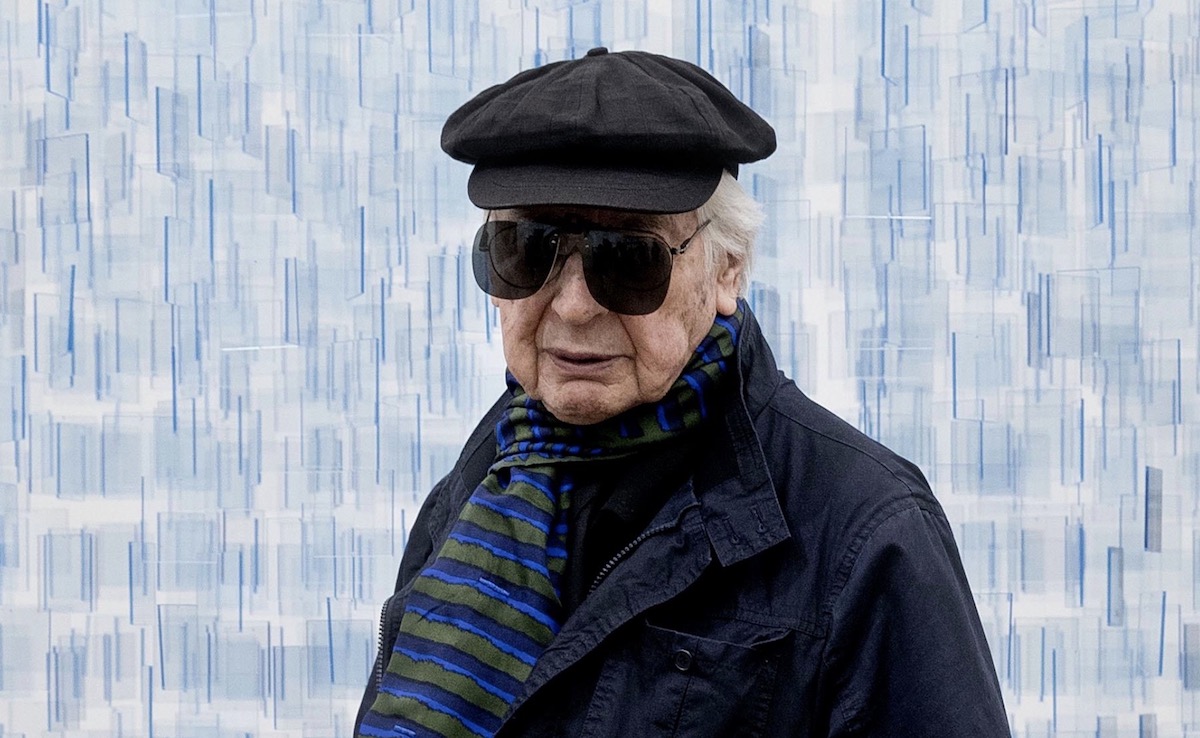
Julio Le Parc, the Argentine-born artist whose restless imagination transformed the experience of looking into something physical, participatory and genuinely democratic, died on 30 May in Paris. He was 97.
Born in Mendoza, Argentina, in 1928, Le Parc came of age in Buenos Aires, where he studied at the School of Fine Arts and encountered the intellectual energies that would shape his practice for the next seven decades. The geometrical rigour of Arte Concreto-Invención and the spatial ambitions of Lucio Fontana’s Spazialismo movement left their mark, steering him away from expression toward system, from gesture toward structure. In 1958, he arrived in Paris on a French government scholarship, accompanied by fellow artist Francisco Sobrino, and settled there permanently — though he never allowed distance to sever his connections to Latin America.
Paris in 1960 was a city fermenting with ideas about what art could do, and Le Parc arrived at precisely the right moment to help decide. Reacting against the gestural excesses of tachisme, he turned instead to the cooler, more rigorous inheritance of Mondrian, Vasarely and the Constructivist tradition. Working from predetermined systems rather than intuition, he began producing geometric abstract paintings, first in black and white, then gradually opening into colour. In 1960, alongside François Morellet, Sobrino, Yvaral and others, he co-founded the Groupe de Recherche d’Art Visuel, a collective whose name announced its purpose with characteristic precision: research into visual art.
Julio Le Parc
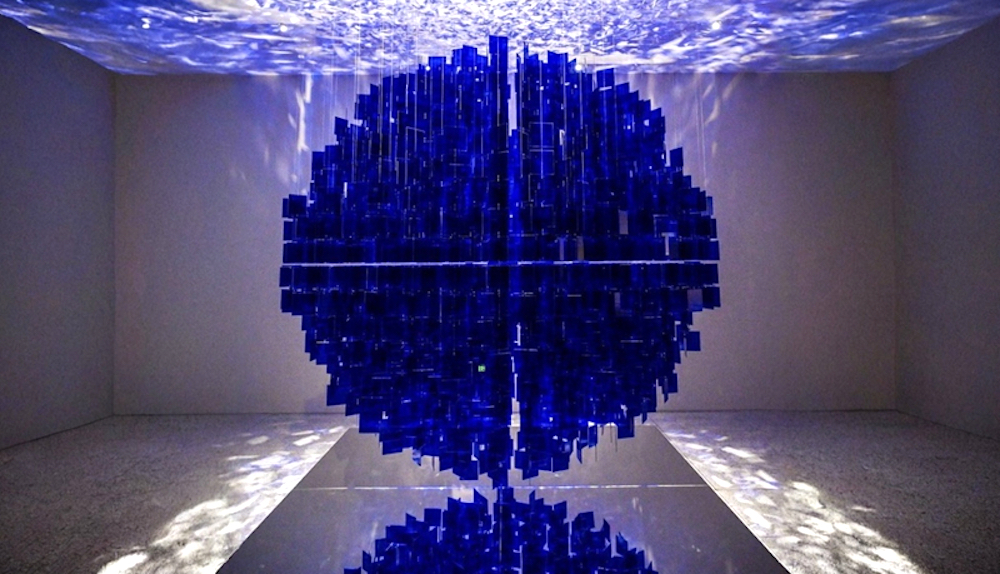
That same year, Le Parc extended his practice into three dimensions with his first reliefs and his initial series of Continual Mobiles, introducing movement and light as formal elements rather than atmospheric effects. By 1962, he was incorporating projected and reflected light, pulsating and shifting, into works that seemed to breathe. His use of distorting mirrors from 1964 onwards — displacing and disorienting the viewer with calm precision — signalled an increasingly sophisticated understanding of perception itself as the true medium of his work.
What distinguished Le Parc from many of his contemporaries was an abiding belief in the active, embodied spectator. His labyrinths and playrooms were not decorative conceits but structural arguments: that looking is something done, not merely received, and that art becomes itself fully only when someone moves through it. This conviction was inseparable from a broader politics. Le Parc sought a more democratic art, one that required no specialist training to enter and offered genuine pleasure rather than bewilderment as its opening gambit.
International recognition came decisively in 1966, when he was awarded the Grand Prize for Painting at the Venice Biennale and held his first solo exhibition at the Howard Wise Gallery in New York. The prize was not without controversy — Le Parc’s commitment to collective practice sat uneasily with the art world’s appetite for individual genius — but the work itself was undeniable. Shimmering, restless and formally inventive, it occupied a category of its own.
Across seven decades, he continued to work with a discipline and curiosity that rarely faltered, producing kinetic sculptures, large-scale geometric paintings and works on paper that tested colour combinations and dynamic visual effects with the patience of a scientist and the instincts of a showman. Recent years brought renewed attention: a major retrospective is about to open at Tate Modern on 11 June 2026. This collaboration gave curators the rare opportunity to review the full arc of his career alongside the artist himself.
Catherine Wood, Interim Director of Tate Modern, spoke for much of the international art world when she described Le Parc as “truly the grandfather of interactive art.” Her statement noted that his death represents “an enormous loss to the international art community as well as to his many friends and the fellow artists he inspired.” Work on the forthcoming Tate exhibition will continue as a tribute to his vision.
He is survived by his three sons, Gabriel, Juan and Yamil.