
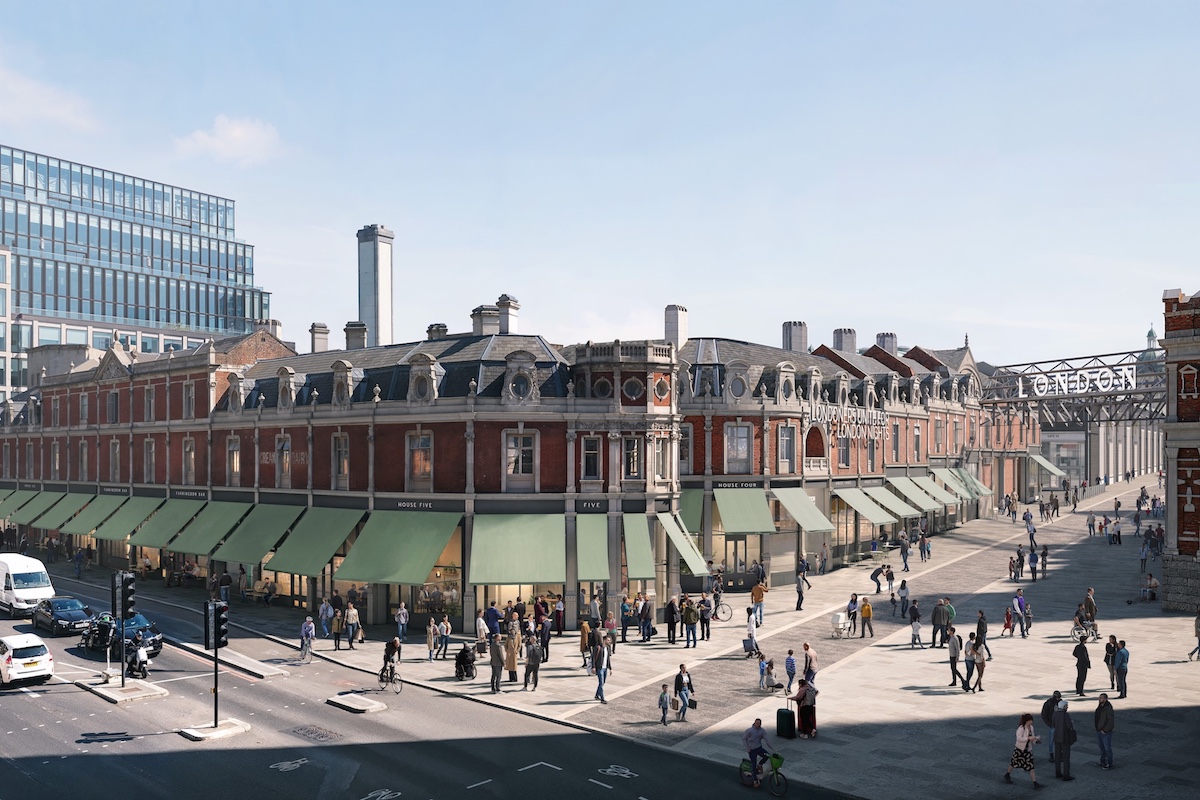
Museum of London, rebranded as London Museum, has confirmed it will open at the General Market in Smithfield on 28 November 2026. The date ends a decade of restoration work on the Victorian market building, which has sat largely unused for more than thirty years, and completes a project that has cost £437 million and involved a partnership between the City of London Corporation and the Mayor of London, with additional support from Bloomberg Philanthropies, the Goldsmiths’ Foundation, The Linbury Trust and the National Lottery Heritage Fund.
The building is in the City of London, one of the oldest parts of the capital. It is designed by Stanton Williams and Asif Khan, working alongside conservation architect Julian Harrap. The design organises the museum into three interconnected spaces, each named to signal its relationship to TimeTime. Real Time is the main entrance, a covered former street enriched with live data that captures the City in the present moment. Our Time occupies the Linbury Hall, a central social space beneath the market’s restored dome, anchored by thirteen large installations drawn from London’s living memory. Past Time is below ground, in the cavernous subterranean galleries, where the permanent historical displays are arranged chronologically and thematically across 450,000 years of the City’s existence.
The collection runs to seven million objects drawn from all 33 boroughs. Among the confirmed highlights are the Whitechapel Fatberg, Charles I’s execution vest, Emmeline Pankhurst’s hunger strike medal, Anna Pavlova’s Dying Swan dress and Banksy’s Piranhas artwork. The Lord Mayor’s Coach, paraded annually through London’s streets, will be one of the thirteen anchor displays in Our Time, alongside Syd’s Coffee Stall, a piece of East End social history, and Hanging Out, a display paying homage to gathering places that includes signage from the India Club, Topshop and the Galtymore Dance Club.
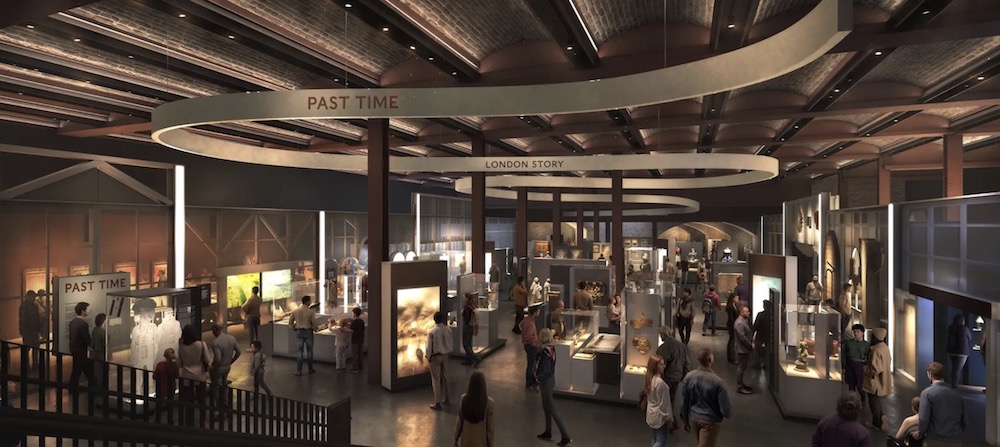
London Museum Smithfield
In the Goldsmiths’ Gallery, the Cheapside Hoard will be shown in the most complete display the collection has ever received. The hoard, one of the most significant collections of Elizabethan and Jacobean jewellery, has not previously been assembled at this scale. Also on display will be Roman writing tablets from the Bloomberg Collection, a trove of more than 14,000 Roman artefacts described as the largest archaeological deposition ever gifted to the museum. These are among the earliest surviving written voices from the City, and their inclusion grounds the museum’s historical range in something genuinely extraordinary.
Our Time is intended as more than a gallery. The space beneath the dome will run a day-to-night programme of activities, including a restaurant, a shop, and a show space for families and schools around its perimeter. The museum’s first major collecting project with young people, drawing on the voices of London’s Generation Alpha, will have its own display here. The ambition is evidently for the hall to function as a civic room as much as a cultural one.
Sharon Ament, the museum’s Director, described the project as an attempt to be London itself, in all its grit and glitter, which is the kind of formulation that could easily tip into marketing language but probably reflects something real about what ten years of curatorial work on this scale feels like from the inside. Over 100,000 people contributed to the museum’s development in various capacities, which is either a meaningful claim about community involvement or an impressively large number, and quite possibly both.The
London Museum is London’s shared place in the middle of it all. No matter where you’ve come from, how long you’re staying for, or what side of the river you live on, we offer a home for exploration and adventure where all of London’s stories cross and collide. At our heart we’re a social history museum and we tell the stories of how London came to be. But we’re also contemporary collectors keeping our finger on the pulse. We’re the world’s biggest city museum. At the core of the London Museum is our collection, which covers 450,000 years of history through seven million objects drawn from across all 33 boroughs. It’s the largest collection in the world relating to a single urban centre.
The London Museum opens at Smithfield, City of London, on 28 November 2026