

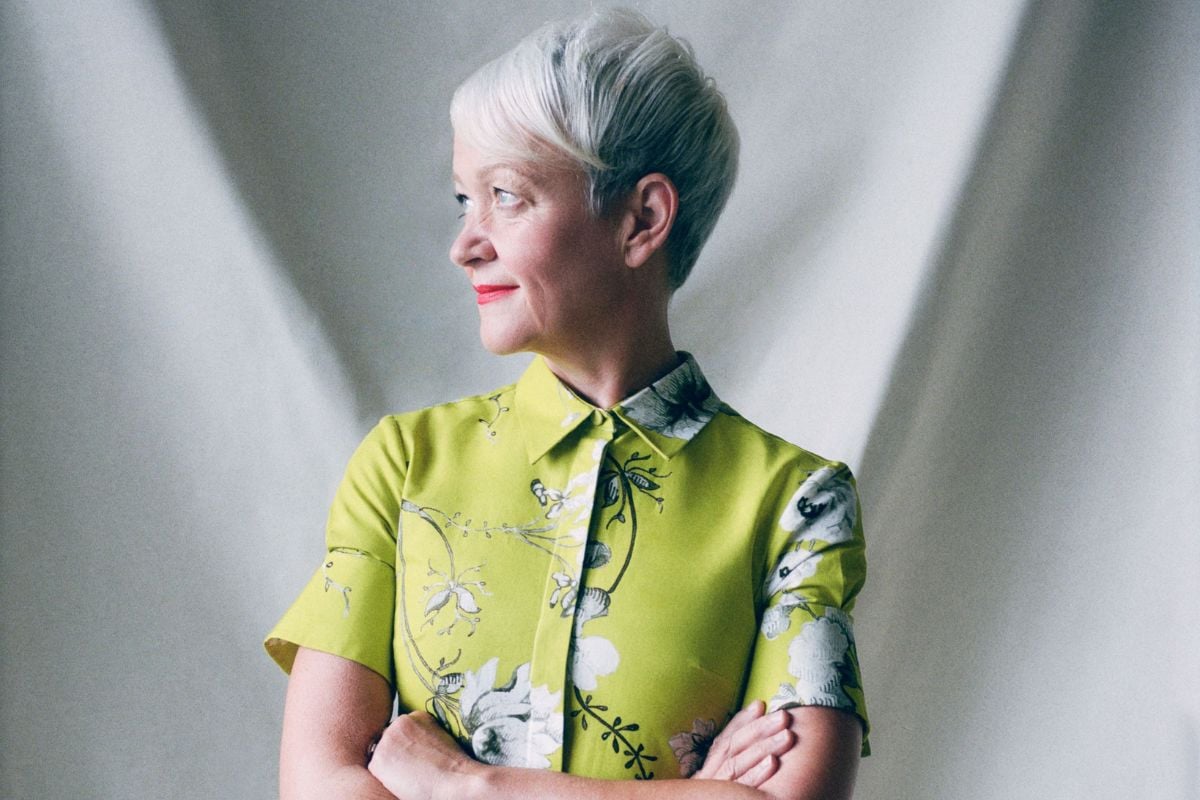
The University of the Arts London has appointed four new Independent Governors to its Court of Governors. The most prominent appointment is Maria Balshaw CBE, who joins as Deputy Chair Designate. She will take up the role in September 2026, following nine years as Director of Tate.
Balshaw was born in Birmingham in 1970 and grew up in Northampton and Leicester. She studied English Literature and Cultural Studies at the University of Liverpool, then took an MA in Critical Theory and a PhD in African American Visual and Literary Culture at the University of Sussex, completing her doctorate in 1996. She spent nearly a decade as a university lecturer before moving into arts management in 2002, when she left academia to lead Creative Partnerships in Birmingham, a government initiative placing artistic programmes in disadvantaged schools.
In 2006, she was appointed Director of The Whitworth in Manchester, where she oversaw a major expansion of the gallery’s architecture. The Whitworth won the Art Fund Museum of the Year award in 2015. She had by then also taken on the directorship of Manchester City Galleries and later the role of Director of Culture for Manchester City Council, running several institutions simultaneously across a city that was investing heavily in its cultural infrastructure.
In 2017, she was appointed Director of Tate, becoming the first woman to hold the position. She succeeded Sir Nicholas Serota and took responsibility for all four sites: Tate Modern, Tate Britain, Tate Liverpool and Tate St Ives. During her tenure, the collection was significantly diversified, with acquisitions from female artists, indigenous traditions and artists from the Global South increasing substantially. She introduced Tate Collective, a membership programme aimed at 16- to 25-year-olds25-year-olds, which reached 180,000 members. The institution navigated the Covid pandemic under her leadership and pushed through a period of significant digital expansion. In 2024, she published Gathering of Strangers: Why Museums Matter, in which she set out her thinking on the civic function of cultural institutions. She announced her departure from Tate in late 2025 and stepped down in spring 2026.
Her move to UAL is a return of sorts to higher education, and the fit is not obvious, as UAL operates very differently from Tate. Whether that distinction produces productive friction or proves awkward in practice will become clearer over time. What she brings is substantial: nearly a decade running one of the most visited and scrutinised art institutions in the world, a track record of institutional transformation at the Whitworth, and a well-documented commitment to broadening access and diversifying collections.
The three other appointments extend the board’s range in different directions. Joe Phelan, founder of Phelan and Partners, brings a background in geopolitical consultancy and strategic communications, as well as experience in cultural investment. Professor Stuart Corbridge FRGS is a former Vice-Chancellor of Durham University and former Provost at the London School of Economics, with a long career in academic leadership. Suzi Brennan, formerly Deputy CFO at Pearson, has worked across finance, strategy and organisational transformation in both education and the arts.
UAL has described the four appointments as supporting the university’s ambitious new strategy, a formulation that tells you relatively little. What the combination of backgrounds suggests is an institution thinking carefully about its financial position, its international profile and its relationship to the broader cultural sector at a moment when all three are under pressure.
The big question that still remains is who will replace Balshaw at Tate.