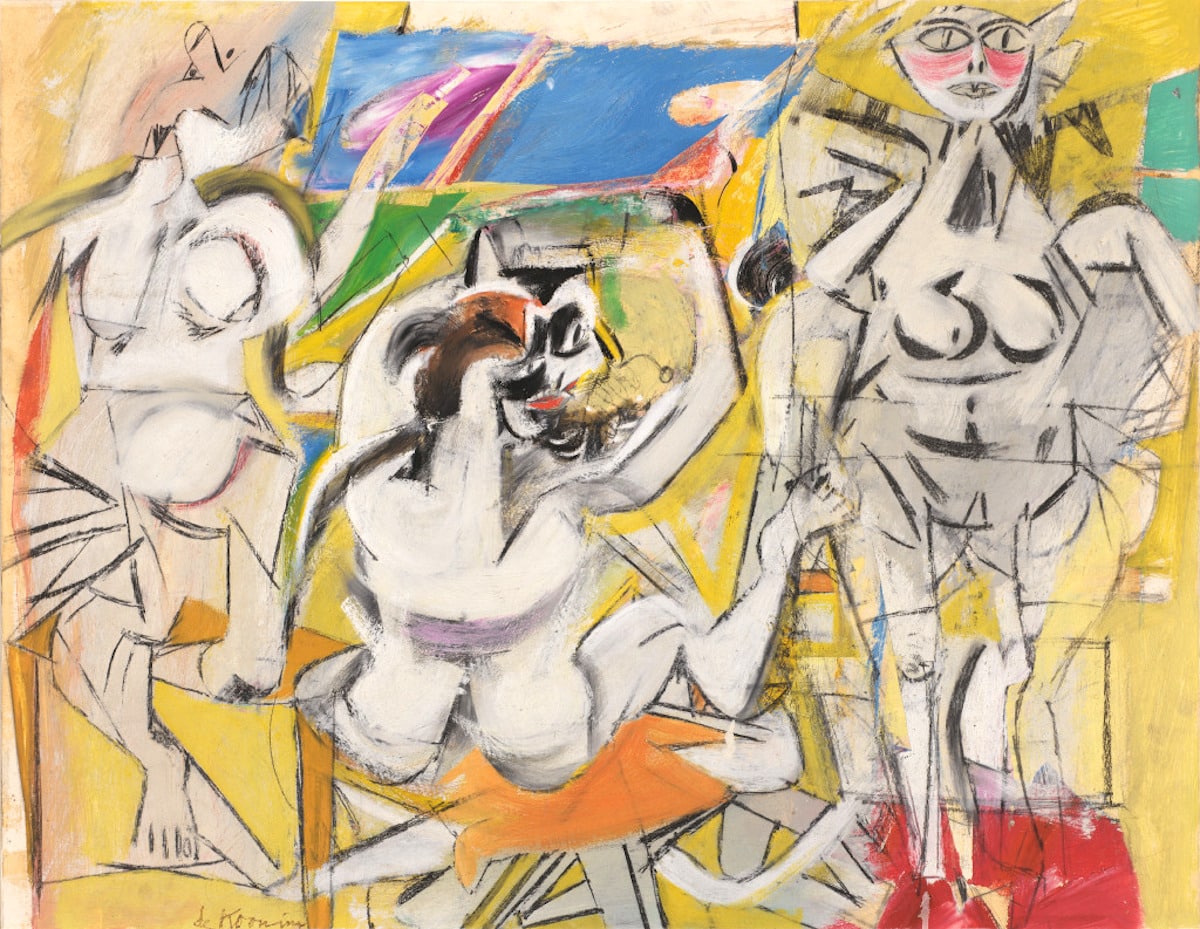
One hundred years after Willem de Kooning left Rotterdam and stowed away on a cargo ship bound for America, the Rijksmuseum is bringing him home. Willem de Kooning at Work, opening on 9 October 2026 and running until 17 January 2027, is the largest exhibition devoted to the artist in Europe for more than forty years, and the first to place his drawn work comprehensively at its centre.
The show brings together more than 120 works, with drawing as its primary thread. This is a deliberate and considered curatorial decision. For de Kooning, drawing was never a preparatory activity in the conventional sense, a means to an end on the way to something more finished and more serious. It was where his thinking happened, where he tested ideas, abandoned them, returned to them and occasionally surprised himself in the process. The exhibition makes this visible, tracing more than six decades of practice through sketches, charcoal studies, works made with closed eyes and pieces where the boundary between drawing and painting has dissolved entirely.
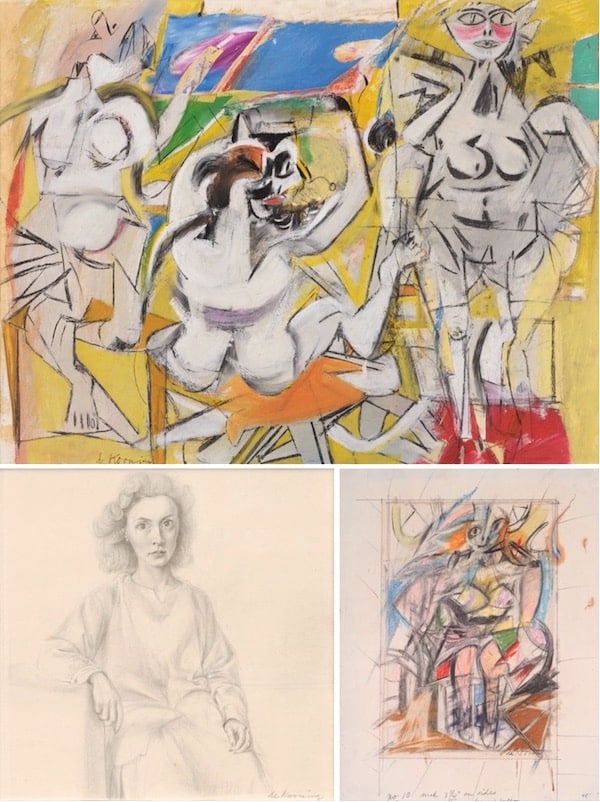
Willem de Kooning’s Landmark Rijksmuseum Exhibition
Among the works on view are Reclining Nude (Juliet Browner) from around 1934 to 1938, Itinerant Chapel from 1951, and Woman in a Rowboat from around 1964 to 1965, all from private collections, alongside Pink Angels from approximately 1945, lent by the Frederick R. Weisman Art Foundation, Abstraction from 1949 to 1950, from the Museo Nacional Thyssen-Bornemisza, and Woman from 1983, from Museum Ludwig. The landmark painting Excavation, from 1950 and held by the Art Institute of Chicago, which co-developed the exhibition alongside the Willem de Kooning Foundation in New York, will also feature.
Running alongside the main exhibition, two of de Kooning’s most iconic paintings, Woman I and Woman and Bicycle, will hang in the Rijksmuseum’s Gallery of Honour among the great works of Dutch painting. The decision to place them there rather than in the exhibition galleries proper carries a clear institutional statement: that de Kooning belongs in that lineage, a Rotterdammer who left with very little and came back, at least in this sense, as one of the defining figures in the history of Western art.
De Kooning was born in Rotterdam in 1904 and showed an early passion for drawing that led him to evening classes at the city’s Academy of Visual Arts and Technical Sciences and an apprenticeship at the decorative arts studio of Jan and Jaap Gidding. In 1926, at the age of twenty-two, he boarded a cargo ship for America without a ticket. He settled in New York, spending his first years as a house painter, illustrator and shop window designer before making the transition to an independent artist. His breakthrough came in the late 1940s, when he emerged as one of the central figures of the New York School alongside Jackson Pollock, Lee Krasner, Barnett Newman and Mark Rothko. He spent the rest of his long career resisting every attempt to fix him within a single category, remaining genuinely committed to the idea that art should keep moving and that the search for new possibilities was the point rather than the destination. He died in 1997 at the age of 92.
The recurring subjects across the exhibition- the human figure, landscape, the female body, the urban environment- are treated not as fixed themes but as occasions for reinvention. De Kooning returned to the same territory repeatedly, never quite arriving at a final version, always finding another way in. The drawings make that restlessness legible in a way that the major paintings, for all their energy, sometimes obscure.
Two publications accompany the exhibition. A scholarly catalogue edited by the Art Institute of Chicago presents new research on the drawings. A separate book published by the Rijksmuseum is aimed at readers coming to de Kooning for the first time, or returning to him after a long absence.
The public programme includes a masterclass in modern art history, a drawing workshop at the Rijksmuseum’s educational centre, the Teekenschool, and an audio tour. In Rotterdam, Fenix, the museum dedicated to migration, is marking the centenary with three of de Kooning’s monumental bronze sculptures installed on the quay outside the museum from 18 July 2026. Students at the Willem de Kooning Academy in Rotterdam have also been invited to take part in an open call to redesign the Rijksmuseum’s exhibition tote bag, with two winning designs to be sold in the museum shop during the run of the show.
Willem de Kooning at work 9 October 2026 – 17 January 2027 Rijksmuseum, Amsterdam, The Netherlands