
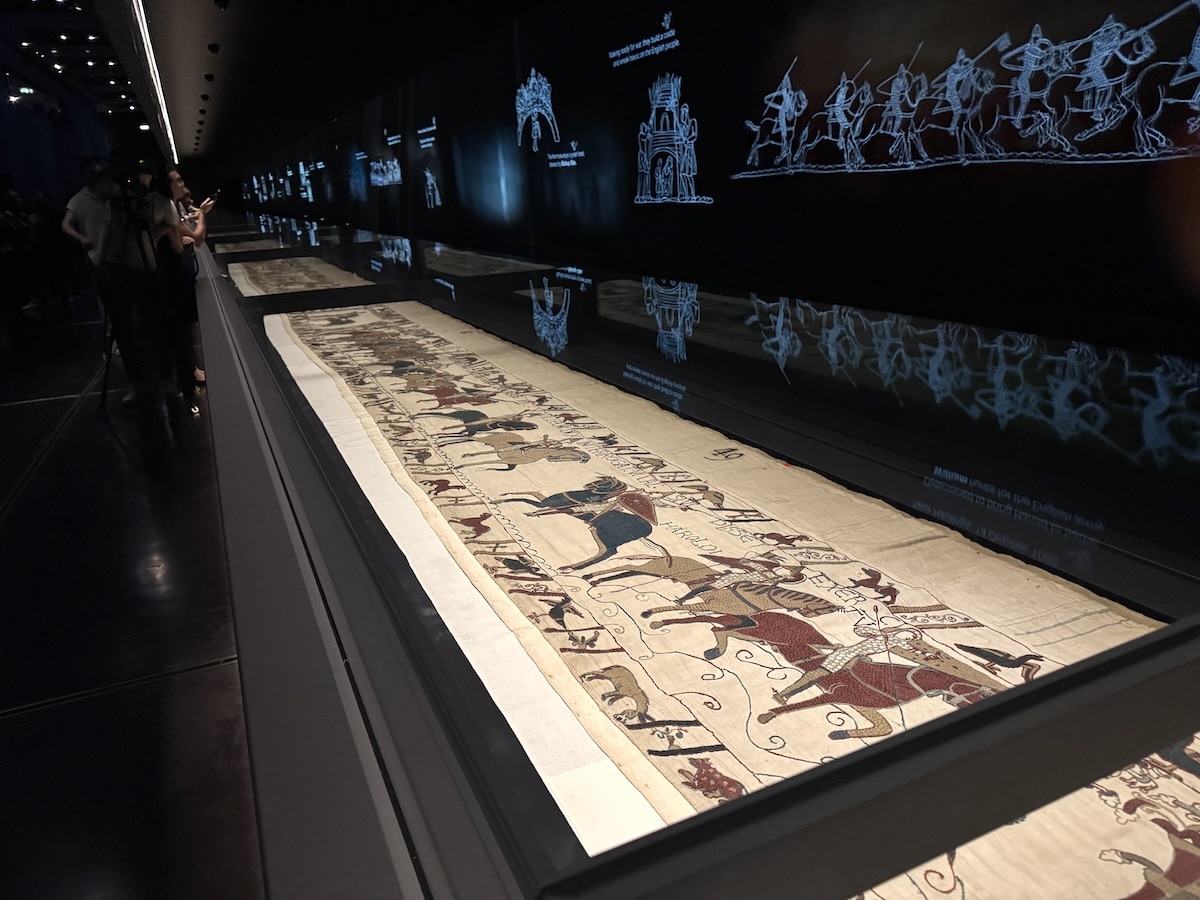
The Bayeux Tapestry has arrived at The British Museum in London after a historic loan agreement with France. The 70-metre Bayeux Tapestry depicts the 1066 Norman invasion and the Battle of Hastings, and is the first time it has been shown in the UK since it was made almost 1,000 years ago. After a week of previews, the exhibition opens to the public on 10 September and will run until 11 July 2027. Tickets for the first run until the end of 2026 sold out instantly, but more tickets are being released on 21 October for bookings from January to April 2027, with member tickets released on 6 October.
At the British Museum, it is presented flat in a glass cabinet in a darkened room with subtle lighting. You first get a glimpse of it from an upper balcony, where you can see all seventy yards spread out below, before heading downstairs to study each frame more closely. A helpful animation projected on the back wall explains the story as you move along.
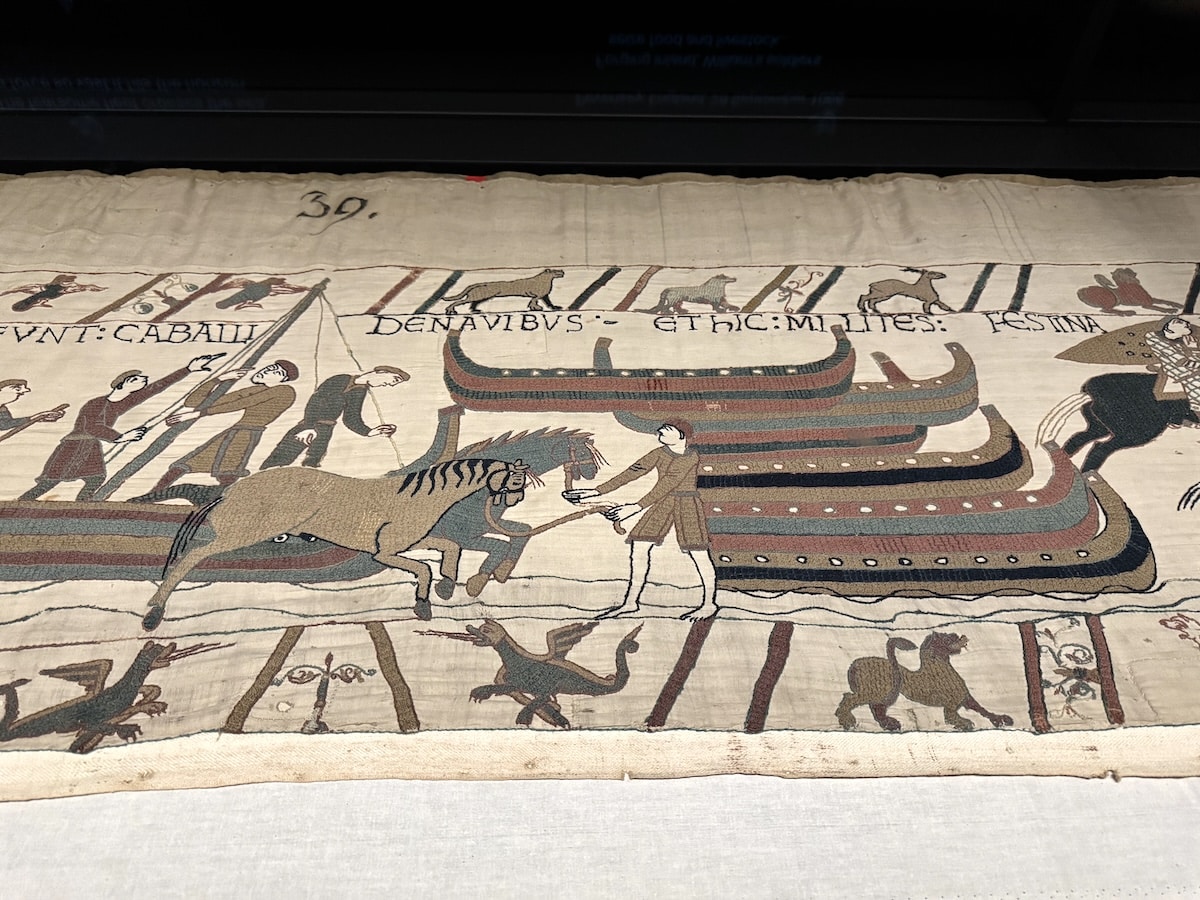
Bayeux Tapestry animals
The 11th-century embroidery is made of dyed wool stitched onto a bleached linen background fabric. The main story is presented over 58 detailed scenes, which are sandwiched between two borders. Within the tapestry, there are 627 figures, of which only 6 are women (three in the main embroidery and three in the border); 737 animals; 23 trees; 416 other plants; 37 ships; and 33 buildings. Looking at all the social media posts from the past few days, it is not surprising that everyone has picked out a favourite image, scene, frame or motif to comment on. Popular posts feature the battle itself, the comet, searching for the 6 women, penises (both human and equine), chain mail, leggings, intriguing buildings, plants, trees, haircuts, moustaches, food, particularly the kebabs, men lifting their tunics to wade out to sea, horses or hand gestures. But for me, I am drawn to the borders and particularly the array of flora and fauna.
The menagerie of paired beasts that populate the margins features many kinds of birds; domestic farm and wild animals, including horses, dogs, oxen, sheep, foxes, boars, and hares; exotic creatures like camels and lions; and fantastical creatures such as winged horses, griffons, dragons and centaurs.
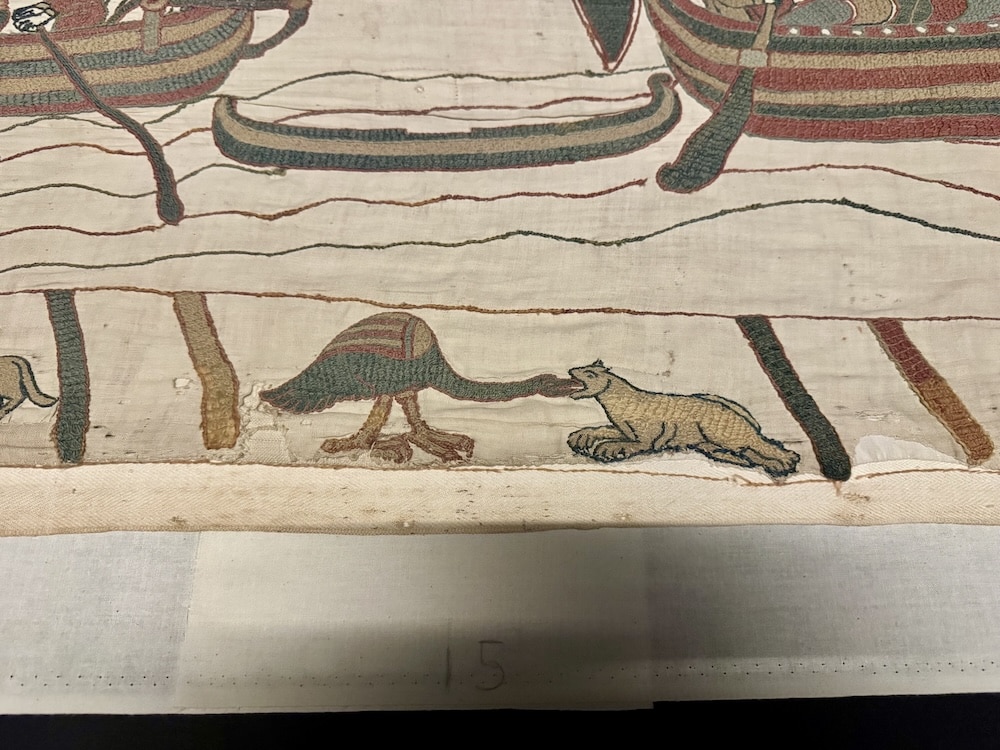
The Wolf and the Crane, Bayeux Tapestry
The margins have a purpose that goes beyond simple decoration. They enhance the narrative by heightening the drama during key moments and illustrating moral lessons. These include scenes from Aesop’s Fables, such as “The Fox and the Crow” and “The Wolf and the Crane,” which convey themes of power, trickery, and foolishness. In the scene where King Edward the Confessor talks to Harold, the lower border beneath the scene depicts a crow perched in a tree with a round piece of cheese in its beak, while a clever fox stands below looking up. The fable is a famous warning against succumbing to flattery. Its positioning suggests a dual commentary. It either implies that Harold is a thief who foolishly let himself be tricked by William, or it acts as an Anglo-Saxon warning that the Normans are smooth-talking flatterers who cannot be trusted. In the border close to Harold’s departute, there is a wolf with a bone stuck in its throat who begs a crane to use its long beak to pull it out for a reward. Once saved, the wolf refuses to pay, telling the crane its reward was not having its head bitten off. The hidden meaning here represents bad faith and broken promises likely mirroring the political dynamic between Harold and Willliam.
The animals depicted often reflect emotions like grief, anger, or fear, mirroring the central human actions in the main narrative. A dog howls beside the panel that portrays the funeral procession of Edward the Confessor. Two peacocks sit in the upper border above William and Harold, drawing attention to their conversation and suggesting that it had significant consequences. Each bird mimics the man below. The ‘William’ peacock, coloured black and yellow like his clothing, stands calmly with folded wings as William sits enthroned beneath, while the ‘Harold’ peacock, also colour-matched, fans out its tail, echoing Harold’s agitated gestures below.
The mythical beasts featured are drawn from medieval bestiaries and folklore, typically representing chaos or virtue. The artwork also includes vignettes of hunting, farming, and fishing.
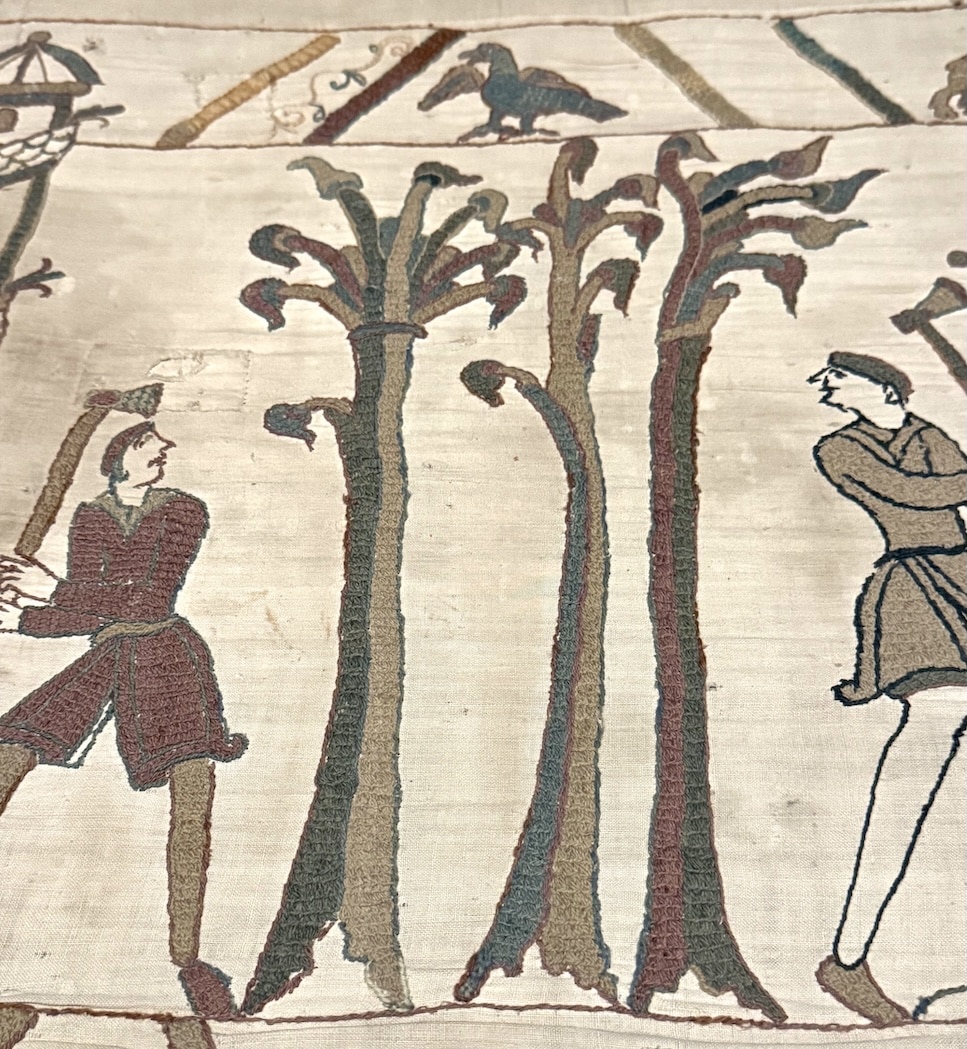
Trees, Bayeux Tapestry
The trees are so much more than background decoration. They serve as structural dividers, marking the end of specific narrative episodes, and are embroidered with distinct botanical features: trunks, buds, and leaves of recognisable oak, ash, and beech trees.
The animal frieze comes to an end when the battle begins, with the battle scenes then spilling over into the border showing archers, soldiers stripping armour from the dead and decapitated corpses lying in the mud.
Bayeux Tapestry, British Museum, 10 September 2026 – 11 July 2027 – Visit Here
Tickets from 10 September – 31 December 2026 have sold out.
The next ticket release will open on 21 October 2026 for bookings January-April 2027
The next ticket release for members opens on 6 October for bookings January-April 2027
See Here for details
Adults £33
Photos: Sara Faith ©Artlyst 2026