The Royal Academy’s stunning Autumn blockbuster Painting the French Riviera is the next best thing to visiting the Côte d’Azur. It is filled with first-rate paintings basking in late-afternoon sunlight.
Five years in the making, the exhibition brings together more than 120 paintings, sculptures, and drawings, along with films, books, and travel posters, to tell the story of how the Mediterranean coast became one of the defining landscapes of modern art. It opens on 2 October and runs until 31 January 2027, a well-timed winter escape for anyone tired of London grey.
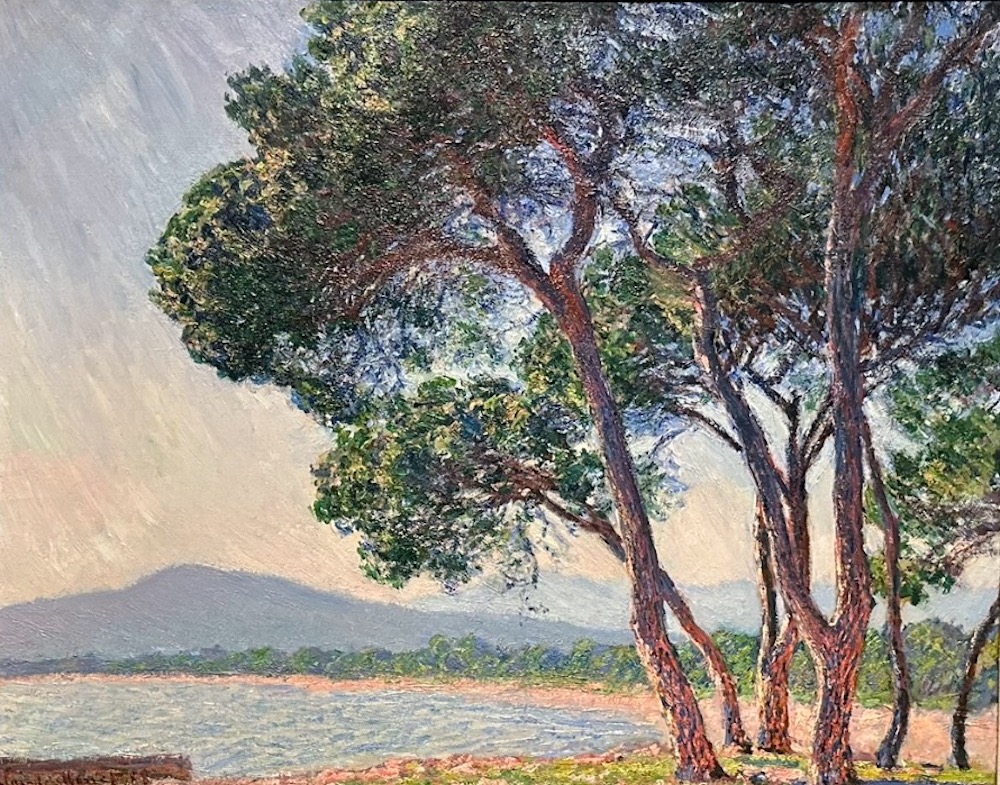
Claude Monet The Beach at Juan Les Pins
The timeline covers nearly ninety years, from the 1870s to the 1960s. The artists on display used the Riviera as a backdrop for a multitude of works, both figurative and landscape. The south of France was synonymous with renewal, a spiritual and creative reset that pushed the artists to find bolder ways to describe what lay before them. Clarity of Light, sky, and sea was in abundance, and the place forever inspired anyone willing to make the trek.
The early rooms turn to Cézanne, Renoir and Morisot, whose fascination with the region gets a first airing before Monet takes over a gallery of his own. His visits during the 1880s, taking in Bordighera, Cap Martin and later Antibes, are represented by Monet’s The Beach at Juan Les Pins.
Next come the Neo-Impressionists, and here the exhibition makes a sensible point. Signac, Henri-Edmond Cross and Théo van Rysselberghe found that pointillism suited the south almost too well, its scattered dabs of colour matching the way the Light seems to shimmer off the water. Cross’s Les Îles d’or from the early 1890s, lent by the Musée d’Orsay, and Signac’s Le Pin de Bertaud of 1900 will anchor the section. The region meant more to these painters than scenery. It carried a utopian charge, tied to ideas of artistic freedom and social progress.
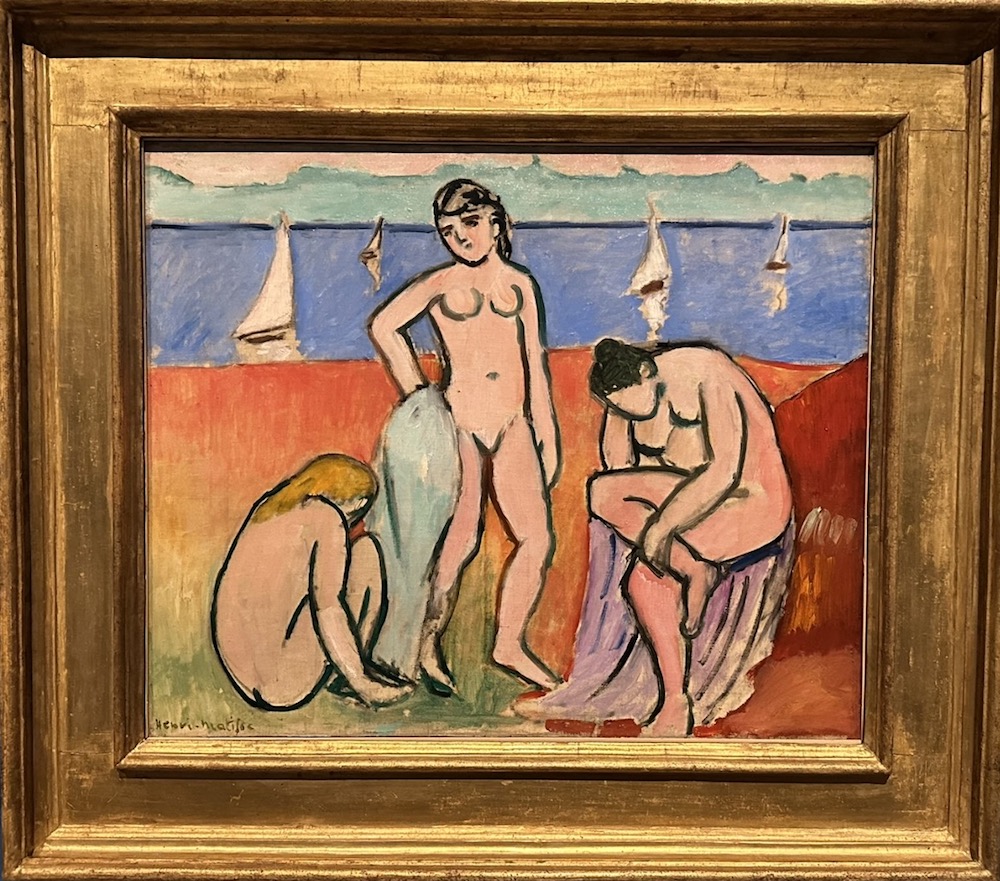
Henri Matisse Three Bathers 1907
The Fauves follow. Matisse leads a group including Derain and Braque, who, between 1905 and 1908, cut colour loose from description altogether and let it simply express itself. Aristide Maillol’s classical figures, much admired by both Matisse and Picasso, sit in the background as a reminder of the older Mediterranean the moderns were reaching back to. The curators trace Matisse from his arrival in Saint-Tropez in 1904 to his later years in Nice, where he created many of his best-known interiors and sea views, including Interior at Nice from 1917 to 1918. Raoul Dufy’s Golfe Juan of 1927 offers a lighter, more social counterpoint, all interwar glamour and easy sophistication.
Bonnard gets a whole gallery, but few of his best works are on display. His Mediterranean paintings, made between 1904 and his death in 1947, are more radiant following his settlement at Le Cannet, above Cannes, in 1926, and The Gate of the Villa du Bosquet in Le Cannet, from 1944.
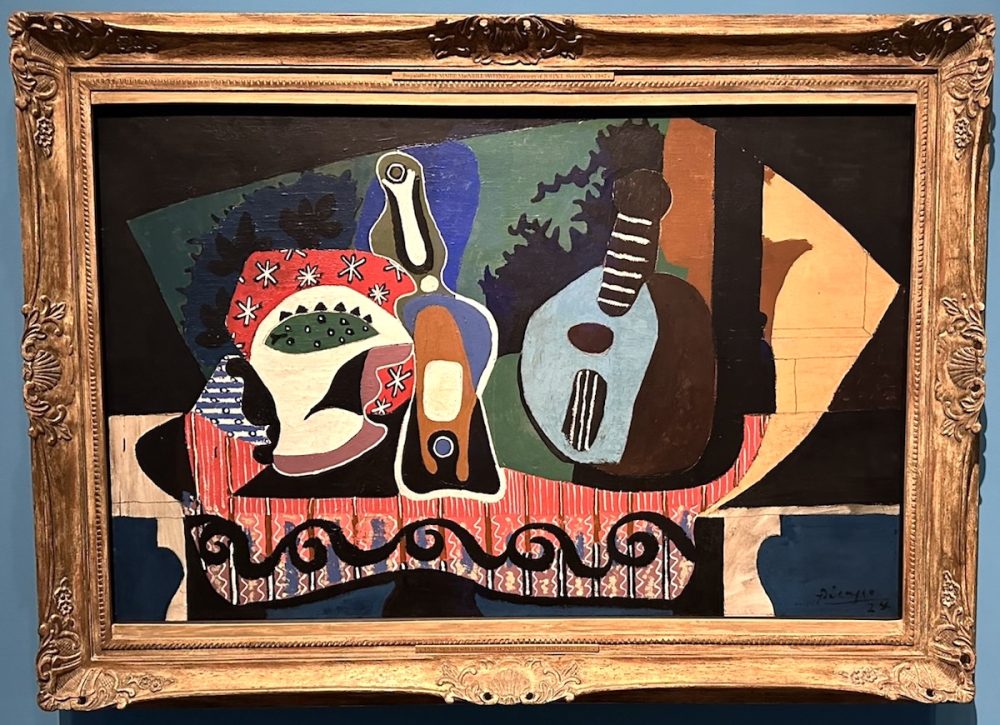
Pablo Picasso Still Life with Mandolin 1924
Picasso, unsurprisingly, occupies a good deal of space. His relationship with the coast runs from the 1920s into the early 1960s, and the selection reflects that range. Still Life with Mandolin of 1924 captures the brighter, more decorative turn he took after the First World War, a long way from Analytical Cubism. A group of watercolours from 1933 draws on the region’s ties to myth, antiquity and leisure, while the ceramics made at the Madoura studio in Vallauris between the late 1940s and the 1960s show a more playful side of his practice. The Bay of Cannes from 1958 represents the later paintings.
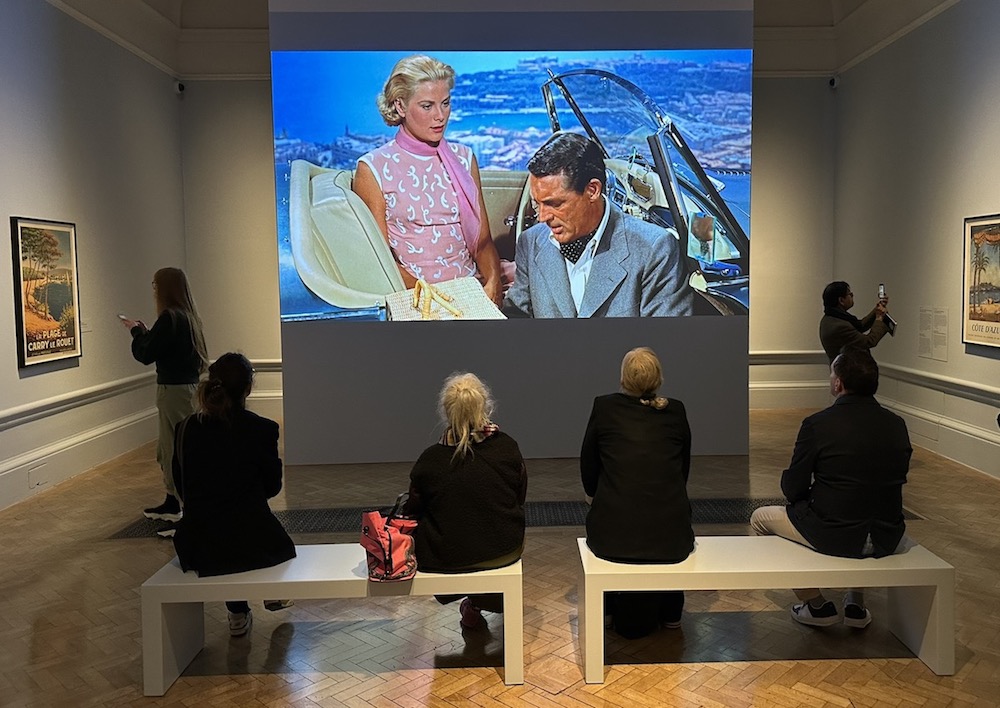
Brest or Leg? A Clip from Alfred Hitchcock’s To Catch A Thief © Artlyst
A dedicated room widens the frame to include travel posters, books and film, with Fitzgerald’s Tender Is the Night and film clips of Hitchcock’s To Catch a Thief placing the Riviera within popular culture as well as art history. It is an engaging change of pace and probably the part of the show that visitors will linger over the longest.
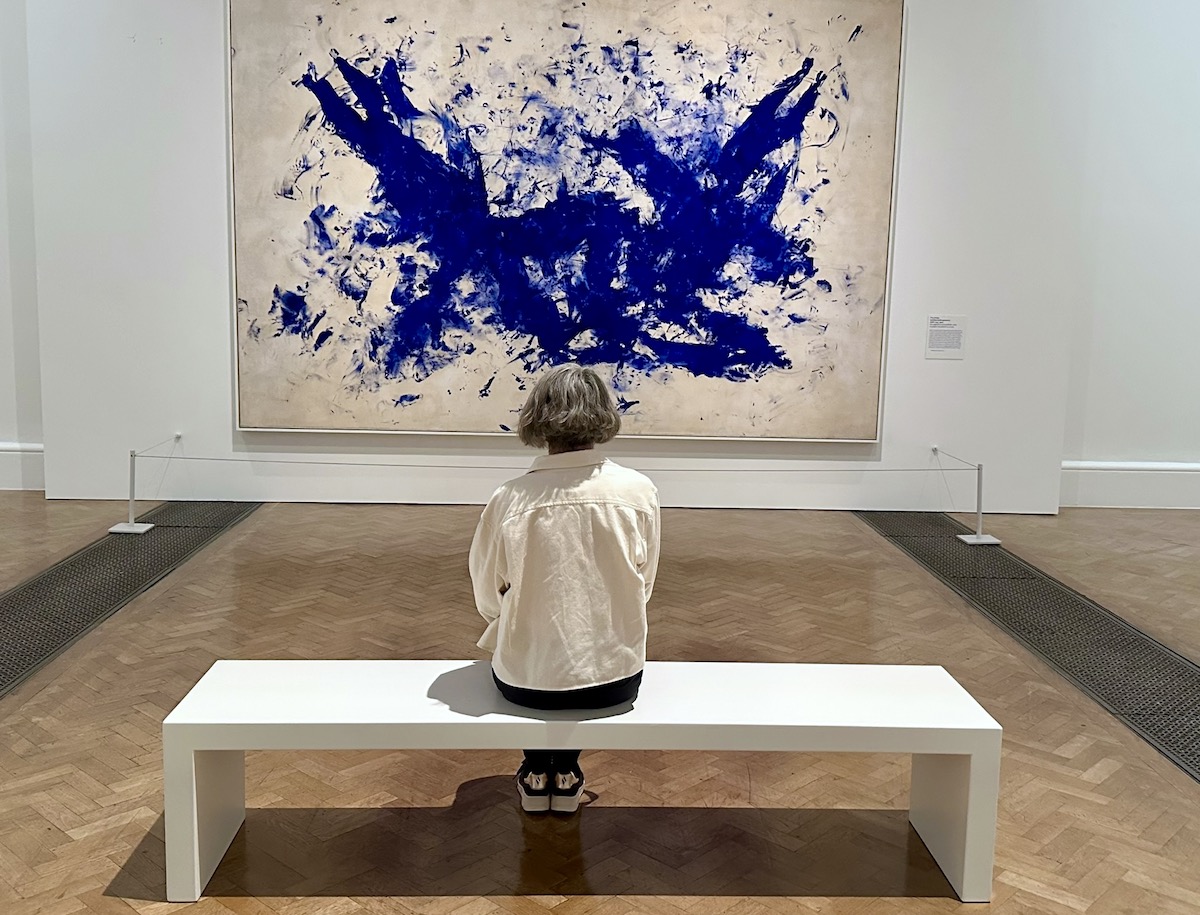
The finale turns to Nicolas de Staël and Yves Klein, (Top Photo) whose abstract takes on sea, sky and colour, including de Staël’s Le Fort Carré d’Antibes of 1955 and Klein’s ANT 84 of 1960, boil the Mediterranean down to something elemental.
The South of France resonates personally, having spent many summers in Antibes. There are so many familiar views. Many of the artists in the exhibition commented about the bright, luminous Light and the intensity of the blue sea. It is the first thing you notice when visiting and stays with you long after you leave. Untitled Blue Monochrome (1KB Godet) by Yves Klein, 1958, is a tidy way to close a story of constant reinvention.
The exhibition is organised by the Royal Academy in collaboration with the Cleveland Museum of Art and brilliantly curated by Ann Dumas and Heather Lemonedes Brown, with Colm Guo-Lin Peare. The show is more than a handsome parade of famous names. The roster is strong, as are the artworks; the theme is an interesting take on repackaging a very crowded subject.
PCR/SF Words and Photos
**** Star – One of the best shows rounding off 2026
Painting The French Riviera Royal Academy of Arts, London 2 October 2026 – 31 January 2027