
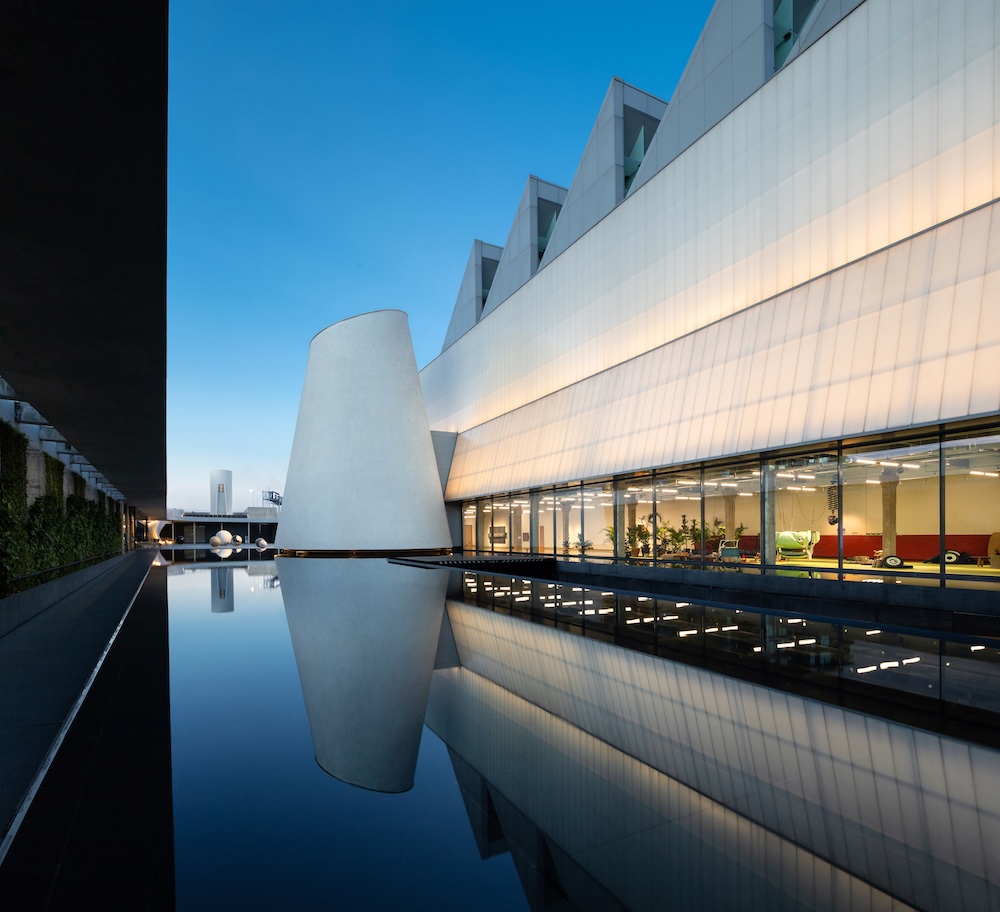
Dib means raw in Thai, a modest name for such an ambitious museum. Dib Bangkok grew out of the collection the late Petch Osathanugrah built over many years, and his son, Purat “Chang” Osathanugrah, has now opened it to the public in an old warehouse converted by the Thai-born architect Kulapat Yantrasast of WHY. The collection holds more than 1,000 works, with Thai contemporary art at its centre. I have always admired collectors who share rather than keep, and this is a truly generous gift to the city. Purat says he wants Dib to be “a place that people feel belongs to them”. At the press opening on Tuesday 22 September, he took the stage with his rock band and played for everyone, which says a lot about the place.
Giving Life ชีวิต ชีวา is the museum’s second major exhibition, curated by Ariana Chaivaranon, with more than 160 works by 33 artists. The curator opened her tour by asking us whether we had ever given life to something that went on living beyond us. Everything here seems to breathe or move, and some of it wears out and starts again. It is a happy show, and I kept finding myself smiling.
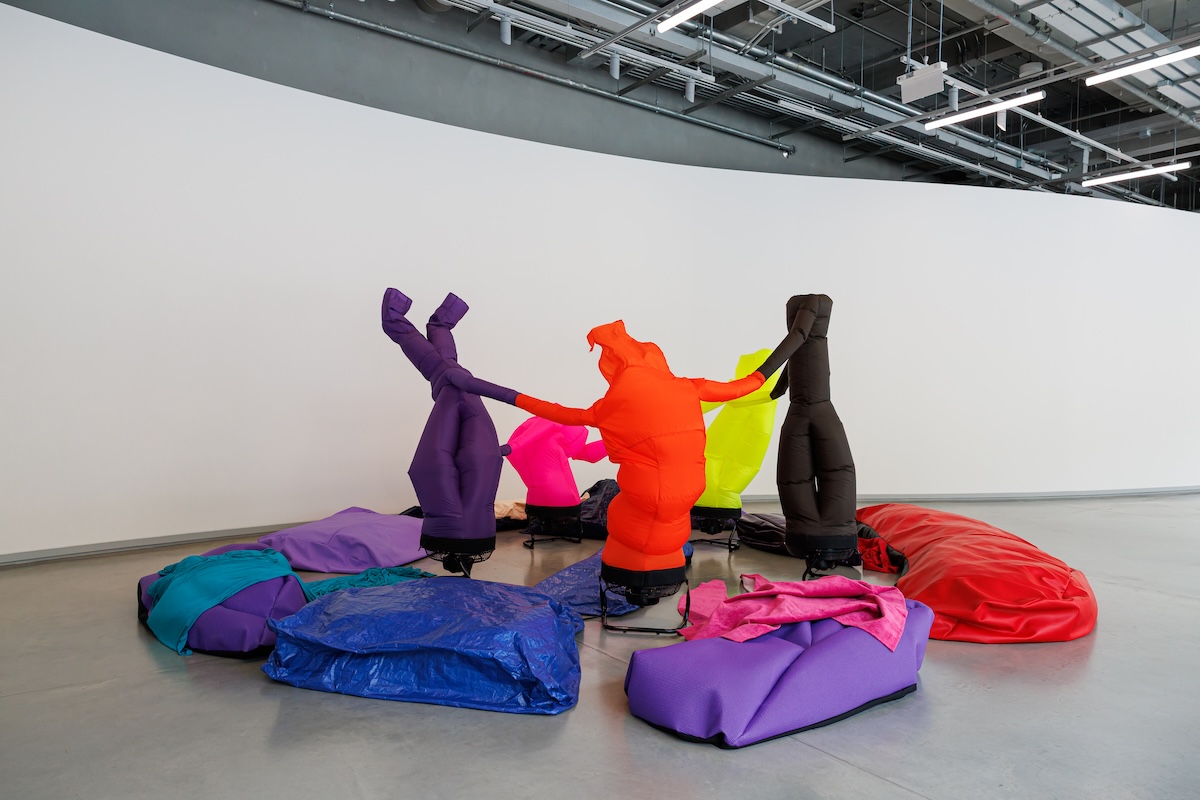
I first saw Paul Chan’s work at the Venice Biennale in 2009 (see lead image) and followed him when he won the Hugo Boss Prize in 2014, so I was very pleased to find him here. His Breathers are fabric figures kept alive by fans, and each one is named after a philosopher. The pink one is Adorno, described as “short, stumpy, takes a while to get going”, and I laughed out loud. What Chan is shaping is really the air inside them. At one point the figures join hands, like Matisse’s Dance.
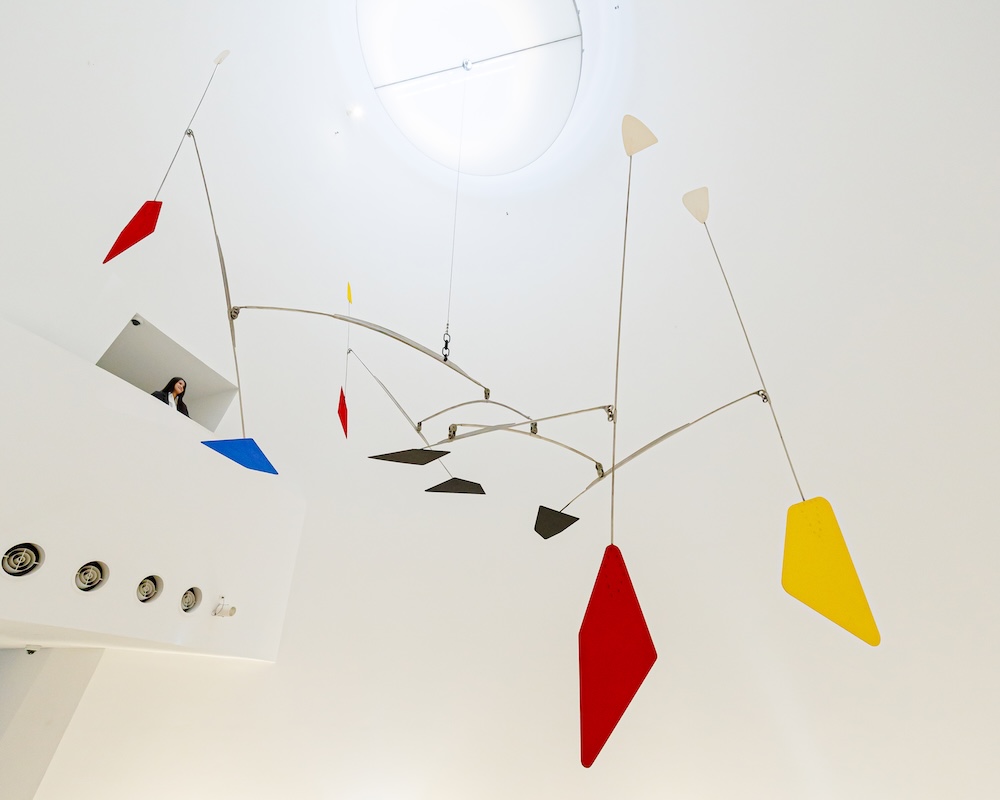
Alexander Calder, Les Trois Barres, Dib Bangkok
Calder is the backbone of the show. I had no idea that Calder’s Circus came to Bangkok in 1975, in the final months of the Vietnam War. It was his first show in Thailand, just as young Thai artists back from abroad were starting to experiment with installation and performance. His friends called him the “dancing man”, and you can see why. Go up to the balcony on level 2 and watch the large mobile slowly turning.
I was happy to see a big mobile by Tuan Andrew Nguyen again. I fell for his work in Saigon in 2025, at Fight or Flight or Float or Fall, his solo show at Galerie Quynh. Tremor (2025) talks straight back to Calder. Nguyen takes unexploded ordnance from the Quang Tri region of Vietnam and turns it into mobiles that musicians, or Buddhist monks, can actually play. Calder was against that war. Seeing bombs turned into instruments is hard to forget.
Dib Bangkok
The first CHANEL Gateway Commission went to the Bangkok artist Nawin Nuthong, and his Project 147 (๑๔๗) is where gaming meets contemporary art. There are sculptures, screens, and six consoles with playable games. The starting point is the Thai folk epic Khun Chang Khun Phaen. In the game, a child goes to three deities and asks them what history is. Once a character’s story is finished, it goes into a fountain, explodes and is born again, over and over, like samsara. History has usually been written by the powerful, but here we are the ones holding the controller, and there isn’t just one version.
The tour ended on the top floor with Montien Boonma’s Arokaya Sala (1996). The title means “house without illness”. The shape comes from Khmer temple towers, and inside hang aluminium lungs coated in Thai healing herbs, turmeric among them. Montien began working with herbs after his wife died of cancer, and he died himself in 2000, at only 47. I stood under it, breathed in the scent of the herbs, and was deeply moved. The exhibition begins with Chan’s breathing figures and ends with our own breathing, and I don’t think that is an accident.
Across town at Bangkok Kunsthalle, Spirits Melt to Flesh goes the other way, into the shadows. Sam I-shan has brought together eight Asian artists working with film, sound, sculpture and photography, and the show is immersive and full of atmosphere. It makes the most of the building. The bare walls, the shadows and the echoes all end up as part of the work. Sam I-shan borrows a line from Al-Ghazali: “This visible world is a trace of that invisible one, and the former follows the latter like a shadow.”
Three artists stayed with me. Daniel Hui’s Funeral Rites is in a dark room marked by burns. A man and a woman, separated by time and distance, talk about love and betrayal against the backdrop of the region’s troubled history. Their images blur and flicker, and the past feels very much alive.
Taiki Sakpisit’s Maelstrom (2026) is a slow, sound-and-kinetic installation about two figures from Thai belief: Mae Nak, perhaps the most famous Thai ghost, said to have lived in Phra Khanong (coincidentally, the same district where Dib stands), and the revered monk Somdet To, who exorcised her. The sound shifts gradually, and without noticing, you slip into the supernatural.
Lieko Shiga made Blind Date in Bangkok during a residency in 2009. She chased motorbikes around the city and photographed and interviewed more than a hundred couples riding together. It comes back here as a newly edited video. The work is about looking at who looks at whom, and about how intimate it is for two people to share one small seat in the traffic. It is tender and funny, and very Bangkok.
Dib is full of light and breath, and the Kunsthalle is all shadows and murmurs. Private passion is doing a lot for this city right now. Dib has raised the bar, and I will definitely go back.
Giving Life is at Dib Bangkok until 3 May 2027.
Visit Here
Spirits Melt to Flesh is at Bangkok Kunsthalle until 4 October 2026.
Visit Here