
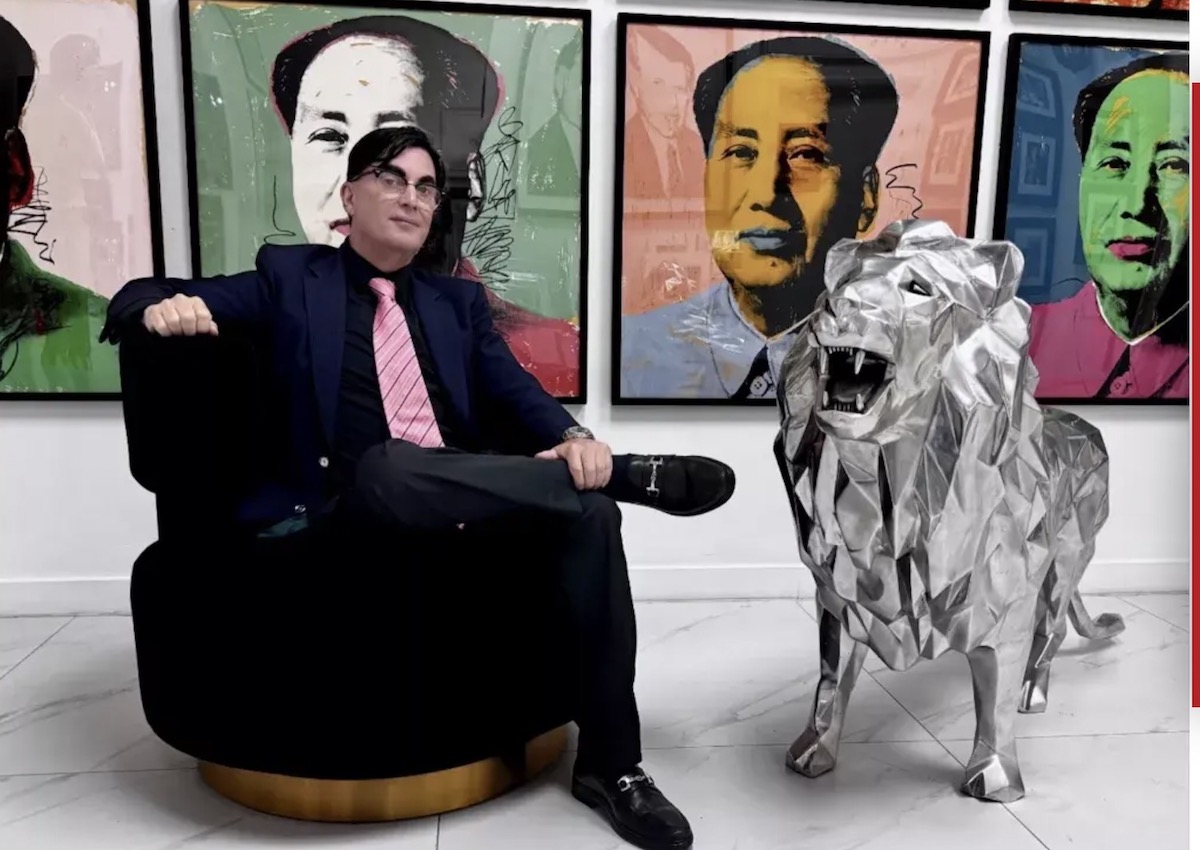
A wealthy Florida family has filed suit alleging they were sold more than 200 fake Andy Warhol works over the course of less than a year, in a case that, according to The Wall Street Journal, points to a forgery operation running from Peru through Miami and into some of the most recognisable imagery in twentieth-century American art.
Richard Perlman, a real estate investor, along with his son and several family investment entities, brought the civil racketeering suit in a Florida court against more than six defendants, including dealers and gallery owners. According to the complaint, the family spent roughly $6.7 million between 2023 and the following year buying what they believed were authentic Warhols, including depictions of Queen Elizabeth II, the singer Debbie Harry, and Superman, three subjects most closely associated with the artist’s late-career output.
What makes the case notable is not simply the scale of the money involved but the apparent sophistication of how the forgeries were dressed up to pass as real. The lawsuit, 42 pages long, alleges that many of the canvases were painted in Peru before being smuggled into the United States, where a domestic network took over the task of making them appear legitimate. That involved engraving false appraisal stamps directly onto the backs of canvases, falsifying shipping paperwork, and manufacturing certificates of authenticity convincing enough to fool buyers who had no obvious reason to doubt them.
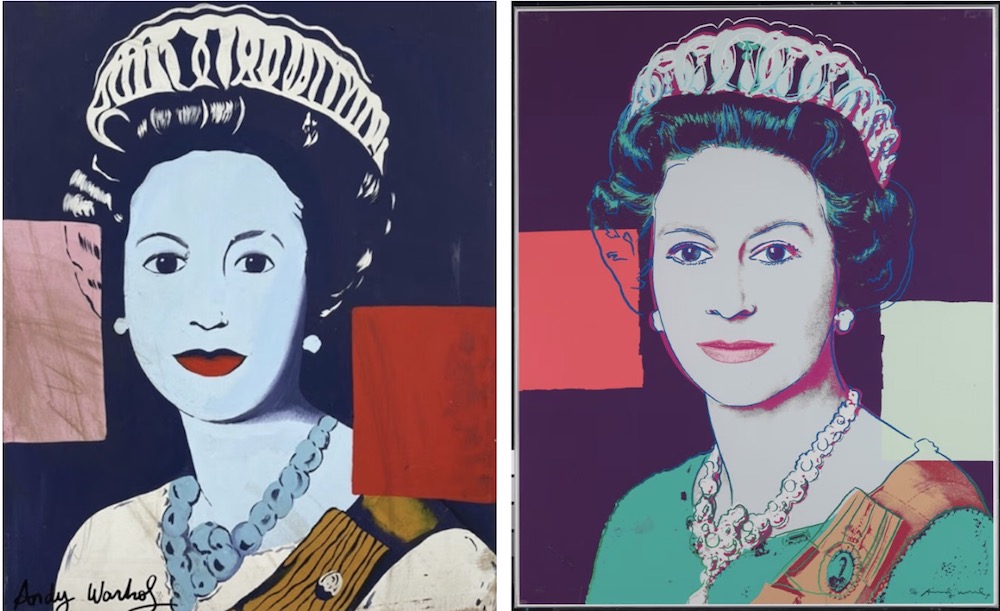
Left: Forged Portrait of Queen Elizabeth II; Right: an Authentic Warhol portrait of the late Queen Elizabeth II
At the centre of the domestic operation, according to the complaint, was Miami dealer Leslie Roberts, owner of Miami Fine Art Gallery, who allegedly worked in coordination with Philadelphia dealer Nathan Isen, known professionally as Nicky, who runs Dane Fine Art. The suit claims the two men effectively formed a pipeline, with Isen’s inventory of forged works quietly moving through Roberts’s higher-profile Florida gallery, lending the pieces a veneer of legitimacy simply by association with a more established storefront.
The scheme apparently extended even further into outright impersonation. The lawsuit alleges the ring fabricated an email domain that closely resembled the Andy Warhol Foundation’s, so convincing that buyers believed the works were being authenticated directly by the Foundation. This could not be the case since the Foundation took a step back after being sued on several occasions. The Andy Warhol Foundation stopped authenticating artworks entirely back in 2012, a fact well known within serious collecting circles but apparently not obvious to buyers operating outside that world. The complaint goes further still, alleging that individuals were sent to pose as authentication specialists from Phillips, the auction house, carrying fabricated business cards to lend the whole operation an added layer of credibility.
The Perlmans’ suspicions were eventually triggered not by anything in the paperwork itself but by an outside appraisal. Late in 2023, the family approached Christie’s to have their growing collection assessed with a view to a possible sale. Christie’s specialists reportedly flagged irregularities almost immediately. That prompted the family to press their sellers, Roberts specifically, for actual proof of authenticity, a demand that ultimately unravelled the arrangement and led to a legal dispute that was settled in January of this year.
Roberts’s troubles did not end with the settlement. He has separately pleaded guilty to federal wire fraud charges connected to the scheme and is scheduled to be sentenced later this month. Isen, meanwhile, is named as a primary defendant in the newer, broader civil suit, and in July the FBI raided his Philadelphia gallery as part of what appears to be an active federal investigation running alongside the civil litigation. His attorney has denied the allegations of fraud and conspiracy outlined in the complaint.
Art crime specialists say the case, while striking in its particulars, fits a pattern that has become depressingly familiar in the high-end art market. Eric Thompson, who teaches art crime at John Jay College of Criminal Justice, has pointed to the fundamentally opaque and fragmented nature of art transactions as the underlying vulnerability that schemes like this one exploit. Because so many sales happen privately, without the kind of centralised record-keeping that governs, say, real estate or securities, it becomes extraordinarily difficult to track whether the same forged work has been resold multiple times under different names or through different intermediaries. A fake Warhol can, in theory, circulate for years, passing from one private collection to another, without anyone outside the immediate transaction ever having reason to question it.
That structural weakness is precisely what makes Warhol such an attractive target for forgers in the first place. His late-career output, particularly the celebrity portraits and pop-culture appropriations that made him famous, relied heavily on screenprinting techniques that are, relatively speaking, easier to replicate convincingly than the labour-intensive brushwork of an old master’s painting. Combine that with a body of work large enough that even serious collectors can struggle to track every documented piece, and the market becomes fertile ground for exactly the kind of scheme the Perlmans say they fell victim to.
Whether the civil suit succeeds in recovering any of the family’s $6.7 million remains to be seen, and the outcome will likely depend heavily on how the ongoing federal investigation into Isen and his gallery develops in the coming months. What seems less uncertain is that the case will be cited, for some time, as a cautionary example of how far a well-organised forgery operation can go before anyone outside the transaction itself notices something is wrong.
Miami Fine Art Gallery states on their website:
“Located in the heart of Coconut Grove, our art gallery stands out for its selective and exclusive collection of masterpieces. We specialize in renowned “blue chip” artists whose works have made a lasting impact on the history of art.
In our gallery, you will find an impressive diversity that spans from the great masters of modern art, such as Pablo Picasso, to icons of contemporary and street art, like Andy Warhol. Our mission is to offer our visitors a unique experience, where each piece of art tells a story and every exhibition is a celebration of creativity and artistic expression.”
From what we at Artlyst have seen, the fake Warhols are not very good and are easily spotted a mile away.
We invite you to explore our collection and discover the works that have defined and continue to define the world of art.
Top Photo: Courtesy Leslie Roberts Miami Fine Art Gallery