

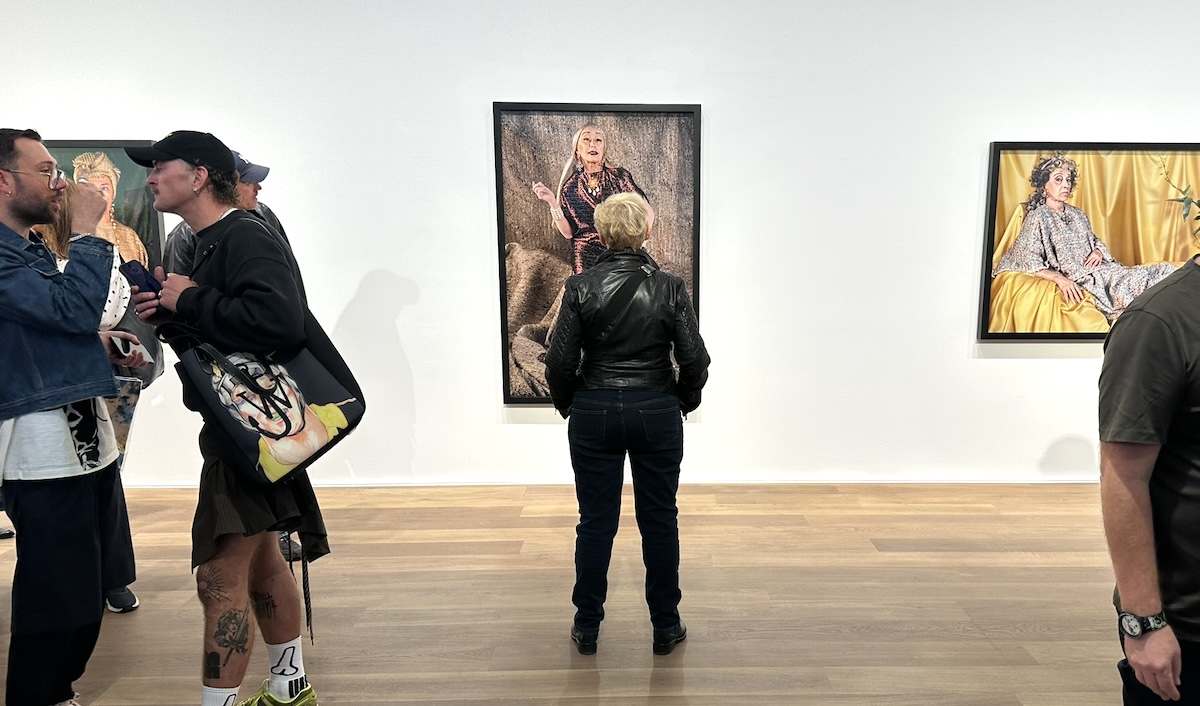
Cindy Sherman has been disguising herself for so long that it is easy to forget who she is. For five decades she has been her own model, building characters from wigs, prosthetics, digital tools and theatrical props. The early film stills still feel fresh. Some of the middle years, I confess, leaned too close to the dressing-up box. Cindy Sherman at Hauser & Wirth in London, runs from 13 October to 23 December 2026, made me look again.
The spark came from a giveaway magazine. Sherman was leafing through a promotional title from an upscale jeweller in East Hampton, where she keeps a summer home. It featured a well-known former swimsuit model in her early seventies, about Sherman’s own age, who had clearly been digitally smoothed and draped in jewels. Sherman told British Vogue that every picture was ostentatiously maximised to show off wealth and suggest youth and sexiness. It struck her as phoney and hilariously pretentious, even by Hamptons standards. Fashion likes to talk about diversity. The range it actually allows stays absurdly narrow.
From that sneer she built a series. Sherman began working with lengths of fabric, using them as both costume and backdrop. The drapery gives the show its visual language. Figures seem to melt into their surroundings, and the tension between hiding and showing becomes the subject. Chanel invited her to use material from its archives, and several of her works include fabric and jewellery from the house. Some tweeds are woven with leather strips, gold thread and sequins. The relationship is not new. Her Ominous Landscapes, from 2010 to 2012, also put archival Chanel on her characters.
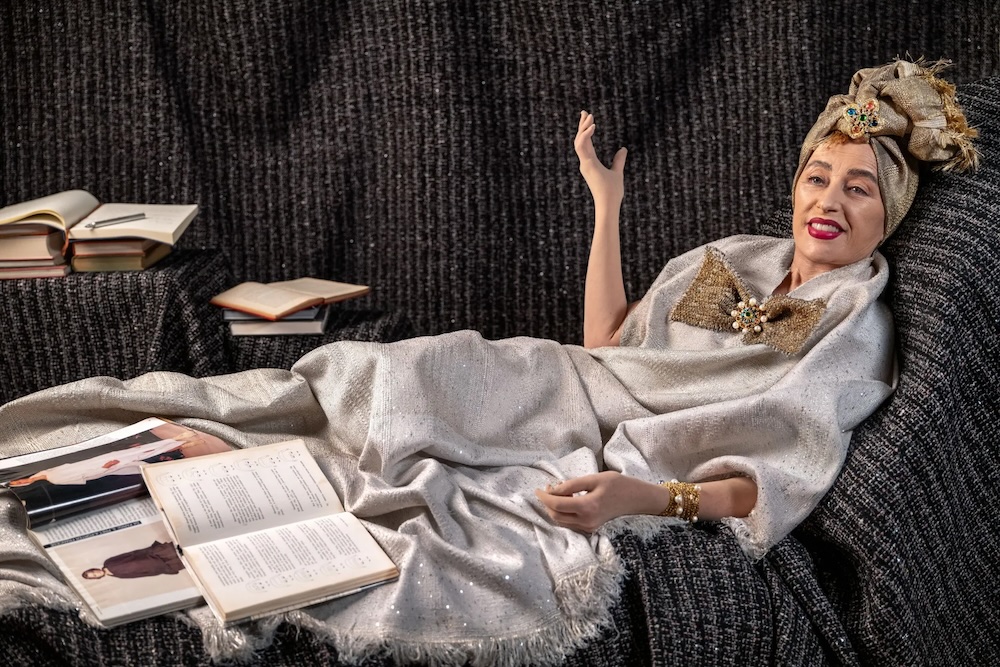
Untitled #710 (2026), Cindy Sherman. Courtesy the artist/Hauser & Wirth; © 2026 Cindy Sherman/Artists Rights Society (ARS), NY
Fabric and wigs come first, as she tries them out until a personality starts to emerge. Makeup finishes the job. The results are a muse wrapped in cloth that forms a floor-length red dress, and a matron in tweed and pantyhose against yellow drapery. Another figure holds a pearl-studded bag, which sits oddly against a peasant-style dress. The clash is the point. Identity is layered and often contradictory.
Artifice has always been Sherman’s calling card, and here it is on show. The wig sits a little crooked. The foundation cracks on a heavily made-up face. You can spot the join. That visible labour is what keeps the pictures honest, and what stops the glamour from taking over.
What is new is the mood. Sherman admits the series is partly about herself. She says it has moved beyond beauty and now shows the characters’ neuroses, probably her own, as well as those of many women her age. Working close to the camera, she found the process of ageing startling to watch. She links that shock to a double standard in which women are measured against ideals of youth and beauty far more harshly than men are. The result is less a satire of other people than a confrontation.
The theme of resisting or embracing time runs through the styling. Props are rare in the show, which makes one photograph stand out. A reclining figure has a glossy magazine beside her, a stand-in for the old ideals of youth. Next to it lies a book on physiognomy, which treats lines and wrinkles as natural features worth studying. Two attitudes sit side by side on a table. Makeup carries the same split. Some faces look near airbrushed. Others imitate the marks of age.
In several pictures, the women wear gloves that make their skin look artificially flawless, as though they were hiding their true selves. Others are dressed in clothing that blends into the wall behind them. Who gets noticed, and who fades into the furniture? The question is asked quietly and never answered. Sherman treats the works as separate individuals, not a story told in order. Viewers are left to find parts of themselves and to face their own anxieties and choices.
There is humour, but it is brittle. Mar-a-Lago faces (who coined this? It’s great) meets loud luxury, dressed and accessorised by Chanel, and it is hard to think of anything more of the moment. Yet the pictures do not stop at mockery. Behind the pearls and tweed you sense a woman watching her own face change.
Sherman was born in 1954 in Glen Ridge, New Jersey, and lives and works in New York. She studied art at Buffalo State College in the early 1970s and rose to prominence in the late 1970s as part of the Pictures Generation. Her later series have touched on class, ageing and horror.
If the last decade felt like a holding pattern, this show suggests a fresh phase. The disguise is still obvious. It simply cuts deeper now. – PCR
Cindy Sherman 13 October – 23 December 2026 Hauser & Wirth London