

Three works by Banksy have so far cost the public almost £150,000 in cleaning operations, security and administration, with the bill on the largest of the three still rising. However, if you count up the cultural and tourism interests, this sum is a drop in the bucket.
The most expensive to remove is a mural that appeared on the Royal Courts of Justice in London on 8 September 2025, depicting a judge in a wig battering a protester with his gavel. Banksy claimed the work on his website and Instagram the same day. The Ministry of Justice has since spent £50,000 attempting to remove the paint from the Grade II listed building’s stonework, with a further £35,300 on security and staff overtime, bringing the total for that single work to more than £85,000.
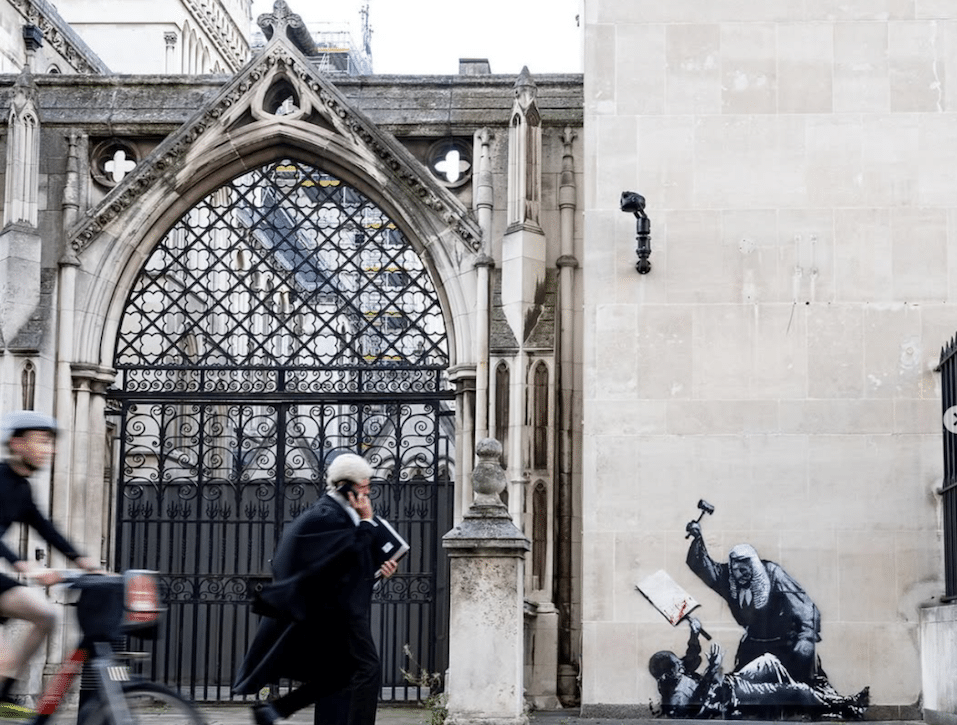
Photo: Via Banksy Instagram
Initial cleaning attempts failed, and contractors have since brought in laser technology. If that too proves inadequate, replacing the affected stonework remains a further option. A separate application has been submitted to install railings across the wall where the mural appeared, at a cost not yet disclosed.
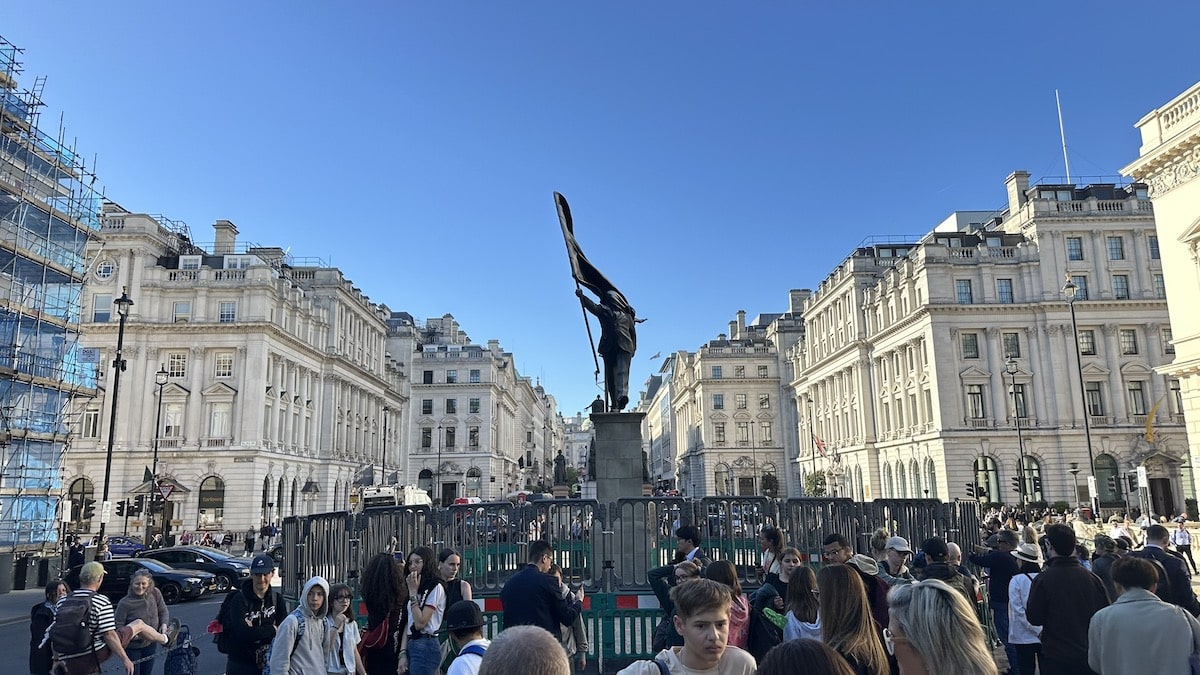
Westminster City Council has spent close to £60,000 dealing with a second work, a statue of a man carrying a flag that appeared at Waterloo Place near Trafalgar Square in April. The money has covered safety barriers, security and administration while the council, which owns the work as landowner, decides what to do with it.
A third piece, a shoal of piranhas painted over a City of London police sentry box in 2024, cost £2,200 to remove. That work has fared rather better than the others: it was preserved and is due to go on display at the London Museum when it reopens in November, which gives it a rather different conclusion to the usual story.
The figures were disclosed through Freedom of Information requests and have reopened the argument that follows every unauthorised Banksy that appears on public property. HM Courts and Tribunals Service defended the decision to remove the Royal Courts mural by pointing to the building’s protected status, stating that it is obliged to maintain the original character of a listed building. Shadow Justice Secretary Nick Timothy said it was outrageous that tens of thousands of pounds of public money should be spent cleaning up after an artist who appeared to believe he could deface public buildings without consequence, and argued that Banksy should pay the costs himself.
The Metropolitan Police confirmed they received a report of criminal damage to the Royal Courts of Justice on 8 September and that the investigation remains ongoing with no arrests made.
The broader context is a long and not always glorious history of decisions made about Banksy works on public and private property. Paintings have been scrubbed off walls, demolished with the buildings they adorned, physically cut out and sold, and in some cases preserved and exhibited.
The gap between the value assigned to these works on the open market and the institutional response to their appearance has been a source of friction, embarrassment and occasional regret for authorities over two decades. There is now a Wikipedia page dedicated solely to Banksy works that have been damaged or destroyed, which is itself a kind of monument to the difficulty of making these decisions in real time, without the benefit of knowing what a work will eventually be worth or mean.
For the Royal Courts of Justice, the immediate reality is more straightforward. More than £85,000 has been spent trying to remove a Banksy from a historic wall, and the work is not yet gone.
Top Photo Banksy © Artlyst 2026 Westminster City Council has spent £60,000 protecting the statue