
Devyani Saltzman is stepping down as director of arts and participation at the Barbican Centre after just 18 months in the post, bringing a brief and closely watched tenure to an abrupt end. The Stage reported that her role had been made redundant. A spokesperson for the Barbican declined to elaborate, saying the organisation was “unable to comment on individual staffing matters”.
The departure follows a period of transition at the vast City of London arts complex, which attracts around 1.5 million visitors each year and has rarely been far from public scrutiny. Saltzman had only recently set out a five-year creative vision for the institution. Announced last June, it proposed an “ideas-led, seasonal” programme shaped by what she described as a time of profound geopolitical and technological change. The aim, she suggested then, was to allow audiences to see the world in a more interconnected way—fluid, shifting, and in constant dialogue with the present.
Her exit comes weeks after Abigail Pogson assumed the role of chief executive, signalling a new era in the Barbican’s leadership structure. The timing, while perhaps coincidental, signals a recalibration within the organisation, which has been navigating structural and reputational pressures for several years.
Saltzman took up her post at the Barbican in 2024, coming from the Art Gallery of Ontario, where she had served as director of public programming. Her appointment was hailed by many. A press statement at the time pointed to a desire to cultivate a new ethos for public institutions—one grounded in serving audiences as much as in presenting ambitious contemporary work.
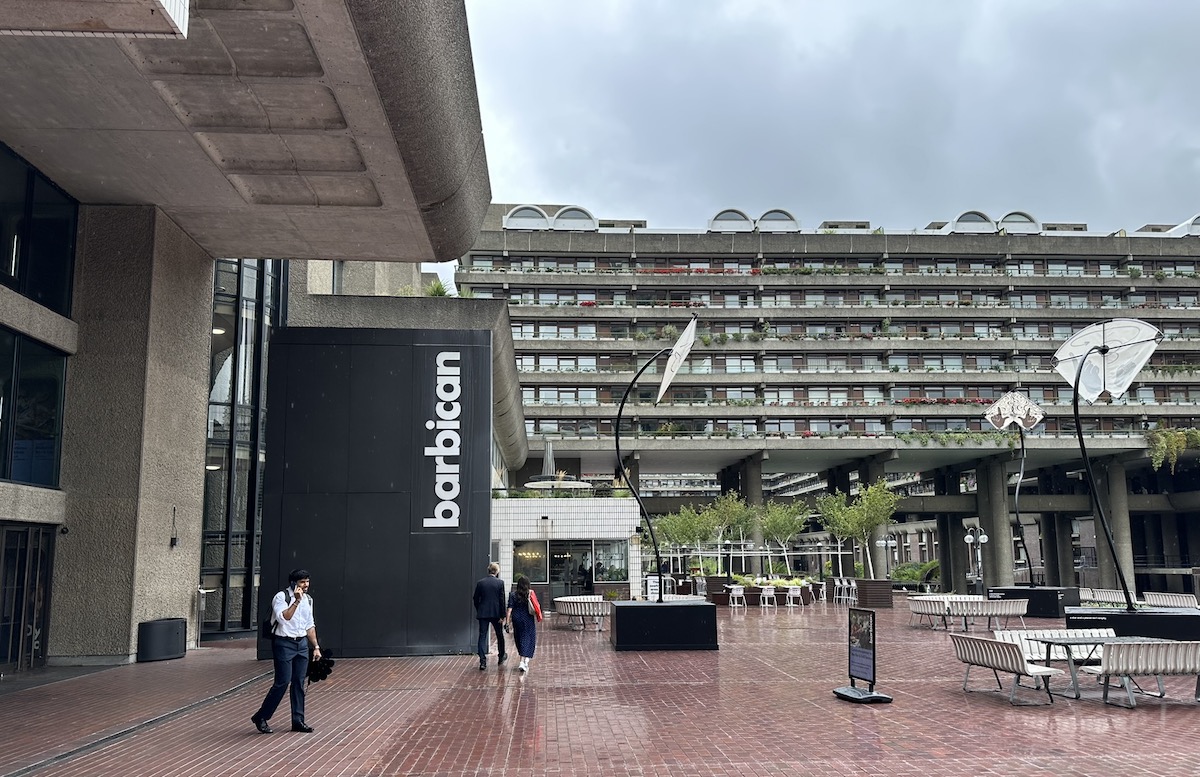
The Barbican, with its sprawling architecture and multidisciplinary programme, has long embodied both the possibilities and the tensions of such ambitions.
Saltzman was approached for comment but had not responded at the time of writing.
Her exit is the latest development in an unsettled stretch for the institution. Back in 2021, the centre underwent a sweeping internal shake-up after a book surfaced detailing more than 100 alleged instances of prejudicial behaviour linked to the venue. The claims triggered a period of intense scrutiny and soul-searching, prompting the organisation to introduce a range of reforms to address questions of workplace culture, inclusion, and accountability.
Leadership changes have followed in steady succession. Will Gompertz was appointed director of arts and learning in March 2021. He later assumed the role of artistic director, playing a central role in implementing the Barbican’s anti-racism plan, positioning the institution at the forefront of sector-wide debates around equity and accountability. In late 2023, however, he departed to become director of Sir John Soane’s Museum, another prominent London institution, leaving yet another gap in the Barbican’s senior ranks.
Elsewhere, programming decisions have at times drawn controversy. In 2023, an exhibition at the Curve Gallery was dismantled after Resolve Collective accused staff of censoring a related talk. The incident prompted renewed discussion about artistic freedom and institutional responsibility—questions that continue to reverberate across publicly funded arts organisations.
Saltzman had been regarded by some observers as a stabilising presence, tasked with steering the Barbican through a complex period while articulating a coherent vision for its future. Reports in the Guardian suggested she had been seen as a figure capable of guiding the organisation through change. However, the brevity of her tenure leaves open questions about how far that work progressed.
For now, her exit adds another layer of uncertainty to an institution already in flux. The Barbican remains one of Europe’s most prominent cultural centres, a vast concrete citadel devoted to music, theatre, film and the visual arts. Yet its future direction—artistically, structurally, and administratively—appears to be in continued negotiation.
The Barbican’s challenges are hardly unique, but the institution’s scale means that each leadership change resonates widely. Saltzman’s departure, brief though her tenure may have been, is likely to be seen as part of a larger story still unfolding.
Top Photo: P C Robinson © Artlyst 2026