
The Courtauld has unveiled its 2027 programme, and it is, by any measure, a strong one. Three major exhibitions anchor the year, each approaching landscape, the body and the female gaze from wildly different angles, alongside a run of smaller displays that dig into the gallery’s own collection with the kind of specificity that only an institution of the Courtauld’s scale can really afford.
The headline draw is likely to be Georgia O’Keeffe: Ghost Ranch, opening in October and running through to the following January. It is worth pausing on how unusual this show actually is. There are no O’Keeffe paintings in any UK public collection, none at all, which means most British audiences have never had the chance to stand in front of her work.
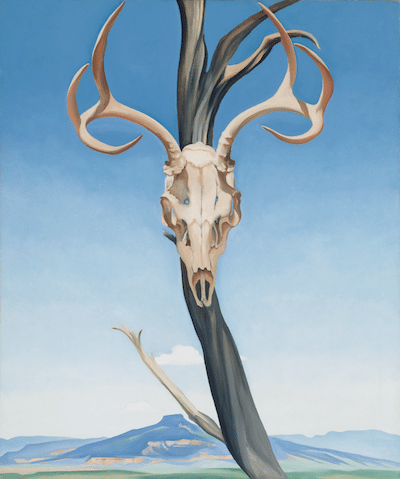
Georgia O’Keeffe (1887-1986), Deer’s Skull with Pedernal, 1936
This exhibition, focused specifically on the two decades she spent painting the landscape around her New Mexico home from the mid-1930s onward, will bring together close to two dozen paintings, the majority of which have never crossed the Atlantic. Loans are coming from the Whitney, the Museum of Fine Arts Boston, Yale, Houston’s Museum of Fine Arts and the Georgia O’Keeffe Museum itself in Santa Fe, among others. What comes through in the description of the work, the weathered cliffs, the flat-topped mass of Cerro Pedernal looming over everything, the bleached animal bones she pulled from the desert floor, is a painter working through a landscape so specific it became almost autobiographical. A companion display of photographs taken by Philippe Halsman and John Loengard for Life Magazine will run alongside it, offering a more documentary counterpoint to the paintings themselves.
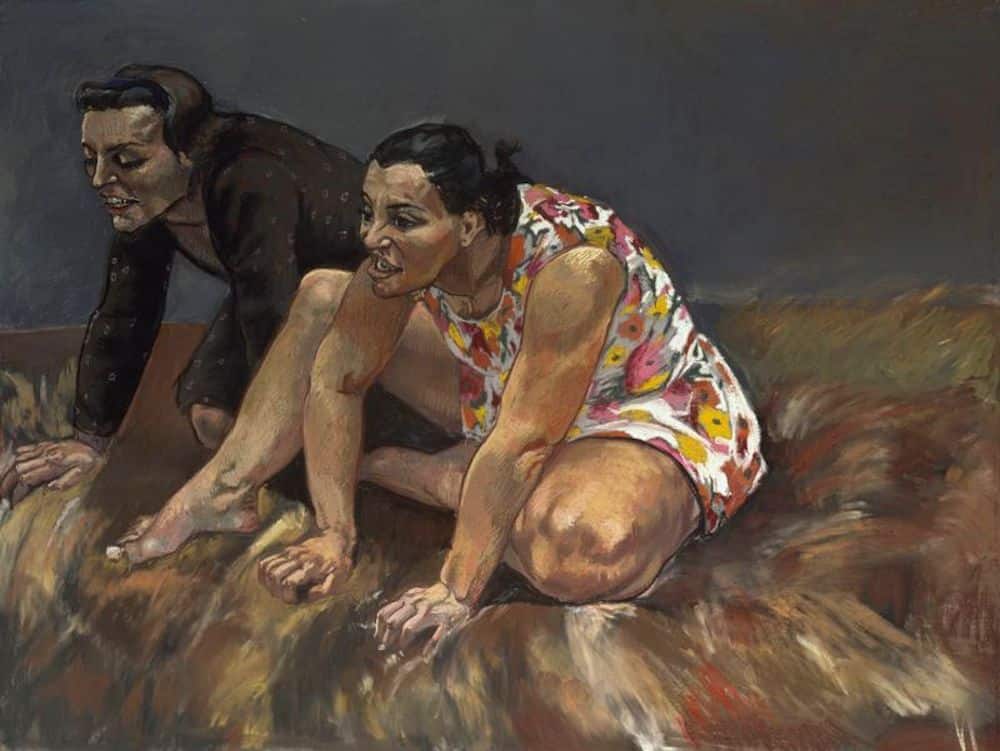
Before that, though, comes Paula Rego: Dog Woman, opening in February. This is the first retrospective ever devoted to the pastel series Rego made between 1994 and 1995, and it has been over thirty years since these works were shown together in any comprehensive way. Anyone who has encountered a Rego pastel in person knows they are not easy to look at. Large, physically dominant female figures, often crouched or contorted, rendered in a medium Rego took up specifically for this body of work because it let her draw and paint simultaneously. She once said she made these works by getting down on the floor herself, posing in front of a mirror, turning herself into an animal, which is about as unvarnished a description of process as any artist has offered. The exhibition marks the beginning of her long collaboration with Lila Nunes, who would remain her primary model for the next three decades, and includes pieces that have not been on public view in Britain since the nineties.
A smaller companion display, Pendle Witches, will run concurrently in the Project Space, pairing prints Rego made in 1996 with the poetry of Blake Morrison that partly inspired them. However, Rego was characteristically uninterested in simply illustrating someone else’s text.
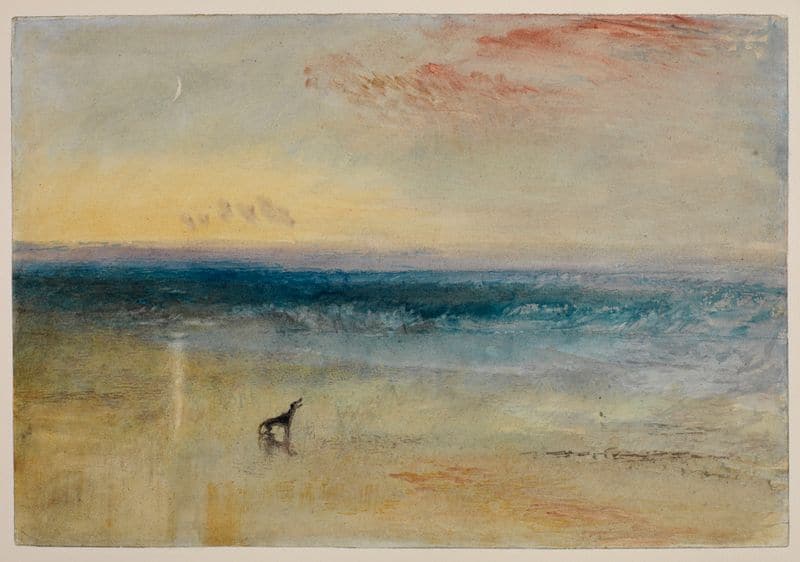
Joseph Mallard William Turner (1775-1851), Dawn after the Wreck
Sitting between these two shows, opening in June, is Turner and the Landscape Generation, which takes a different tack entirely. Rather than focusing on a single artist, it looks at four painters, Turner, Constable, Girtin and Cotman, all born within a handful of years of one another, all trained in the same circles, all part of the generation that essentially invented British landscape watercolour as a serious artistic pursuit. The show traces their actual travels, Turner in Switzerland and Germany, Cotman touring Yorkshire, Constable in the Lake District, the three of them variously crossing paths in Wales, drawing on both the Courtauld’s own holdings and loans from major UK collections.
The smaller displays deserve attention too, even if they will inevitably sit in the shadow of the headline shows. A display of newly researched Flemish drawings, including work by Bruegel the Elder, opens alongside new technical scholarship in February. A summer display looks at Rubens’s workshop practice through drawings by van Dyck and Jordaens. And in a genuinely exciting footnote, a pair of painted wooden panels attributed to Vanessa Bell, unseen publicly for over a century, will go on display from October, having spent decades in the same family’s possession before conservation work brought them back into public view.
Into The Future:
Vanessa Bell: A Rediscovery October 2027 – February 2028
An important new addition to the Courtauld’s leading collection of art by the Bloomsbury Group will go on display in October 2027. Previously unknown and not seen in public in over a century, this pair of painted wooden panels, attributed to Vanessa Bell (1879 – 1961), was made at the Omega Workshops in London between 1913 and 1916. The Omega Workshops were a collective of avant-garde artists who made and sold experimental domestic wares, including painted wooden furniture, textiles, rugs, and ceramics, and had a significant influence on 20th-century artists.
Originally the doors of a wardrobe, the panels feature two stylised female figures wearing dresses sold at the Omega from the middle of 1915. Acquired in 1919, the year the Omega Workshops closed, they have remained in the same family ever since and have been generously donated to the Courtauld, where they have undergone a major conservation project.