There is a question at the heart of Earthly Paradise: Radical Living in the UK, the major new exhibition opening at William Morris Gallery this autumn, if the home is the primary site of self-expression, personal freedom and the working out of new ideas about how life might be lived, what does that mean for the growing number of people who cannot access one? The exhibition does not shy away from that question. It builds toward it.
Opening on 3 October 2026 and running until 28 March 2027, Earthly Paradise is a touring exhibition developed through a collaboration between William Morris Gallery in Walthamstow, Tŷ Pawb in Wrexham, Blackwell in Bowness-on-Windermere and Dovecot Studios in Edinburgh, the four institutions working together under the name Four Lanterns. The project is part of the Art Fund’s Going Places programme, a £5.36 million initiative supporting touring exhibitions developed through partnerships between museums and local communities. It is curated by Hadrian Garrard, Director of William Morris Gallery, alongside independent curator Linsey Young and Assistant Curator Tayyabah Tahir.
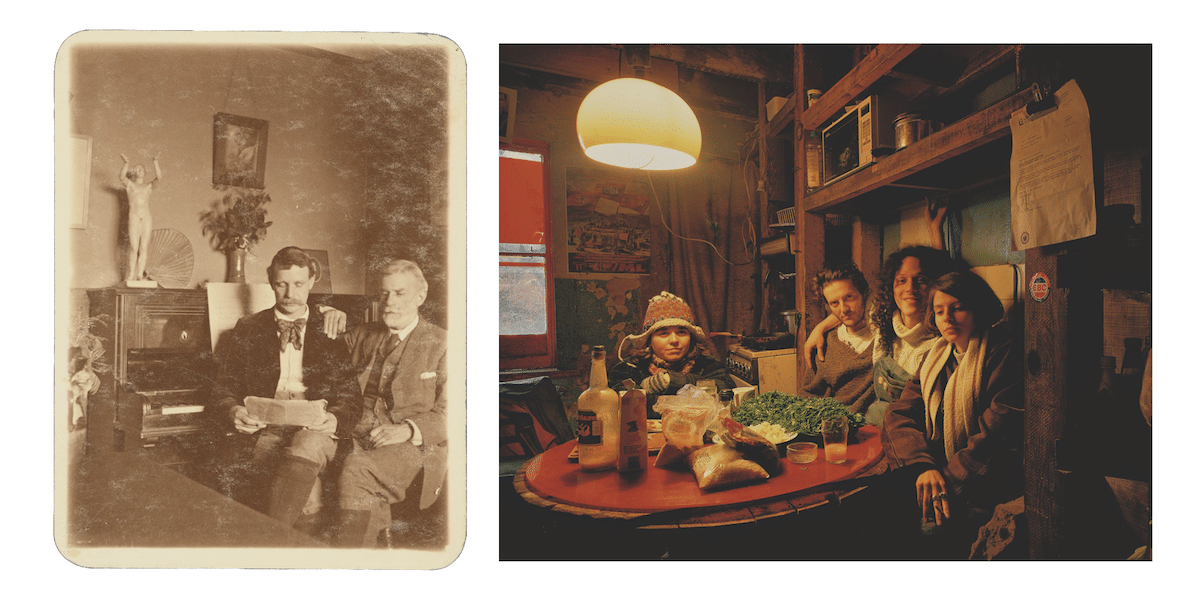
From left to right: Photograph of Edward Carpenter and his partner George Merrill, c.1900 (1). Digital image provided by The John Rylands Research Institute and Library, The University of Manchester; The Ghetto, 43 Kitchen, 1993, Tom Hunter.
The exhibition spans two centuries and takes the Arts and Crafts movement as its point of departure, though it quickly travels far beyond that origin might suggest. Its subject is the relationship between domestic space and radical thought: how artists, writers, activists and communities across Britain have used the places they inhabit as laboratories for testing new visions of society. The home, the show proposes, is not merely a backdrop to creative life. In many cases, it is the work itself.
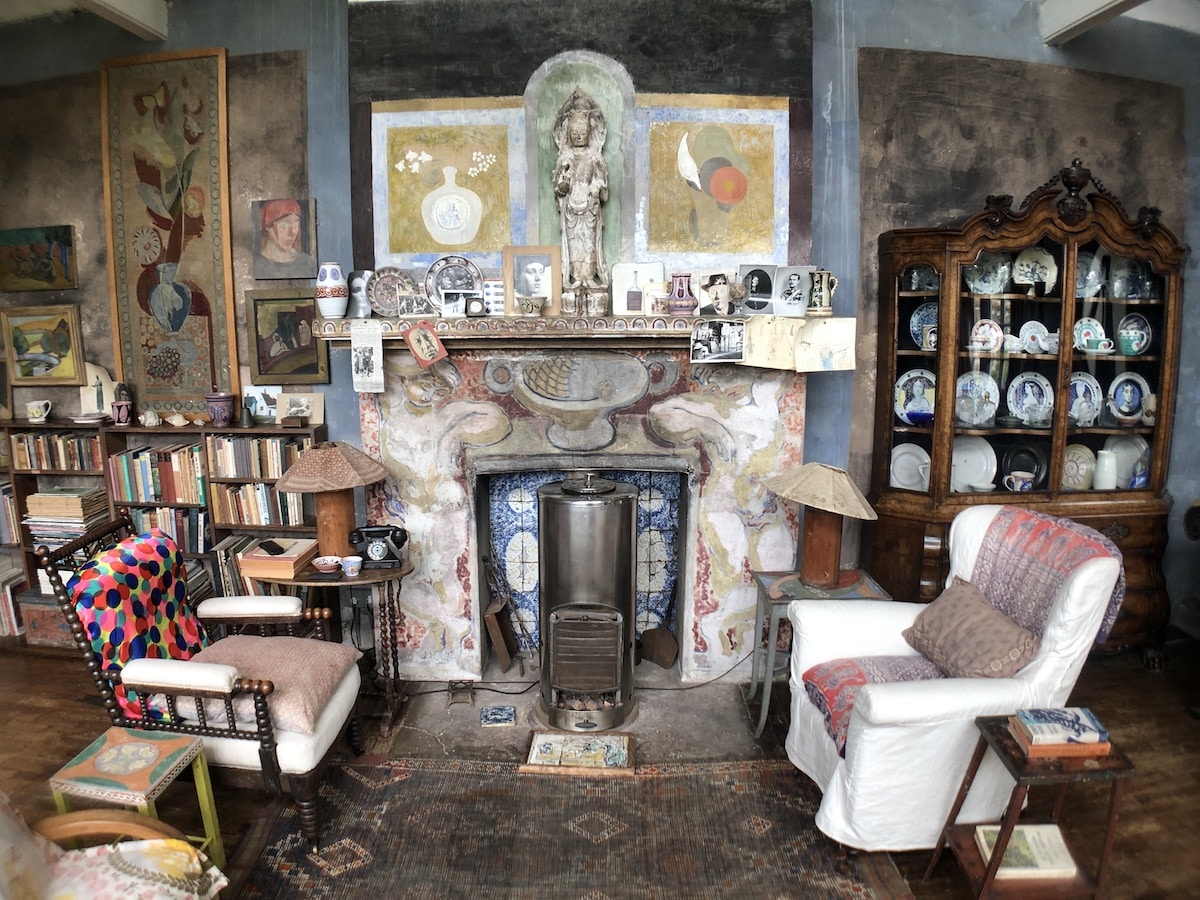
The cases gathered here are sometimes surprising in their range. William Morris’s Red House is the obvious touchstone, but the exhibition extends outward to take in Vanessa Bell and Duncan Grant’s farm house at Charleston; Cedric Morris’s Benton End in Suffolk, which functioned as an unofficial art school and sanctuary for queer artists and thinkers; Derek Jarman’s Prospect Cottage on the shingle at Dungeness; and Dial House in Essex, the self-sustaining anarcho-pacifist open house founded in 1967 by Penny Rimbaud and Gee Vaucher of the punk band Crass. These are spaces deliberately created, often at considerable personal cost, to embody beliefs that mainstream society refused to accommodate.
The first section of the exhibition spans the late eighteenth century to the mid-twentieth century, animated by Morris’s convictions about the moral and political significance of the domestic environment. Works by and about the Ladies of Llangollen, C.R. Ashbee, Oscar Wilde, Ethel Mairet and Lee Miller sit alongside archival photography and household objects, building a picture of individuals and communities who used the spaces they occupied to question received ideas about marriage, gender, class and the natural world. Communal living arrangements, the slow and dangerous fight for the recognition of same-sex relationships, alternative spiritual practices and utopian politics all find their place here. The exhibition follows its subjects into post-industrial spaces, countryside communes and solitary retreats, treating each environment as a form of manifesto.
The bridge between the two halves of the show is a quietly pointed one. Documentation of Morris’s involvement with housing activists during the 1885 rent strikes in the Old Nichol slums of east London connects the exhibition’s first section to its second, which takes the post-war period as its starting point and moves to the present. It is a reminder that the freedom to live radically has always been unevenly distributed, and that the history of alternative domesticity runs alongside a parallel history of people fighting simply for the right to adequate shelter.
The second half of the exhibition is particularly strong in its account of feminist and anti-racist housing activism. Works by Matrix, the Craigmillar Festival Project, Leeds Animation Workshop and Castlemilk Women’s House address the relationship between feminist politics and the built environment. The history of Bengali squatting movements in the 1970s and 80s, along with the paintings of Raksha Patel, brings anti-racist housing struggles into focus. Photography from the 1990s by Martin Parr, Sunil Gupta and Smiler traces the shifting landscape of homeownership in the wake of Thatcher’s Right to Buy legislation, its consequences still being lived with today. The exhibition closes with a new commission by Abel Holsborough and works by David Spero that sit with the present reality of housing insecurity, refusing easy resolution.
Garrard has spoken about Morris in terms that reframe the familiar image of the Victorian craftsman and socialist. “William Morris was in an open marriage and wanted to completely blur the lines between domestic life and making and experiencing art. He was friends with gay men and women, anarchists and revolutionaries, and he lived radically in the ways that we see many other artists live through history.” That reframing gives the exhibition its animating energy. This is not a heritage show dressed in period textiles. It is an argument about the political potential of everyday life, one that draws on two centuries of people who decided that the space they came home to each night was worth fighting over.
The exhibition will be accompanied by ten newly commissioned texts, freely available and written by contributors including Charlie Porter, Sheena Patel and Natalie Olah. After it runs in Walthamstow, it travels to Wrexham, Windermere and Edinburgh through 2028.
Top Photo: © 2026 PC Robinson Artlyst
Earthly Paradise: Radical Living in the UK William Morris Gallery, Walthamstow 3 October 2026 – 28 March 2027